Waterford’s Dan Mulhall on diplomacy, geopolitical change and how the EU “kind of lost its way”
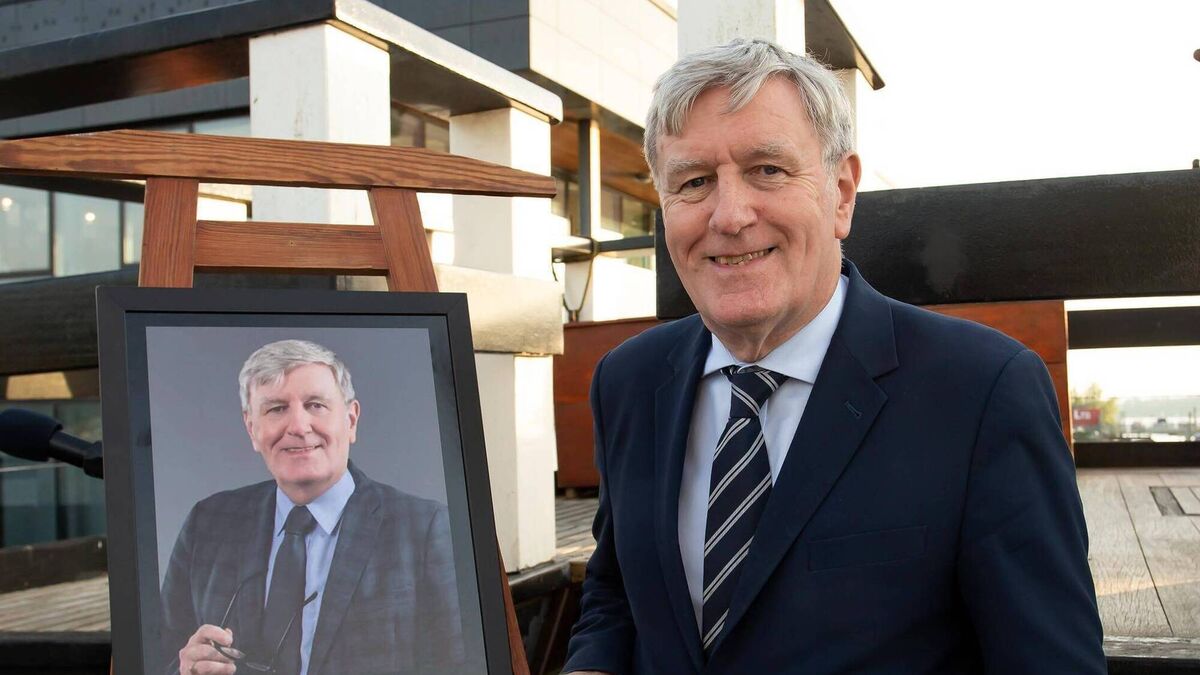
Dan Mulhall was awarded the freedom of Waterford in 2019. He has also been inducted in the Irish American Hall of Fame. Photo: Mary Browne
At a time when the world appears to be rapidly upending, seemingly everybody - from members of the political commentariat to laymen on the street - is desperate to pontificate on the happenings of the day, from war in Iran, the AI revolution, to the insurgency of populist strongmen.
There are very few people in Ireland better positioned to cut through the noise than Dan Mulhall.
The Waterford native, who built a career as one of Ireland’s most established diplomats, often had front-row seats in witnessing the past century’s most consequential events.
In 1990, he was posted as a permanent representative to a European Union that was drastically reshaping itself following the fall of the Berlin Wall.
In 2016, as Ireland’s ambassador to the United Kingdom, he watched on as Britons voted to leave the EU.
Fast forward a few months, and he was packing his bags for Washington DC, tasked with handling Ireland’s international agenda and interests in the face of freshly elected political firebrand Donald Trump.
Rubbing shoulders with the world’s most powerful leaders was never originally the plan.
He came from humble beginnings, growing up in a large family in Ballybricken - the close-knit, working-class edge of Waterford’s inner city.
In 1972, he attended University College Cork.
“I probably intended to be a teacher and to come back and teach in Waterford,” Mulhall says.
“Once I got to college, I realised there were other opportunities, and eventually somebody told me about the opportunities in foreign affairs. I never planned to be a diplomat, but it happened, and I applied for the job, and I got it, and I spent 44 years in the Department of Foreign Affairs.
“I had a very full career, and I was very pleased to have got some very senior posts at the end of my career, in Berlin, in London and in Washington.
“I was very pleased to be able to serve Ireland for all of those years. Wherever I was, I was always conscious that it was a privilege to serve this country.
“I was never good enough to play sport for Ireland or to be in the Eurovision Song Contest, so being a diplomat representing Ireland certainly satisfied me greatly.”
He retired in 2022 but has evidently maintained the same tenacity his extensive diplomatic career required.
His passion for literature has birthed two books - a guide to the work of WB Yeats as well as a handbook to help tackle James Joyce’s, 'Ulysses'.
Other acute interests include his directorship of animation studio Carlichauns, a child-friendly project centred on Irish folklore.
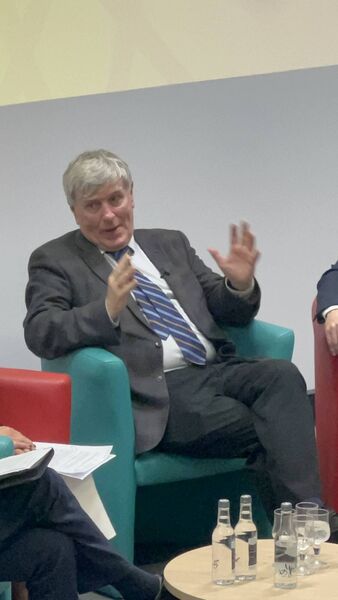
He is a familiar voice on RTÉ Radio One, using his expert insight to bring clarity and analysis to the strange times we now find ourselves in.
So where does Ireland now stand in the modern world?
G7 leaders like Canadian Prime Minister Mark Carney have made an overt pitch for ‘middle powers’ like Ireland to band together, and to leave behind once-stalwart allies like the United States.
“Nostalgia is not a strategy,” Carney told a crowd at the World Economic Forum in Davos.
In many ways, Mulhall concurs: “We stand as a member of the European Union. And it seems to me that there's a big responsibility on the European Union to be more independent, because it can't rely on the old ways to keep it going to be stronger economically, to be stronger politically, to be more cohesive, and to have perhaps more of a defence posture that can use hard power to protect, to defend Europe's interests.
“So I think the only way Ireland can cope with this strange new world that we live in is as part of the European Union.
“The EU has the capacity to be an important part of a new world order, but it has to get its own act together first. It has to strengthen itself, it has to become more cohesive. It has to become economically more dynamic, and it has to pay more attention to its defence.”
As it happens, Mulhall is speaking in SETU Waterford as part of an event promoting Ireland’s upcoming presidency of the European Council.
Like Mulhall, Irish leaders are adamant that the nation’s future lies with Europe. Getting the public to invest in that vision can prove difficult.
Mulhall touches on how the EU is often viewed as an alien, excessively bureaucratic and overly regulated entity that exercises oversized influence on the island.
Flashpoints like the Mercosur trade deal have done little to curry favour with quarters that already view the EU unfavourably.
Recent polling commissioned by pro-EU think tank European Movement Ireland shows that while Ireland remains largely fond of the EU (82% of respondents said Ireland should remain in the EU), support has begun to gradually dwindle.
Mulhall is the first to concede that the EU has “kind of lost its way” in recent times.
“You have to demonstrate that the alternative works well,” he says.
“So if the European Union fails or fails to satisfy people's needs, they will turn to other solutions to respond to their needs.
“So the EU has to be aware that it's not a done deal. Ireland is Ireland, and it's not going to change, but the European Union requires the member states to be part of this.
“I think the EU has kind of lost its way a little bit over the last 10 or 15 years, but I think it now has to find that way again, because the world, the state of the world, demands that it finds a way to revive itself and to become more of a player in a new environment that is upon us.”
The next six months will see EU leaders descend on Ireland, and will likely prove pivotal in shaping the public’s view of Brussels over the coming decades. Trust Mulhall to be watching and commenting closely.