SETU Waterford celebrates fourth anniversary in tandem with Ireland’s EU presidency
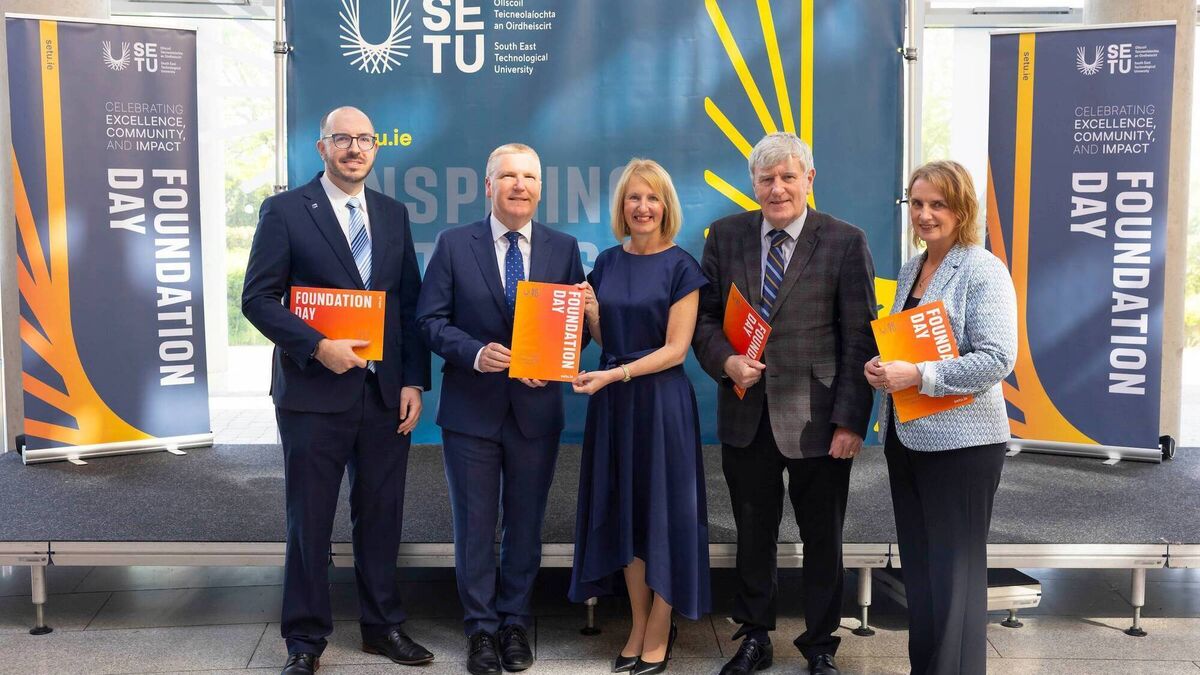
L-R: Niall Casey, European Commission, Michael McGrath, European Commissioner, Professor Veronica Campbell, President of SETU, Dr Dan Mulhall, Former Ambassador, and Kathryn Kiely, Vice President for External Affairs at SETU. Photo: Patrick Browne
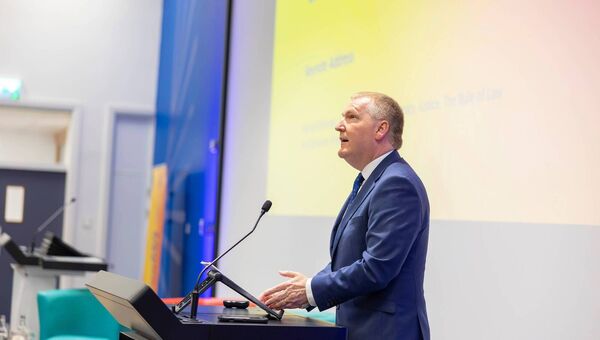
European Commissioner Michael McGrath championed SETU as a vital backbone in Ireland’s democracy while speaking at the university as it celebrated its fourth anniversary since its inaugural foundation on May 1.
The anniversary celebrations coincided with Ireland’s upcoming presidency of the Council of the European Union, with a key focus laid on cross-collaboration between the university and wider European institutions.
Mr McGrath spoke alongside other academics and distinguished guests, including SETU president Professor Veronica Campbell and former Irish ambassador to the United States Dr Dan Mulhall.
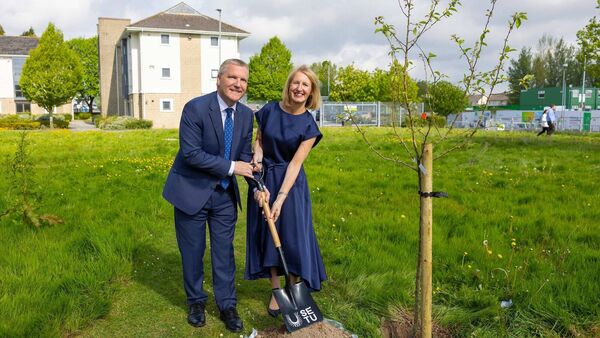
“SETU represents universities at their best,” said Mr McGrath.
“It drives innovation and research, connects deeply with its region while engaging internationally, and contributes to the broader European project.
“Universities also play an essential role in safeguarding democracy. By challenging ideas, generating knowledge and fostering open debate, institutions like SETU help sustain informed, resilient and confident democratic societies.”
The importance of unlocking funding from European Union initiatives like Horizon Europe, a stream of research and innovation funding, was highlighted by Prof Campbell.
The university has already secured almost €13 million from the fund to date.
“This places SETU at the forefront of European-funded research and innovation,” she said.
“What matters most is what this means for our region: secure jobs, retained talent and opportunities for European collaboration in the South East.
“The event and the EU-funded projects showcased today demonstrate this impact and bring these opportunities to life.”
Ireland’s EU presidency, which begins on July 1, has been touted as pivotal at a time when a once-de facto world order is rapidly shifting, and traditional European alliances with the United States appear increasingly fickle.
Domestic issues also possess the ability to hamper Ireland’s presidency over the council.
In January, the spoke to farmers across Waterford who voiced concern with the proposed trade agreement between the EU and Mercosur, the four-nation South American trading bloc.
While Ireland voted against the deal at the European Council, it was ultimately approved by a qualified majority.
Irish farmers have argued the deal with Argentina, Brazil, Paraguay and Uruguay will undercut Irish agriculture - particularly beef - and will taint the domestic market with poor quality produce.
The deal began on May 1, but only provisionally, as Members of the European Parliament voted to refer the deal to the European Union’s Court of Justice.
Speaking to the , Mr McGrath said that the deal will have “net benefits” overall.
“Fundamentally, Mercosur is about bringing down trade barriers. It is about eliminating or greatly reducing tariffs that already apply to goods that are being traded in both directions,” he said.
“The lifeblood for Ireland is export. It is international trade, and farmers in Ireland have never had anything to fear from new markets being opened up.
“We will be monitoring the market developments, and there are controls and safeguards that are built into the Mercosur agreement to make sure that the perceived negative consequences do not materialise, and if they do, we have instruments where we can step in and prevent that harm being done.”
Over the course of Ireland’s EU presidency, leaders from across the bloc will be descending on Ireland for a series of events and meetings across the second half of the year.
While Mr McGrath said the agenda and locations of visits are largely determined by the Irish Government, he expected to see key EU players in the South East.
“I have no doubt that there will be events and occasions for European leaders and for EU commissioners like myself to be here more often and to see the real-world impact on the ground of decisions that we are making, but also an opportunity to listen to stakeholders and listen to citizens about what they think we should be doing on the EU policy front,” he said.
“Those of us who are Irish citizens are also EU citizens, and we do help to shape and influence EU policy, and I think it's an opportunity that we should all seize.”