Together, we stronger - organising LGBTQ+

Michelle Byrne
As many of us will know, LGBTQ+ people are a minority group who can face oppression and discrimination, often compounded by other forms of inequality as identities and experiences intersect across race, gender, disability, class and more.
Labels can help us understand ourselves and build community, but they can also be used to divide us.
One of the clearest threads connecting so many of us, however, is class. Class is about our relationship to work, wealth and power. Most people must work or rely on social support in order to survive, while a small minority are able to live from the ownership of assets and the profits generated by other people’s labour.
So, by that definition, many LGBTQ+ people are working class. The term is not just reserved for those with a certain accent, postcode or how close to poverty we are, although many working class people face further discrimination due to these.
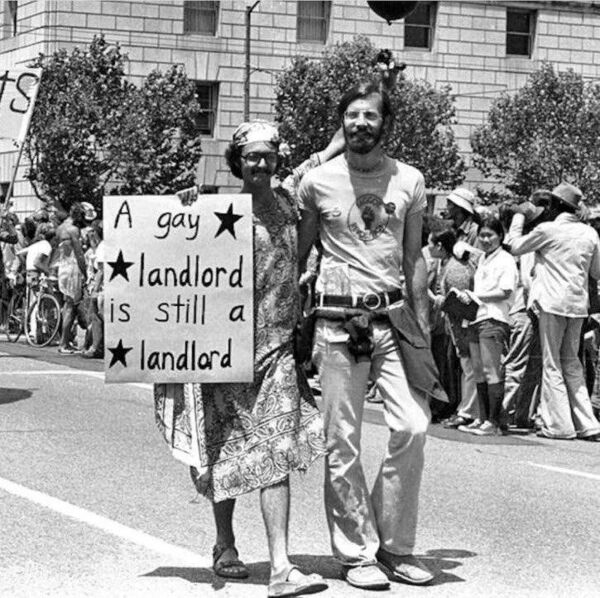
One example of this is a gay landlord illegally evicting gay tenants. In that situation, their shared sexuality does not erase the unequal power relationship between the landlord and the people being made homeless.
A wealthy, gay landlord and a working-class gay tenant do not necessarily share the same material interests simply because they are both LGBTQ+.
Similarly, LGBTQ+ equality at work cannot be separated from class politics: low pay, insecure contracts, outsourcing and cuts to public services disproportionately affect LGBTQ+ workers.
Trade unions are strongest when they organise around the issues workers actually face in daily life - economic insecurity, housing costs, healthcare access, discrimination and bullying at work are interconnected struggles. Organising in the workplace on these issues alongside straight, cis people can also raise the consciousness of those workers about LGBTQ+ experiences within these collectively felt issues.
Workers themselves should be the leaders on addressing equality issues. Employers, who have different class interests - will often drop the promotion of equality initiatives if it is not benefiting them through good PR or profit.
We have recently seen a trend of certain companies dropping sponsorship of more corporate Pride events across the world, ceasing the creation of their limited edition rainbow merchandise or their Pride month social media posts.
Taking Dublin Pride as an example - over a quarter of US-based corporations that supported Dublin Pride the previous year decided not to sponsor the parade last year, with Indeed and MasterCard among them. In some workplaces, equality budgets in big multinational companies are being cut and even staff that work in the area of Diversity Equality Inclusion (DEI) are being let go from their jobs.
Employers often promote ‘diversity’ while resisting pay rises, union recognition or secure employment. Equality without material change risks becoming symbolic or can even become ‘pink washing’ - a term used to describe the strategic use of the promotion of LGBTQ+ rights or imagery/messages that are superficially sympathetic, while hiding or justifying harmful behaviours or policies.
Class solidarity inside unions means recognising different experiences without abandoning collective demands. LGBTQ+ liberation is strengthened, not weakened, by workplace organising around wages, safety and dignity.
While we often use the umbrella term ‘LGBTQ+ community’, without sustainable structures and working together on class interests (which includes equality issues), it is difficult for us to act in union as a community. Workplace equality campaigns are most effective when they are democratic and trade union member-led rather than company top-down HR initiatives or once-off campaigns. Workers organising together in unions creates lasting power.
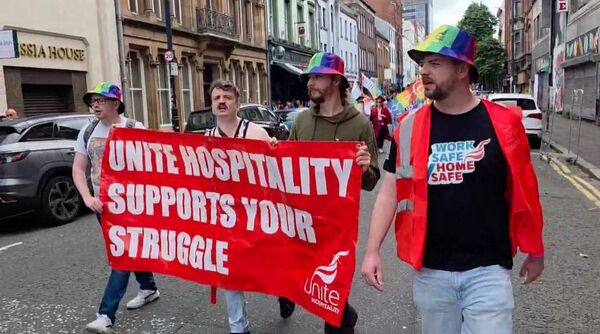
Trade Unions often have equality committees and reps within their structures. Unite the Union for example, not only has elected equality reps across workplace branches - it has an LGBTQ+ committee for LGBTQ+ workplace representatives/shop stewards to come together across the union to lead on equality campaigns, policy, events and workplace resources for across the union.
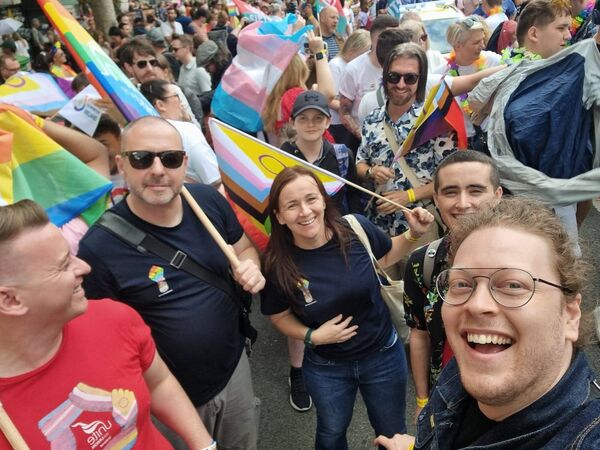
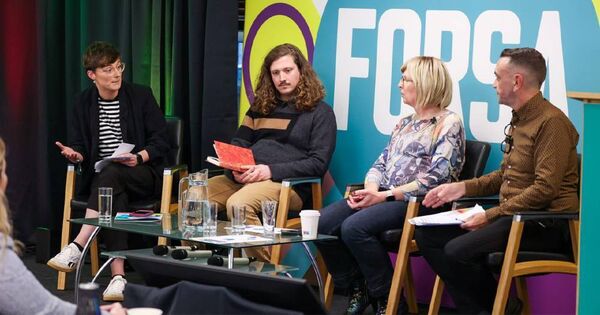
In the same vein, tenants unions such as Community Action Tenants’ Union (CATU) - who have branches across Ireland - including in Waterford - can bring together renters, social housing tenants, HAP tenants, and others impacted by the housing crisis, no matter what their identity is across their housing struggles.
CATU also has equality policies and groups to support their organising work across class interests.
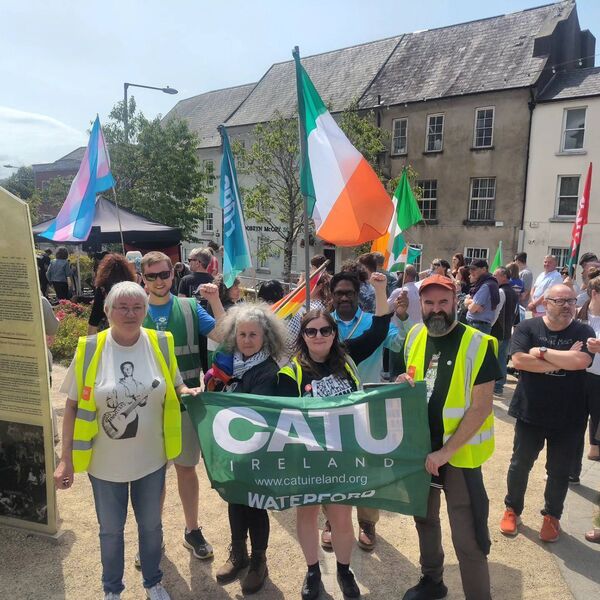
CATU Waterford members at the Diversity not Division event in Waterford, 2025 Anti-LGBTQ+ politics are frequently used to divide working-class communities and distract from inequality, declining public services and falling living standards. Unions - both trade unions or tenants unions - can counter this through collective organising and political education.
Successful organising avoids treating LGBTQ+ issues as separate “identity concerns” detached from economic struggle.
Workplace power and social equality reinforce one another. Trade unions and tenants’ unions are some of the few institutions capable of uniting people across identities and backgrounds around shared material interests while defending minority rights collectively.
There is hope - as we are powerful working in union together.
Unions are their members - meaning that not only should you join a union, but also get active in its structures to drive it forward to fight for the more equal world that we want to see.