Pride Without Borders: LGBTQ+ Rights Around the World
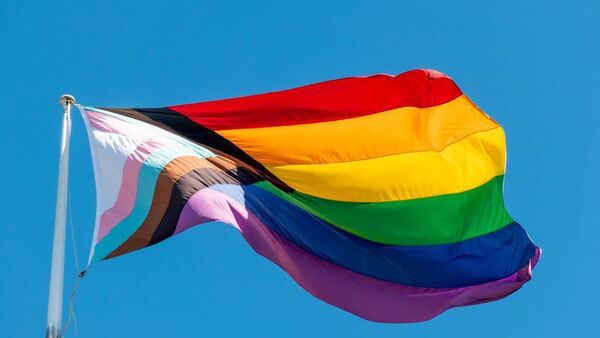
Ireland held its 14th place on the 2026 Rainbow Map - but lost points, dropping from 63% to 61%. Stock image
As Pride of the Déise marks its seventh year, we look beyond Waterford - and beyond Ireland - to ask: where is the world at, right now, for our community?
The answer is that it depends entirely on where you're standing.
2025 and 2026 have brought genuine breakthroughs and alarming reversals in the same news cycle, often in the same week. The contrast has never been sharper - and neither have the stakes.
On 23 January, 2025, Thailand became the first country in Southeast Asia - and only the third in Asia, after Taiwan and Nepal - to legalise same-sex marriage.
A landmark decades in the making, and a clear signal to the rest of the region that progress is possible, even where it has seemed impossible.
In November 2025, the European Court of Justice ruled that all EU member states must recognise same- sex marriages performed elsewhere in the EU. For couples who had married in one country only to face legal limbo when they moved, travelled, or needed their rights recognised in a hospital corridor, this is a real and concrete change to daily life.
On 12 May 2026 - just days before this supplement went to print - ILGA- Europe published its 18th annual Rainbow Map, ranking 49 European countries on LGBTQ+ laws and policies. Spain tops the ranking for the first time, scoring 89% and gaining 11 points in a single year, ending Malta's decade- long run at the top.
The Spanish government followed through on commitments set out in its 2023 LGBTI and trans laws: equality action plans, an independent anti- discrimination authority, and full depathologisation of trans people in healthcare. Ireland, for reference, is not in the top five. Our neighbours are showing us what actual political will looks like.
The European Commission launched a new LGBTIQ+ Equality Strategy for 2026–2030, targeting hate crime, workplace inclusion, and civil society funding.
But the EU fell short on one significant test: despite over a million signatures calling for an EU- wide ban on so- called conversion "therapy," Brussels blinked, arguing it lacked the legal authority and didn't want to step on member states' toes.
Non- binding recommendation it is, then. Campaigners called it a "missed opportunity".
EU Equality Commissioner Hadja Lahbib called conversion practices "covert violence" - which makes the retreat all the harder to stomach. Bans already exist in eight of the EU's 27 member states: Belgium, Cyprus, France, Germany, Greece, Malta, Portugal, and Spain.
Ireland is not among them.
Despite legal progress in some countries, ILGA- Europe warns of "real and growing danger" in parts of Europe - and far beyond.
Slovakia has amended its constitution to define sex as fixed at birth, making legal gender recognition impossible.
Turkey is rolling back healthcare access for trans people, dissolving LGBTQ+ youth organisations, and ramping up criminal prosecutions of activists. In Belarus, a new law modelled on Russian anti-LGBTQ+ legislation introduces criminal penalties.
These are not outliers. They are a pattern.
Seven countries proposed or enacted laws in 2025 targeting LGBTQ+ visibility in education, directly echoing Russia's approach. So- called "foreign agent" laws aimed at shutting down civil society organisations - including LGBTQ+ advocacy groups - were introduced or proposed in Georgia, Bulgaria, Hungary, and Montenegro.
The playbook is simple: make the community invisible, then pretend it doesn't exist.
The Anti- Homosexuality Act continues to be strictly enforced, with penalties including potential death sentences. For LGBTQ+ people in Uganda, this is not a political debate.
It is a matter of survival.
Where do we even start?
The situation for LGBTQ+ people in the US - and especially for trans people - has deteriorated so fast and so far that this supplement genuinely cannot contain it all.
What follows are some highlights from what the Lemkin Institute for Genocide Prevention - yes, the organisation that exists specifically to name and prevent genocide - has called "the early to middle stages of a genocidal process against trans people".
In 2025 alone, US lawmakers passed 125 bills negatively targeting trans people. That's the sixth consecutive record year, and a 668% increase in such legislation since 2021. Bathroom bans. Book bans. Bans on gender-affirming care for minors and adults.
In Kansas, a new law introduced a cash bounty for members of the public who report trans people using the bathroom that corresponds to their gender identity - a state-funded mechanism for encouraging public participation in persecution. Contemporary, state-funded witch hunts. Literally.
The language coming from the administration has kept pace with the legislation. Trans people have been designated a national security threat, labelled domestic terrorists, and blamed without evidence for violence committed by cisgender people.
In May 2026, the Trump administration's counterterrorism strategy listed "extremist transgender ideology" as one of the top three threats to the country - alongside narcoterrorism and Islamist terrorism.
Let's sit with the logic of that for a moment. If antifascism equals opposition to the state, and the state is explicitly anti-transgender, then trans people are, by this government's own maths, antifascists.
Which means "extremist transgender ideology" is just fascism's oldest enemy, and they've said the quiet part out loud.
For completion though, if your state is saying that being anti-fascist is anti-state, then being pro-state would be…
For a historian, or for anyone paying attention to how these things have gone before, none of this is surprising. It's just deeply, exhaustingly familiar.
Which is also part of the point and strategy.
Fascist movements have always needed a scapegoat - a group small enough to attack without immediate political cost, visible enough to be useful for whipping up fear, and already marginalised enough that mainstream society will hesitate before defending them. And most people, most of the time, have underestimated how far it goes until it's already gone very far indeed.
We have been here before. In May 1933, Nazi stormtroopers raided and destroyed the Institut für Sexualwissenschaft in Berlin - the world's first institute for the study of sexuality and gender, founded by Magnus Hirschfeld, and a sanctuary for gay, trans, and intersex people decades before those words existed in their modern forms.
They burned the books. They erased the archive. History doesn't repeat exactly, but it rhymes with a persistence that should, by now, have stopped surprising us.
On 7 January 2026, Renée Good - a 37-year-old poet, mother of three, and US citizen - was shot and killed by an ICE agent in Minneapolis while observing immigration enforcement near her home. Her partner was beside her.
A doctor who tried to reach her afterwards was told by agents: "I don't care."
The Department of Justice declined to investigate the shooter. Multiple federal prosecutors resigned in protest. The ICE agent was reassigned. As of May 2026, no charges have been brought.
Renée Good was a lesbian woman living through the same political moment the rest of us are watching from a distance. She is not a symbol. She was a person. And she's gone.
Trans activists in the US are looking toward the 2026 midterm elections to begin clawing back some of what has been lost. Many have already left.
Legal progress and lived experience are not the same thing - and ILGA- Europe is clear about this themselves. In Spain, now ranked number one in Europe, assaults against LGBTQ+ people are up 15% since 2024, driven by a climate of hate speech that licenses violence. A top score on a ranking doesn't keep anyone safe on a Friday night.
Laws matter. Representation matters. Community matters. The everyday courage of being visible - in Waterford, in Minneapolis, in Madrid, in places where it costs far more than it should - matters most of all.
"This year's Rainbow Map tells two stories at once. One of genuine courage - in Spain, in courtrooms, and in leaders who are choosing to stand with their communities rather than scapegoat them. And one of real and growing danger that cannot be underestimated."
- Katrin Hugendubel, Deputy Director, ILGA- Europe, May 2026
14th out of 49.
Ireland held its 14th place on the 2026 Rainbow Map - but lost points, dropping from 63% to 61%. We score well on Civil Society Space, Family recognition, and Legal Gender Recognition. We score 0% on Intersex Bodily Integrity.
We still don't have hate speech legislation that names sexual orientation and gender identity. Conversion practices are still legal here. Trans legal recognition still requires a statutory declaration and an undefined waiting period for a service which is not fit for purpose.
We legalised marriage equality in 2015 and celebrated it as the landmark it was. But 14th out of 49 is not a finishing line. Spain was 5th last year and is 1st today. The gap between where Ireland is and where it could be isn't about resources or capacity.
It's about whether the government decides to act or decides to wait and see.
Pride of the Déise is seven years old this summer. We know what it looks like when people decide to show up.
Come march with us on 31st of May!