Tonn Nua - Waterford set to ride new wave of offshore renewable energy
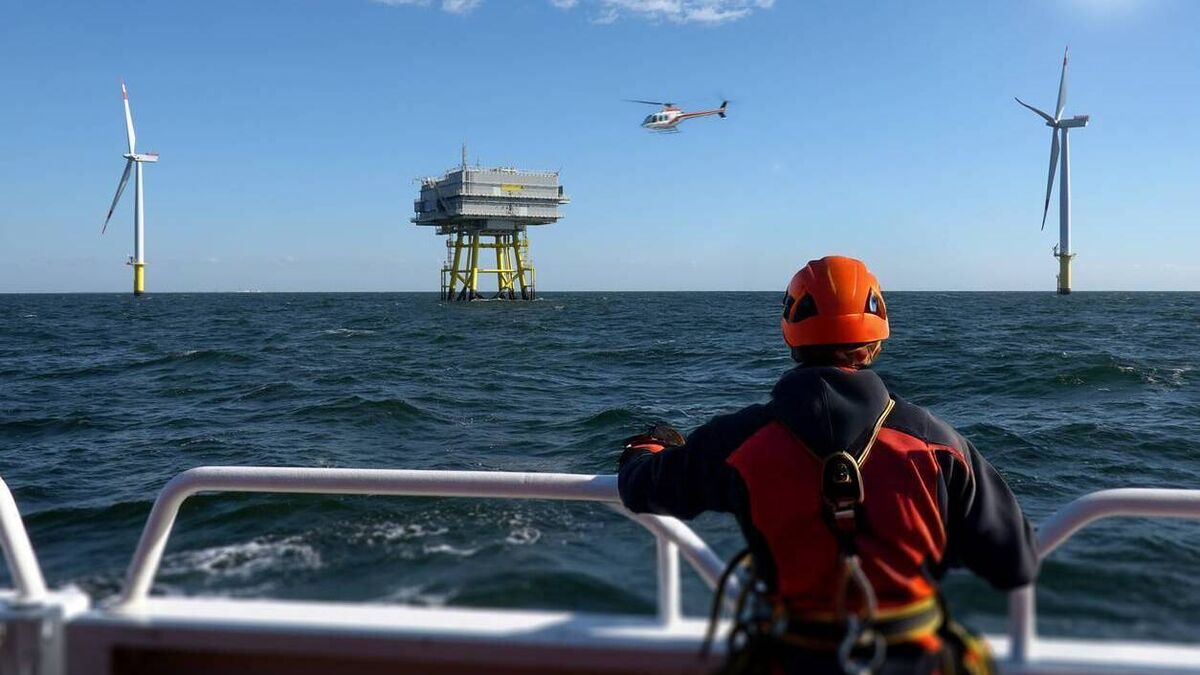
The Tonn Nua offshore wind energy project may be in its relative infancy but it is already generating steam and courting controversy.
What have the Eiffel Tower, the oil wells of Saudi Arabia, and Waterford Crystal got in common?
They have all been compared to Tonn Nua, the landmark offshore wind energy project planned for the south coast of Ireland. After a number of fallow decades, Ireland is finally ready to embrace offshore wind again, capitalising on one of our biggest natural resources, and the Waterford coast is set to be the first major beneficiary.
The project may be in its relative infancy but it is already generating steam and courting controversy. While many see this as a once in a lifetime opportunity for the region, given the economic and environmental potential, others are making their personal concerns known as public engagement begins in earnest. Even more say Ireland’s wind energy resource is one of the best in Europe, and now it’s time to exploit it as the reality of climate change begins to bite and the vulnerabilities of our energy supply are laid bare.
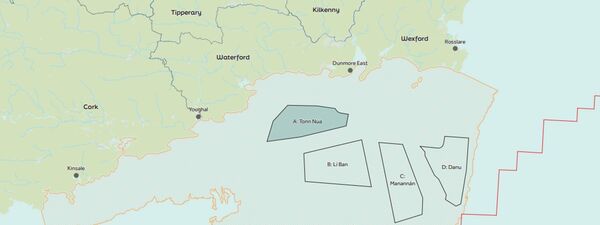
Tonn Nua is unique in that it is the first offshore wind project to be developed as part of the State's new plan-led offshore development model. In fact, Tonn Nua is just the first of four project sites identified in the south coast Designated Maritime Area Plan (DMAP). The auction for its development was subsequently won by the ESB, who will manage the project in a 50/50 partnership with Danish wind energy giant Ørsted.
The scale of the project is unprecedented - some 60 turbines will be built across a 306km site located off the Waterford coast, with two substations erected to bring the resulting energy to shore. The hope is that Tonn Nua will be operational by 2034, delivering 900MW of electricity - enough to power up to one million homes.
Waterford’s stunning coastline was the perfect place to spend the magical summer of 2026 and our seaside towns and villages reaped the rewards as the sun blazed.
But what was different this year is that many people began to connect the dots between “a good summer”, and the realities of climate change. Heatwaves, wildfires and hosepipe bans are set to become the new norm, climate scientists are warning.
The high temperatures only served to underscore the urgency of Ireland’s ambitious - but necessary - decarbonisation targets. The Climate Act commits the State to reducing greenhouse gas emissions by 51 per cent, and generating 80 per cent of its electricity from renewable sources such as solar and wind.
ESB’s Patricia Comiskey is the development director for the Tonn Nua offshore wind project. She tells the News & Star that Tonn Nua will help strengthen Ireland’s energy independence by generating large amounts of home-grown renewable electricity and reducing our reliance on imported fossil fuels.
“As Ireland continues to electrify transport, heating and industry, demand for clean electricity is expected to grow significantly over the coming decades. Offshore wind will play a critical role in meeting that demand while supporting economic growth and decarbonisation.”
Energy shocks have been a brutal reality of recent years. Ireland imports some 80 per cent of its energy requirements - far above the EU average of around 57 per cent. This makes us particularly vulnerable to energy crises caused by geopolitical instability such as the ongoing wars in Ukraine and Iran.
While the march to renewable energy is essential from a climate point of view, it is also critical for our future energy independence and resilience, says Noel Cunniffe, CEO of Wind Energy Ireland.
Proponents of the Tonn Nua project say this and others like it are our best shot at achieving clean, affordable energy. Ireland currently spends a staggering one million euro every hour importing fossil fuels, says Cunniffe. “The delivery of more onshore wind energy and offshore wind projects like Tonn Nua is critical to achieving energy independence and ending our dependency on imported fossil fuels.”
Other critics have suggested that tangible gains in renewable energy are effectively cancelled out as they are diverted to energy-guzzling data centres.
Friends of the Earth research published in 2024 suggested that households could face an additional €1.43 billion in electricity bills linked to data centre growth between 2025 and 2034. This aligns with recent data from the Central Statistics Office that data centres consumed 23% of our metered electricity in 2025 - this was just 5% in 2015.
The reality is that our energy requirements are drastically different to what they were 20, 10, or even five years ago. That’s according to Captain Phil Murphy, a former mariner who has been appointed as South East Technological University’s project manager for offshore wind.
“Turn off your phone for 24 hours and tell me you don’t need a data centre. We need to have mature conversations about the reality of the situation, the reality of our needs as a 21st century society.”
The potential economic benefits of Tonn Nua were starkly laid out in a report published earlier this year by the Ireland South East Offshore Wind Partnership. They found that the first 5GW of offshore wind energy could generate between €1.7 billion and €2.2 billion in additional gross value added (GVA) for the wider south region, representing a potential boost of over 11% to the south east economy.
In addition to the direct economic contribution, the report estimates that up to €500 million could flow into local communities through the Community Benefit Fund mechanism over the lifetime of the projects. This could be transformational for Waterford and the wider south east region.
Murphy is unequivocal. “The opportunity that this presents for this region is astronomical and the potential is astronomical.” His unique role was created as the university begins the prep work for what they see as a new era for education and skills in the region.
Building and maintaining the turbines and substations will create thousands of jobs, directly and indirectly. With the right vision, Murphy says, Waterford could establish itself as a “centre for excellence” in offshore wind.
“This is a whole new industry coming and there will be highly-paid, highly-skilled work available in the region. It will need everything from engineers to technicians, construction workers to electricians, to the local taxis and local chippers. That is the real benefit for the Waterford community,” he points out. SETU is already devising new third-level courses with a view to seeding the pipeline of workers needed as the project progresses.
The visibility of the turbines is one of the main talking points of any offshore wind project. Concerns have been raised about the visual impact of Tonn Nua, although some have suggested the structures could become a tourist draw in their own right. The site is located between 12km and 20km off the Copper Coast.
Blue Horizon has been one of the most vocal objectors. Led by Dr Mick O’Meara, they were contacted several times by the Waterford News & Star but did not make themselves available for interview. The environmental group’s main concern is that the turbines will be too close to shore; they are calling for them to be built at least 22km out to sea. They say the structures will disturb the Copper Coast’s “pristine coastal views” and could negatively impact visitor numbers. The group has also expressed its worries that Tonn Nua - and the other three sites identified in the DMAP - will “diminish” the coastline and its habitats.
Yet with no defined map yet of where they will be or details on how high they will rise, this is mostly based on speculation. Having been compared to the Eiffel Tower by the ESB - and referred to as “mountains” by Blue Horizon - those involved in the project are keen to impress that until extensive surveying is carried out, no one knows any of these details for sure.
Sinn Fein TD for Waterford Conor McGuinness was appointed chair of the Oireachtas Committee on Fisheries and Maritime Affairs when it was established last year. He has recently returned from a visit to Neart na Gaoithe, a 54-turbine offshore wind farm with the closest located 15.5km off the Fife coast. He admits that, despite it being a clear day, he could not see the turbines on the horizon.
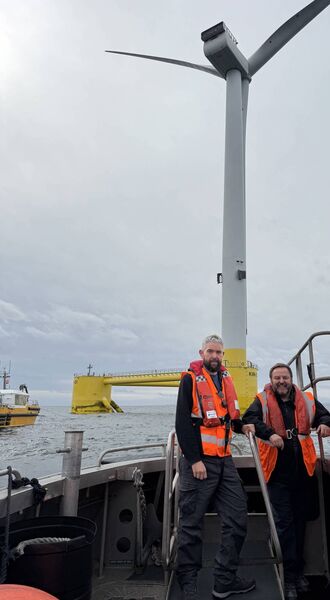
“My colleague, who obviously has better eyesight than me, could just about make them out,” he says. “It was a real eye-opener. I had my glasses with me and I squinted and strained, but no, I could not see them.”
Despite this realisation, McGuinness is keen to see the distance offshore being the “maximum possible” to mitigate against any visual impact.
“Think of the spectacular views we have of the Celtic Sea all along the coast of Waterford, from the shore estuary right down to the Blackwater Estuary, and the Copper Coast around Dungarvan Bay out to Helvick Head,” he says. “We have absolutely pristine coasts, we have beautiful views, cliffs and beaches, and it would be a shame to see anything diminishing that and diminishing the tourism potential that is still being discovered in Waterford.”
McGuinness also visited a floating offshore wind farm off the coast of Aberdeen while in Scotland, and he says this technology, albeit far more expensive to construct - could be the answer to some of those concerns.
The potential benefits of Tonn Nua have been communicated at length, as have the concerns of the people and sectors it will most impact directly. Yet those involved in the project feel the wider level of understanding remains low, with public education set to be a crucial aspect of the project’s early development phase.
“People are saying these are going to damage the environment. But in the big picture, what's the damage of burning diesel in your car? The naysayers are very loud, but it has to be legitimate debate and informed commentary,” Murphy says.
“We have this golden egg of an industry, literally, landing on our shores and people are pushing against it. And while some of those concerns are valid, or based on valid issues, we need to have mature conversations.”
Comiskey has hit the ground running, and is currently working on progressing surveys of the area - the first five-week geophysical survey is currently underway. She has also been engaging with all stakeholders and many public and private face-to-face meetings have been held as the ESB attempts to communicate the knowns and unknowns of the project and listen to the concerns of communities and businesses.
Success, she says, depends on building trusting relationships with local communities, fisheries, relevant authorities, and other stakeholders from an early stage. “Currently we are still collecting evidence and developing proposals, so meaningful engagement requires balancing openness with ensuring the information we share is accurate and robust.”
Eirgrid, which will be responsible for building the infrastructure necessary to bring power generated by offshore windfarms from Ireland’s south coast into the national grid, has recently launched its own 12-week public consultation.
McGuinness says one of his key takeaways from his Scotland trip was the level of engagement across the lifetime of the project by the Scottish government.
“The SNP government really pushed the fact that there had to be, not just consultation at the beginning of the planning process, but right through the planning process, right through development and after commissioning,” he notes. “And that will continue for the lifetime of the wind farm.”
One of the main sectors that the ESB is engaging with is the fishing industry. Skipper John Lynch is CEO of Irish South & East Fish Producers Organisation. He says the impact on fisheries will be “massive” and while he singled out the ESB for its meaningful engagement with the sector, he criticised the State for “bulldozing” the project through.
“There is an obligation to do an environmental impact assessment but we want them to do a proper impact assessment of what the impact would be on fish stocks on the environment and on fisheries.”
The “spatial squeeze”, he says, will displace large numbers of boats. Lynch also believes a significant portion of the community benefit fund should also be ringfenced for fisheries, given the huge disruption to the sector. “Every little pier up and down the coast, there are boats landing fish. Some people are up in arms over the visual impact and really that’s merely subjective. It's at the luxury end of the scale. The other end of the scale is people's jobs and people's livings.”
Offshore wind development is fraught with risk and uncertainty and the Tonn Nua project is no different. The project has myriad hurdles to overcome, from planning to infrastructure to investment. The cautionary tale of Sceirde Rock looms large in the minds of all involved - developers Corio withdrew from the development of the proposed 450mw wind farm off Connemara early last year. The failure of this project to get off the ground was described as a huge setback to the Government's offshore wind energy targets but also as “devastating” for the local community in terms of their loss. It is thought that deeper understanding of the engineering challenges involved and harsh weather conditions in the region led to the project being deemed unviable.
Comiskey reiterates that the process of developing the Tonn Nua project will be a marathon, not a sprint.
“Ireland has an exceptional offshore wind resource and unlocking that potential will require a supportive policy framework, timely consenting processes, appropriate infrastructure and continued investor confidence,” she says. “The key lesson is that all parts of the system need to work effectively if projects are to be delivered successfully.”
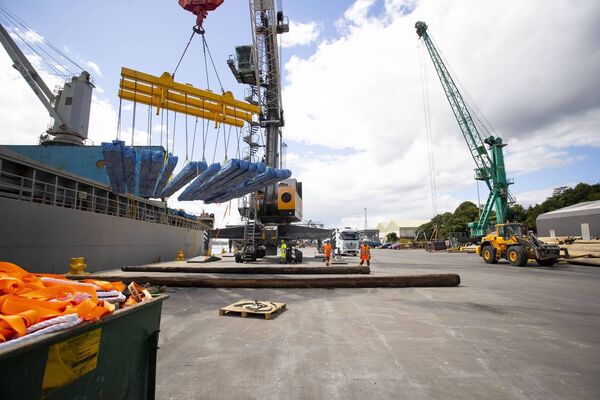
A critical part of the infrastructure for the project is the Port of Waterford, which will act as a strategic staging ground throughout the project's construction, allowing local businesses to become vital cogs in the complex supply chain required. The port recently lodged plans for a purpose-built Offshore Renewable Energy (ORE) terminal at Belview after receiving a Maritime Area Consent (MAC). The hope now is that adequate funding will follow - not only from the State, but also from the European Commission and other investors.
The pressure is on because Tonn Nua is the first offshore renewable energy project that is plan-led by the State, and not simply cherrypicked by private developers. Its success - or lack thereof - will prove a harbinger for all future projects.
“Tonn Nua has an important role in demonstrating how the new framework can support the delivery of large-scale offshore wind projects in Ireland,” Comiskey says. “Its successful delivery will help build confidence among investors, regulators, supply chain companies and local communities.” “Every effort must be made to strategically and actively support these projects at each step of the way until they are built,” Cunniffe adds.
Jody Power is a mariner, lecturer and former Mayor of Waterford. The former Green Party councillor likens the Tonn Nua development to the building of the Ardnacrusha hydroelectric power station back in the 1920s in terms of its momentousness.
Back then, it was about rural electrification. Now, he says, it’s about saving the planet.
“If we can get offshore wind going, you're not going to be worried when you're plugging your kettle, because you know the electricity you're using is not contributing to making the planet unlivable.”
Power says the scale of the opportunity presented by Tonn Nua and the remainder of the developments in DMAP will be a “game changer” economically and even psychologically for the county. Negativity and nimbyism, however, could mean that Waterford is left behind “yet again”.
“We could be the Saudi Arabia of energy. We cannot afford to be left behind on this.”