The critical role of Waterford Port in offshore wind on the south coast
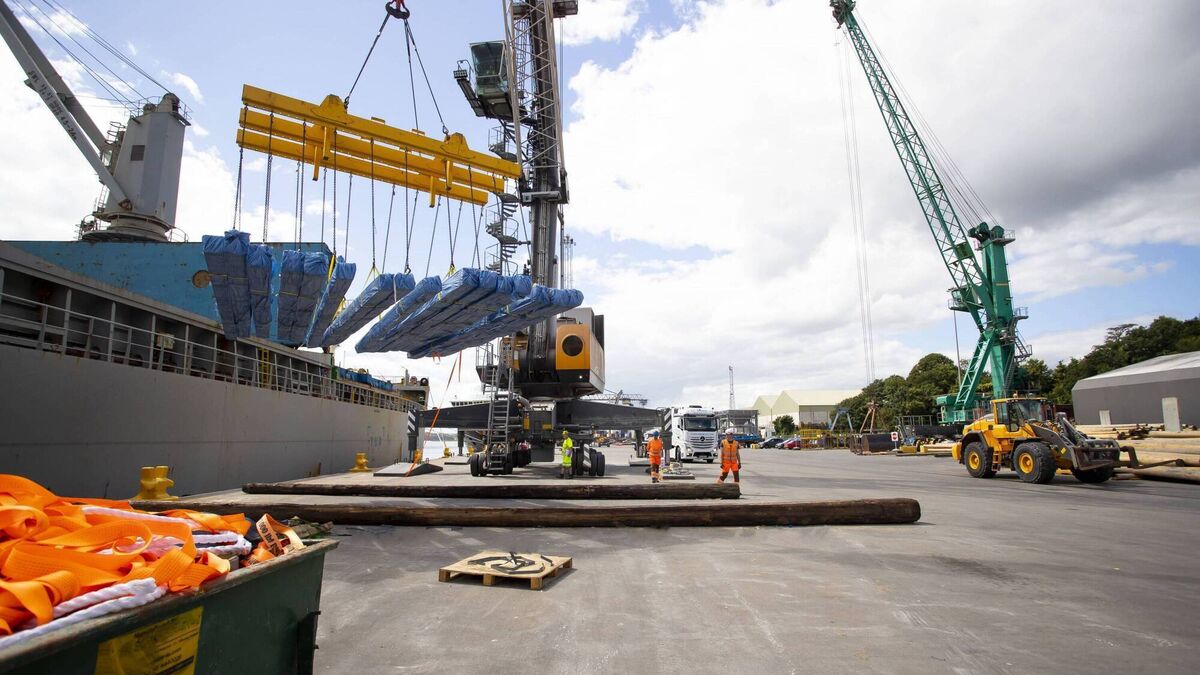
The Port of Waterford.
David Sinnott is Chief Executive Officer of the Port of Waterford. He is effusive when it comes to speaking about the opportunity that Tonn Nua and the other south coast offshore wind farms present for the south east and the historic port located in Belview.
The port, Sinnott notes, was here even before the city itself existed.
“The Port of Waterford is Ireland's oldest continuous running business, and it's been around for 1111 years,” he says. “The port came and then the city came, and it's Ireland's oldest city.
"For a thousand years, the port was the economic driver of the city.”
At one stage, the world's third largest shipbuilding yard was located in Waterford.
Over the last two centuries, the port, like many others, found itself fulfilling a different role as the global economy transformed and economic activity shifted to the hinterland. With the advent of offshore renewable energy, Sinnott believes, the port can once again position itself as a major economic driver for the city and wider region.
Ships arrive in the Port of Waterford from everywhere, Sinnott says; from the Far East to the Americas.
“But even for the short journeys, and even for a journey that's 12km away, as is what will happen with Tonn Nua, for example, every journey will have to start at a port. And what I think the big advantage of having the port here associated with offshore wind projects is it will enable local businesses to become involved in the supply chain for their construction.”
Rosslare and Cork ports will be doing the heavy lifting in terms of transporting the huge turbine components - the “white bits”, as Sinnott calls them.
“But we could be doing everything else. Think of the cables needed for 60 turbines, for example - there could be a cabling factory here. But it will only work if the cabling factory has a loading dock.”
Sinnott is painfully aware that this cannot become a story of lost opportunity.
“If the port isn't here, all that ‘value add’ opportunity will be done in Wales or England.”
A failure to create the port infrastructure required as the project progresses could see Waterford lose out.
“That’s the concern. We could easily lose it because we are so close to Wales.”
The Port of Waterford lodged a direct planning application with An Coimisiún Pleanála for its Offshore Renewable Energy (ORE) Capable Terminal in September 2025.
“That went in on the 5th of September last year and we've recently received an RFI, a request for further information,” Sinnott notes. “We're grinding through the details of that. We'll get it back to them in a couple of months but hopefully we'll get a favourable decision.”
With that hurdle cleared, however, another will loom - how to fund this extensive expansion. The application is for a 250-metre extension to the existing wharves at Belview, while the application also provides for extensive land reclamation, new quayside operator support facilities with workshops and warehouses, berthing pontoons, and two separate three-storey office and staff buildings for ORE operators. It also incorporates a replacement electricity substation, underground services, roof-mounted solar PV arrays to generate renewable power on site, and a dedicated biodiversity enhancement area of approximately 1.8 hectares.
Sinnott believes a significant proportion of the funding could be obtained from the Connecting Europe Facility, a European Commission funding mechanism for trans-Europe transport and energy links.
“But that will only cover about 30% of it,” he admits.
Public consultation on the draft revision of the National Ports Policy has just concluded. According to the Department of Transport, the new policy would implement the Programme for Government commitments to support investment in Ireland’s commercial and passenger port infrastructure, supporting offshore renewable energy development and “ensuring ports have the future capacity to meet the needs of our economy”.
“That does open the door to maybe a possibility of State funding,” Sinnott says, noting that an element of public-private partnership may be the answer to the remainder.
State investment is a crucial part of the puzzle, he asserts.
“I believe the project will add value over its lifetime over the lifetime of the asset, 50 years, whatever it is.”
Sinnott stresses the scale of the opportunity.
“This is not an artificial thing, like with a LEADER scheme [for rural development]. This is a real opportunity, it’s tangible, and it's a whole new area for us.”
Offshore wind energy, he says, will happen with or without buy-in from the people of Waterford.
“Globally, this is the way the world is going. We need more energy. We need it to be from renewable sources. And it can be cheaper. We're all giving out about the cost of electricity so the more we can generate here, the better.”
Sinnott believes Tonn Nua and future offshore wind farms off the south coast present “a levelling up opportunity” for Waterford and the south east region.
“Consider the brain drain, the number of people from the south east who go to Dublin to college and then meet boyfriends and girlfriends and they never come back,” he says. “There aren’t enough people earning €100,000 or more in this region. We want to pay more tax, actually. We would have more money for culture, art, sports, and people going out at night.”
The fear, however, is that this once in a lifetime opportunity could be lost to our near neighbours if the funding and support for the Port of Waterford doesn’t materialise.
“We just need a little bit of money to kick start this. And if we don't, it will be a French town or a Welsh town that will become what Waterford should be.”