The Waterford vineyard pioneering organic Irish wine
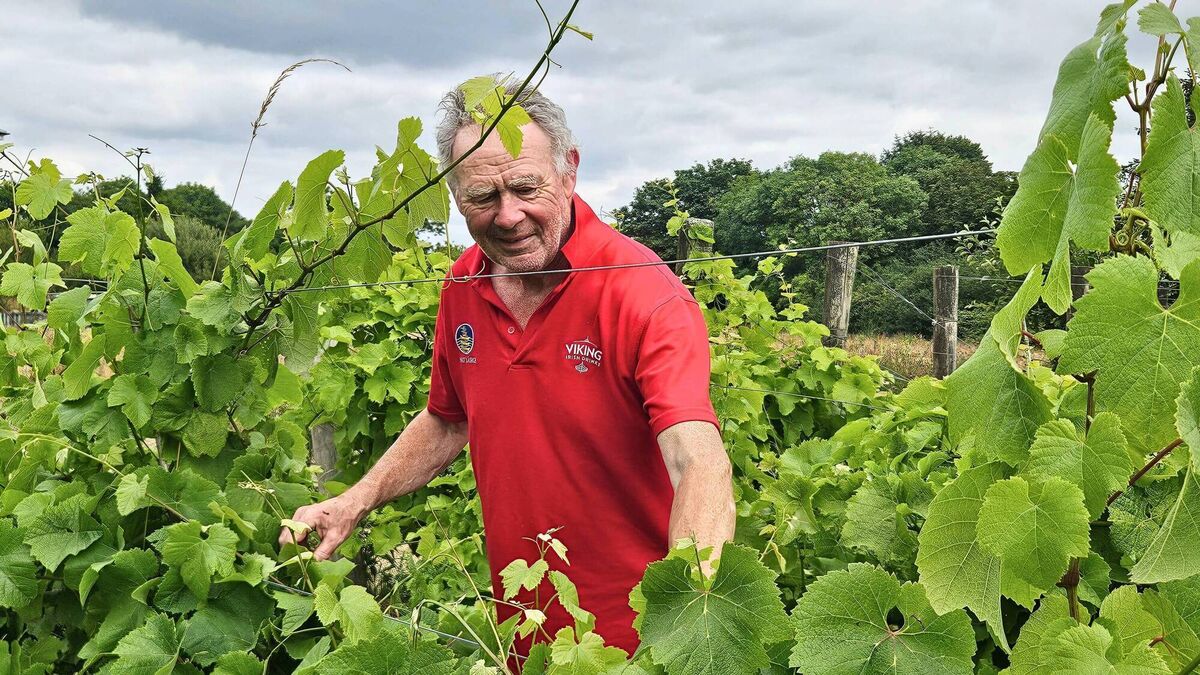
David Dennison at his organic vineyard in East Waterford.
Waterford may not be the first place that comes to mind when people think of wine, nor Ireland as a whole, but with Ireland’s only organic vineyard sitting pretty on the edge of Waterford City that may be about to change.
David Dennison, former sommelier and restaurant owner, started his organic East Waterford vineyard in 2009 with 30 vines and now has over 6,500 to pick, prune, press and bottle for the organic, low-intervention wines he produces in house.
“I was involved in the hospitality business all my life, and I had a restaurant as well, but I got to the stage where if I didn’t get out of it, it would kill me,” he said.
“And I mean that,” he continued, “it’s just so demanding. So I decided then to do this, as if it’s any better (stress-wise), but you’re out every day, you’re able to get rid of your stress with work.”
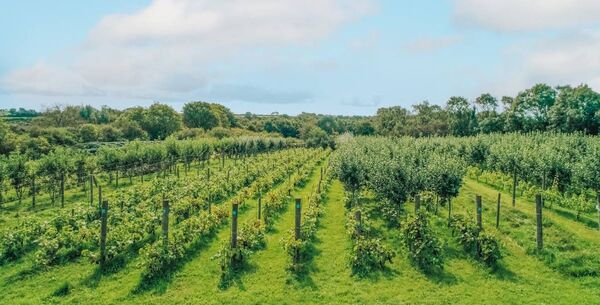
At his Waterford vineyard, Dennison is producing reds, whites and sparkling pét-nats, and has launched Ireland’s first vineyard tours, tastings and viticulture courses, alongside craft ciders and special batch liqueurs.
This reporter took a tour around the vineyard with David last week to hear more about the Irish wine-making trade and how it works in the Barony of Gaultier in East Waterford where his organic farm sits.
“We don’t have a culture of growing grapes in Ireland, you can grow plenty of grass and we can feed plenty of cattle, but we don’t know much about grapes and we’re still only learning.”
In the newest section of the vineyard, nicknamed Callie’s Corner after one of the two pups circling Dennison’s feet throughout the tour, the grapes were mid-harvest, with some plucked and others still dangling off their vines.
The grapes from the 1,000-odd vines planted there in 2022 were being used for wine for the very first time that week, Dennison explained, because he doesn’t think the fruit is at its best for the first four to five years.
“Other people think two years, we think they’re mad,” he said, explaining that from year one to three the vine’s root system is still being developed.
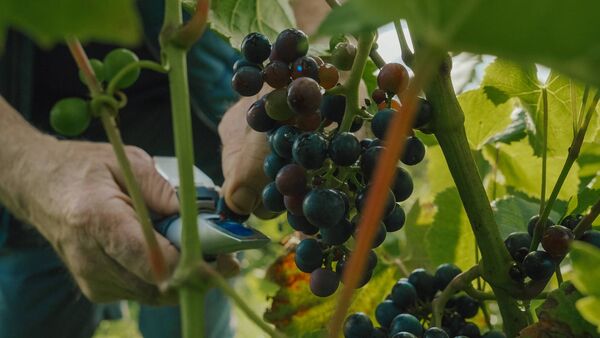
Dennison works only with hybrid vines at his vineyard, like the grapes he was harvesting during the tour; the Cabernet Cortis, the “pretty weird” result of a red grape and a white grape mixed together to make a dark red grape.
The decision to concentrate on hybrids was a no-brainer for the farm, as they work better with the Irish climate, which is vastly different from the usual vineyard climates, as well as helping Dennison to remain organic and avoid pesticides in the process.
All of the grape vines used on Dennison’s farm are from rootstock bought from an institution in Mannheim in Germany, he explained, where they house around 700 different varieties.
Using this rootstock helps him to control the growth, and to prevent pests and diseases like “the dreaded phylloxera”, a pest that nearly wiped out all the vineyards in Europe in the late 19th century.
“This year we did 2,500 vines and it pinned me to my collar,” Dennison said, explaining that with the dry weather over the summer they had to water the vines by hand, taking away about two weeks of other work and setting them behind their already busy schedule.
“No sooner was one job done, and the next job was nearly overdue.”
Much of the vineyard's earnings come from its eco-tourism appeal, through vineyard tours and tastings, Dennison explained, adding that of the five tours held so far this year all but one were sold out well in advance.
He also hosts private tours at the vineyard, with a recent group of Ballymaloe Cookery School students arriving in as part of their sustainability course, picking, milling and pressing apples for cider.
Viking Irish Drinks’ craft ciders are another successful venture of the farm’s, with three varieties made completely in-house at the East Waterford farm.
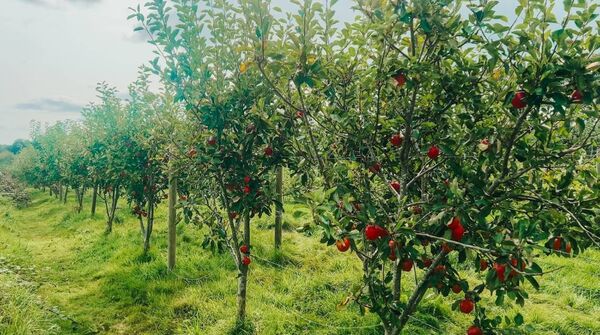
The more recent of Dennison’s orchards, planted in 2015 and 2016, struggled to match last year’s quantity over the summer, with a loss of about 30%.
“Last year you just would not see the leaves with the amount of apples on the trees, it’s totally different this year. The quality is good,” Dennison continued, “but the quantity is going to be small.”
This is part and parcel with farms of all sorts, as unpredictable weather, like we saw across the country this summer, can mess with crop growth and yield, leading to more windfalls for the orchard this year than past years, and smaller apples.
The craft ciders, a dry, medium and blush (flavoured with a blackcurrant wine also produced at the farm) are a big seller for the company, alongside their white wine, which has sold out for the year and won’t be restocked until the new year.
“It just goes; we never have enough of it,” he said, adding that their website sales are a major income for them.
Not a small feat for an organisation of “one and half full-time staff”, some part-timers and volunteers.
Dennison’s partnership with SETU often helps in this regard, by having culinary students come by the vineyard and apple orchard for big harvests.
As the only organic vineyard in Ireland, Dennison said, “We’re very much against pollution. We see a serious problem in Ireland, all 32 counties.”
The hardest part about running an organic farm, Dennison told this reporter, is the paperwork, especially as a small operation.
The amount of ‘quangos’ organic farmers are governed by can also be a challenge, he said, “We’re governed with so many quangos, it’s frightening.”
Between Waterford City and County Council's water testing, inspections from The Organic Trust, the HSE and The Department of Agriculture, Fish and the Marine (DAFM), paperwork and site visits take up a good deal of time for Dennison.
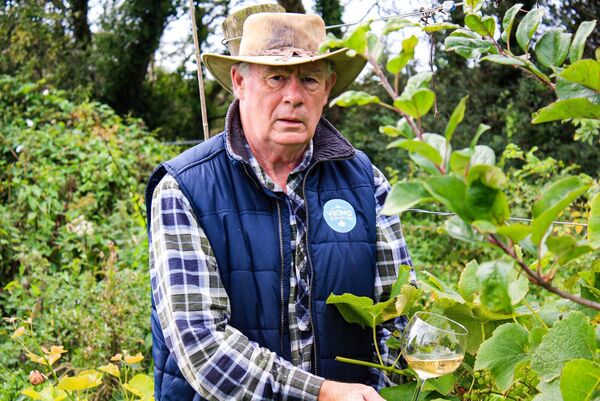
Being organic is still a no-brainer for Dennison though, who said, “We were passionate about being organic for the simple reason that we see the damage glyphosate, the weed killer, is doing.
“The only reason why it hasn’t been banned yet is because the big companies, the likes of Bayer, are so entrenched in the EU that it’ll never be banned with the money they’re pumping into it.”
“It’s a carcinogenic product,” he added, “It stays in the ground for 20 years. You spray glyphosate, any of the weed killers like Roundup or any of those; it’ll stay in the ground for 20 years, and it’ll stay in your plant for life.
“And they’d never tell you that.”
“That’s why we’re so passionate about it, and why should we do it? Now that we have hybrids, we don’t need to do it. So, anybody that’s growing hybrids and spraying, they’re just off.”
Another way Dennison works with nature is by doing things in line with biodynamic farming practices, a more holistic approach that uses natural preparations and treatments in line with seasonal rhythms to enhance crop health and soil fertility.
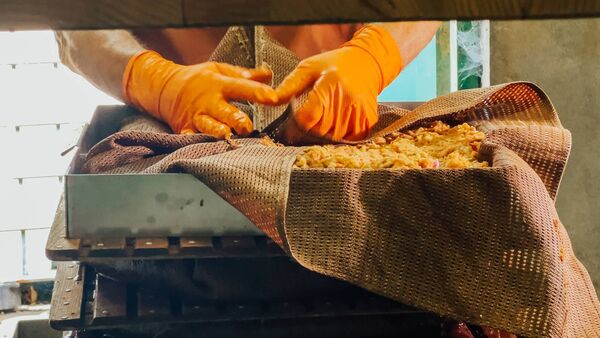
One treatment they practice is the 503 method, using a cow or deer horn filled with lactating manure, manure from lactating cattle just after they’ve given birth, and burying the horn about two metres deep, covering it and leaving it in the soil until springtime.
You then take the horn out, mix the manure with distilled water, leave it for about a week or so, strain it and use it as a mixture for spraying crops to prevent diseases.
Funding for organic producers, though, is “getting scarce” throughout Europe, Dennison said, making it hard to get funding for farm equipment and upgrades.
He recently applied for funding from DAFM looking for €30,000 for machinery pieces, and was lucky to be granted €800 in the end.
He is also the founder of the Irish Winemakers Association, which represents around 30 members.
“Our biggest problem is we don’t have enough producers. We have 47 growers, and we probably will get between 27 and 31 members, but out of that amount, we only have maybe four or five producers. So that’s our big problem.
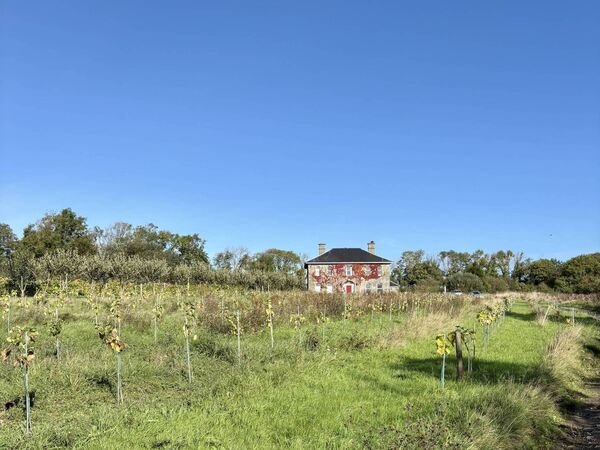
"Of the 31 members, Dennison estimates only three or four will become commercial, bringing it up to six potential producers, “which is not bad for a country that doesn’t have a history of viticulture.”
The vineyard is set to produce 2,500 bottles this year, a huge increase on their production numbers from the last few years, with production increasing year on year as the wines mature.
“As they mature, our production will go up about 150%, so we’re producing about 2,500/3,000 bottles max now and in five or six year's time we’re producing 20,000/30,000 bottles.”
Although, he added, for every 12 or so bottes produced, you lose one.
Irish wine has been growing in popularity over the last few years, and as Dennison sees it, the industry is only getting started.