The Story of Transportation from Waterford to Van Diemen's Land
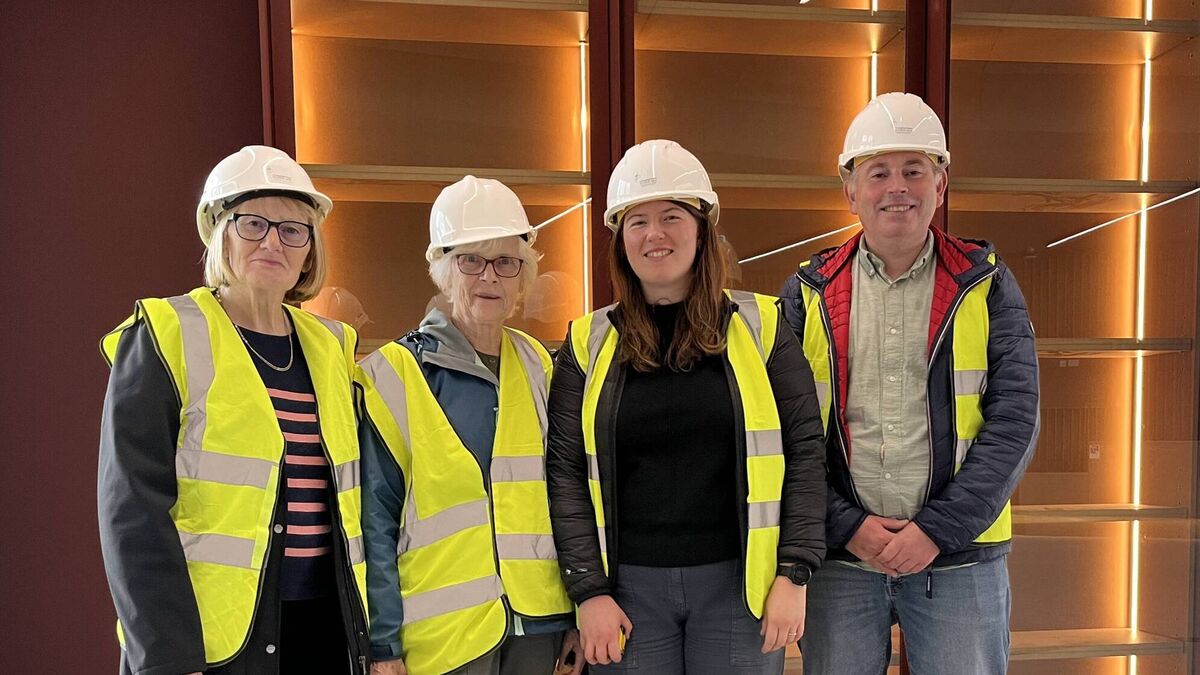
Ann Fitzgerald Secretary of Waterford’s Transported Convict Women: A Herstory Margaret Richards, curator of the group. Katherine Martin project manager Grangegorman Histories Dublin. Kieran Cronin Chairman of the group
Christmas is a season of stories, some joyful, some sorrowful, each a thread in the fabric of our shared historical past.
This year, we turn back to 1849, a year etched into Waterford’s history. Many will recall it as the year Thomas Francis Meagher was transported from Dublin to Van Diemen’s Land as a state prisoner. Fewer will know that in that same year, 10 young women from Waterford were also sentenced to transportation.
Their journey could not have been more different from Meagher’s. While he travelled with relative privilege, they endured the brutal conditions of a cold, damp, and crowded convict ship. Their names slipped from memory, yet their fate reminds us that alongside the patriots and leaders were countless others whose lives were uprooted, their voices seldom recorded. Today, through , their stories are being reclaimed.
Our group is honoured to be invited by Grangegorman Histories, Dublin, to contribute to a major exhibition marking the grand opening of the new Academic Hub at the university in early 2026. This state-of-the-art library, the first standalone building for Technological University Dublin, will consolidate library services from five sites across the city.
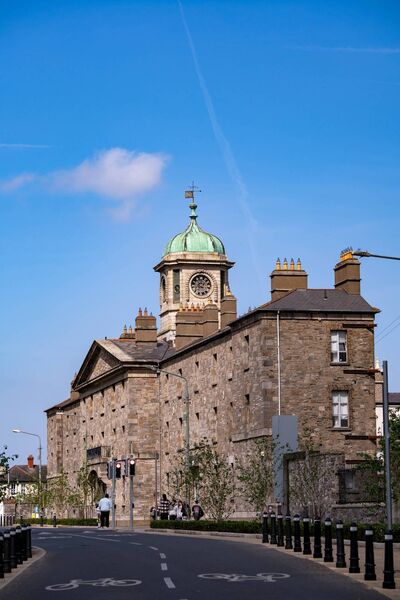
The exhibition explores the layered history of Grangegorman, including the Female Penitentiary, which opened in 1836 as the first all-female prison in the British Isles.
It was inspired by Quaker reformer Elizabeth Fry, the first woman to campaign for improved conditions for convict women and children. One of her most enduring contributions was the establishment of the penitentiary system itself, which introduced significant reforms, such as appointing female officers and providing training in sewing, laundry, and domestic service.
Research by group member Joan Johnson has revealed that Elizabeth Fry herself visited Waterford, hosted at Summerland, the residence of John Strangman and Dinah Wilson Newsom, grandparents of Dr. Mary Strangman. Joan and Roger Johnson still hold a small prayer book personally signed by Fry, a tangible link to that history.
For this exhibition, we will highlight many stories, especially those of the 10 Waterford women registered in Grangegorman before boarding the at Kingstown Port (now Dún Laoghaire) on June 26, 1849.
Here are the crimes for which these Waterford women were sentenced for transportation:
- Bridget Dooling – arson
- Bridget Scanlon – arson
- Mary Crowley – arson
- Mary Costello – stealing brass pins
- Mary Brien – stealing clothes
- Bridget Crotty – stealing three geese
- Judith Farrell – stealing three geese
- Alice Molloy – stealing boots and gown
- Nora Moore – stealing a cow
- Mary Murphy – stealing fowl
Our research shows that around 380 women from the city and county of Waterford were either natives of, or tried in Waterford. Among them, this group of 10 stands out. Convicted around the same time, they were received into Grangegorman before being shipped to Van Diemen’s Land. On arrival, they were either assigned as servants to settlers or confined in the notorious Female Factories, penal institutions that functioned as prison-like workhouses, where women endured punishing labour and harsh conditions.
The colony valued these women not only for their labour but also for their capacity to bear children, regarded as vital to the settlement’s growth.
Sentences ranged from seven years to life.
While most survived the gruelling three-month voyage, some died before ever setting foot on Australian soil. Those who lived became the unwitting founders of modern Australia. Today, it is estimated that nearly one in four Australians can trace their ancestry back to these resilient convict women.
In March of this year, the ‘Voices of Resilience: Remembering Waterford’s Transported Women’ event took place with involvement from our group and the Island of Ireland Peace Choir.
Dr Phil Brennan, founder and musical director of the Island of Ireland Peace Choir, said: “Now they have a story; now they have a name. Their existence is no longer a shameful footnote on the annals of history but rather a testimony to an uncrushable spirit that never died.
“These women were denied their most basic human rights; wrestled from their homes and families, forced onto transport ships for a four-month voyage to a foreign land they knew nothing about, conscripted to years of penal servitude that stripped them of their true worth, yet, somehow, they found the strength to withstand their torment and leave their own deep imprints on the sands of time.”
In 2017, during a commemoration at Grangegorman, participants wore cloth bonnets, a concept created by Dr Christina Henri, each symbolising a woman once imprisoned there. At the new TU Dublin exhibition, each bonnet will be displayed alongside the women’s stories, now researched and written, which can be read in full on the Royal Irish Academy website.
It is an opportunity to place the convict women of Waterford within the wider story of Grangegorman and transportation, to remember them not as statistics, but as young women whose lives were cut short or forever altered.
Katherine Martin, Project Manager, Grangegorman Histories, said: “The site of Grangegorman, and Waterford, are linked by the women of the 19th century who were convicted and sentenced to transportation to Australian penal colonies. Travelling from Waterford County gaol, prior to embarkation these women first came to Grangegorman female transportation depo to be trained in domestic skills before setting sail to Hobart, Tasmania.
“These resilient women and their rich legacy are important stories in the shared history of Ireland and Tasmania.
“Grangegorman Histories is delighted to partner with Waterford’s Transported Convict Women to share the stories of these women.”
The Grangegorman Female Penitentiary in Dublin opened in 1836 and was the only women’s prison of its kind in the British Isles, staffed entirely by female guards.
It became the main holding prison for women from across Ireland sentenced to transportation to Van Diemen’s Land (Tasmania), where most became servants. Before departure, prisoners were trained in skills such as needlework to prepare them to work in the colonies. Over 3,000 women and more than 500 children left Grangegorman for the long, often deadly voyage. The prison remained in operation until 1897.
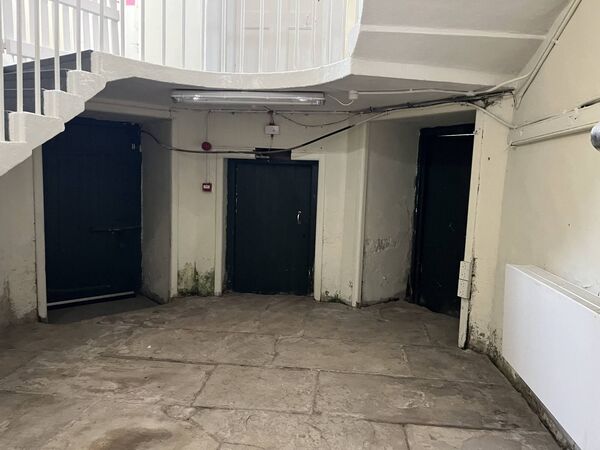
Each admission was meticulously recorded, convict number, age, crime, personal details, creating a rare archive that allows us today to glimpse the human lives behind the statistics. This Clock Tower Building holds a remarkable place in history. Over the course of its lifetime, it has served many roles; a prison, a fever hospital, and later a part of the Richmond Asylum. Crowning the structure is its four-sided clock, built in 1816 it is the oldest flatbed mechanical clock in Britain and Ireland, and still chimes on the hour to this day. Remarkably, it predates London’s Big Ben by 26 years, making it a rare and enduring landmark of Irish engineering and heritage.
Sean Egan, Master Engraver, with over 35 years service at Waterford Crystal, and more recently working from his own studio in the Viking Triangle in Waterford city, was commissioned to create a series of bespoke glass artworks for a exhibition that the group hosted in Reginald’s Tower in August 2024.
Each piece was individually hand-cut and engraved to symbolically capture the lives and stories of the women.
Using the traditional copper wheel technique, a craft requiring more than a decade to master, and one in which Sean was the sole practitioner in Ireland, he brought both artistry and meaning to every design.
Since 2023, group, as custodians of the ‘Roses from the Heart’ project here in Waterford, has had three aims: first to continue the pioneering and inspirational work of Dr Christina Henri, second, to honour, highlight, and document the remarkable stories of Waterford women transported to Australia, and by doing so, to welcome them back in spirit. Thirdly, and equally important, we aim to learn from history.
The story of forced transportation and the treatment of these women offers profound lessons about justice, dignity, and resilience. By acknowledging their struggles, we strive to shape a more compassionate and peaceful world – one where the past informs a better future.
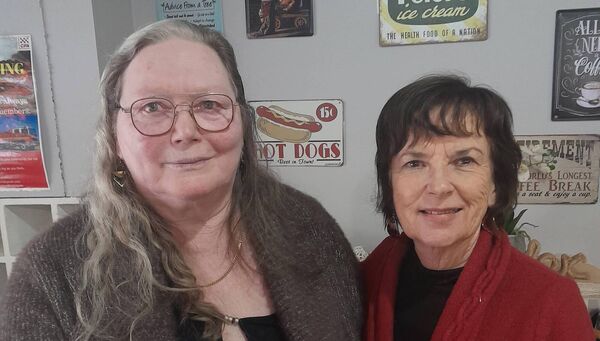
We are the great-great-granddaughters of Waterford convicts Bridget Dooling and Bridget Scanlon. How wonderful it was for us to meet recently, knowing our female ancestors shared such an incredible story from so long ago.
Meeting in Country Victoria, we discovered we had more than arsonist grannies in common. It quickly became apparent, like our Bridget’s, we were both feisty and resilient! We have both had lives persuading, raising points of order, often on behalf of others, in the interest of social justice. Our question, what influence did the experience of these brave women have?
Our Bridget’s thought and dreamed in Gaeilge, they did not read or write English. Sentenced to transportation for 15 years, Bridget Dooling, and Bridget Scanlan left ‘An Gorta Mór’ behind. Arson and the convict ship their means of survival. Illegally pregnant, malnourished, in the cold, stark Female Factory, both carried, and lost, their first child, nurtured under a rule of silence.
The trials and tribulations of both Bridget’s continued throughout their lives, each with their own individual stories of hardship and survival, each living into their late 60s – considering the hardships they faced, relatively long lives.
As female descendants of these two incredible Irish women, we find it almost impossible to comprehend the layers of pain and suffering they experienced. Having grown up with strong family ties and a deep love for our country, the thought of being banished to the other side of the world and losing contact, possibly forever, with our loved ones and homeland is inconceivable. How traumatic and heart-wrenching. We ponder, does our DNA carry traces of our ancestors’ pain and trauma? Is there a healing process involved as we uncover and share their stories? We think so!
Little Bridget Scanlon,
Dark hair and freckled face,
I have made you a bonnet - trimmed with just a wee bit of lace.
As I sewed your name upon it I thought of you with tears,
My Irish great great grandmother who suffered all those years.
When I read your convict record, I saw myself in you,
A feisty little rebel,
Who didn't like to be told what to do,
And "garrulous and quarrelsome" can be said about me too!
Bridget, I'm glad I have your genes,
For I am strong and brave,
I've had my share of women's pain and shed a lot of tears,
I have survived - just like you!
My Irish great great grandmother who suffered all those years.
By Shirley O'Shea
I wonder what they saw as they looked back over the stern of the Isabella or Sea Queen?
The ships conveying them eleven thousand miles away from home.
The convict girls, taken from Waterford city and county.
Offenders, mothers, mistresses, daughters,
Thievers and givers of food, cloaks and blankets,
Swapping petticoats and shawls for a life behind bars and a colony.
Culprits adjudged and condemned to Spike Island or Grangegorman,
Vagabond girls, subjected to earn their own living in felony,
Serving time till their freedom papers and tickets of leave.
Risk takers. Lawbreakers. No pardons or pleas.
The widow Mary stole a kerchief, and her child was taken from her.
A convict dressmaker traded in Van Dieman’s Island in Tasmania.
Hard labour or toil, nor her crude tongue could tame her,
The mischievous vixen escaped times over, as a deep poverty mania
Drove her forth in her anger and grief.
Better than the penalty of death but no less,
Not worth the mantilla, or the price she paid too steep.
In waters deep.
Like Mary, Ellen had an eye for the style and fancied a petticoat,
That cost her more than the penny she would have paid for it,
And a shawl to go with it, pretty slippers, ten more months, was made pay
With no conditional or absolute pardon.
The shoes she required for her night on the town,
and she did not drown on her journey from Kingstown or Queenstown,
to Hobart female penitentiary,
and a life of continued brutality.
This girl was one and twenty years, illiterate and abandoned,
stole a cloak and so exiled on the boat from Grangegorman,
Her convict trade to be made toil and scrub as a housemaid.
A freckled girl, with a gap in her smile, all the while,
Her 7 children did not survive or were orphaned.
7, the number unlucky for Margaret of Dungarvan.
Her Hemiplegic body paralysed by the loss and the grief.
37 the number of years in her life.
The Lismore girl stole three geese from Pat Walsh of Portlaw,
Made an outlaw of her and her friend Judith
Sent first to Grangegorman workhouse to await her passage,
Yet a quiet girl like Bridget understood the message
and good behaviour cut short her servitude, with her modest attitude,
and the flesh of the geese never made it to her belly
from Ballyduff to the rough seas,
going under to the hell of a retributive colony.
Of Lismore and a friend of Ms Crotty, the geese stealer
She sailed down to hard labour without favour from healing
herself from the dysentery on the boat of transportation,
Frequented disorderly houses and stations
Where she took up with a fellow, a drunken braggard boaster,
Her black tale of woe ends with her rape and her murder.
No absence permitted or sanctitude or saviour,
She couldn’t escape from his fervour and venture.
Ms Brien stole a hen at the height of the famine
To sustain starving children, 7 years transportation.
Transformed to a penal servant girl, dark haired and blue eyed
Her boy John Brien, age 4 by her side
was taken into the orphanage on arrival, the pain of survival.
Bereft Bridget heartbroken, caught drunk and absconding
One of 9000 women, repentant remanding.
The women of Waterford and Van Diemen’s landing.
What did they see when they glanced back over the stern?
They saw Ireland, to where they would never to return.