Willie Moore on a lifetime in Ballybeg
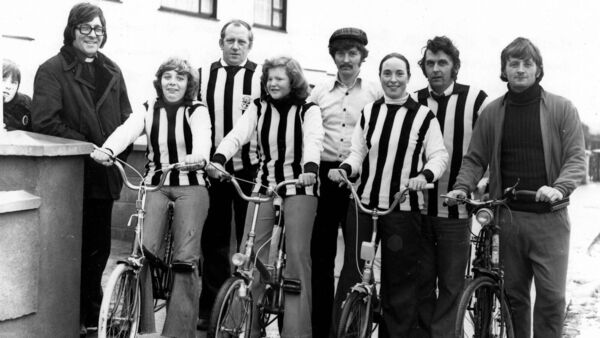
Members of St. Saviour's Parish, who cycled to Dublin and back during Easter 1978 to raise funds for the community, included were, Fr. Mullins, Christina Power, Maria O'Sullivan, Bill Donegan, Tony Murphy, Robert Murphy, Tony Power and Bobby Kennedy.
Willie Moore’s eyes danced as he proudly reflected on Ballybeg’s first half-century. The Bunclody native has witnessed some of the estate’s greatest days, and some of its darkest, facing each one with drive, determination and courage.
Any politician, Council staffer, Garda or inquisitive mind with a pen and tape recorder, who has sought to gain some understanding of the area since the late 1970s/early 80s, has spent time with Willie. And that time has always been well spent.
Be it coincidence, serendipity or something in between, our chat in the Brill Family Resource Centre marked the beginning of Willie’s final week as a community activist at the age of 71. The very campus surrounding us, which houses family support services, youth and adult education, employment programmes and the thriving Ballybeg Greens, might not be here without Willie and a host of like-minded local advocates.
Their voluntary spirit is, fittingly, priceless, and the value of both their respective and collective contributions to the lives of their neighbours would take several scrolls to adequately catalogue.
“I wasn’t quite here from day one, when the first residents moved into Lower Ballybeg in 1975; we moved here in late 1979/early 1980,” Willie, who lives in Clonard Park, recalled.
“By the time the other sections of the estate were built, there were 800 houses in total here – a massive estate by any measure. But when all that building work was completed, there was still no church or permanent school here; in fact, both Mass and the school began out here in portable buildings and the only shop we had was the Autoport on the Cork Road.
“You see, the recession kicked in and that definitely had a negative impact in terms of getting more facilities into the area earlier. Sure, the roads weren’t finished – and we could spend all night talking about Ballybeg Drive and what needs to be done to it now.
“But I can’t only talk about what we needed then and could do with now because the whole way through, there’s been some great stuff done out here by the Council; there’s always been great people in there. And the same applies to the guards, they’ve backed us all the way.”
Nonetheless, the campaign for amenities in the estate has been a regular feature of Ballybeg life and it was local women who set the ball rolling on that front.
“The women out here at that time were stronger than the men,” said Willie. “And they were the ones who beat the drum about the need for a community centre, particularly geared at youngsters, so that they’d have somewhere to go in the evenings. So to raise awareness, they pushed a bed to Dublin, which was an incredible thing to do. The likes of Nora Kennedy, the Lord have mercy on her, and Liz Rockett, the days and nights they put in to make things better here. And what began on this site is what really kicked things off in terms of community development in Ballybeg.”
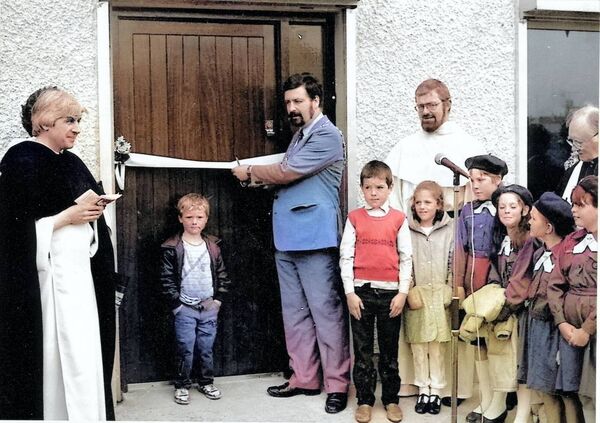
He continued: “We wanted to find some way of occupying the kids during the summer so Michael and Bella Jacob in Ballybeg Park decided we should run a children’s outing – and we collected 50 pence a week from the different sections of the estate to cover the cost – some families didn’t have it at the time, that’s how tough things were.
“So over a period of weeks each summer, there’d be three buses outside what was then the new church and off we went to a whole heap of different places – Clara Lara in Wicklow, Dublin Zoo, Courtown in Wexford and so on. When we’d go to the beach, Billy ‘The Bull’ Flynn used to bring the kids into the sea to teach them how to swim, and he was brilliant at it. Those outings kept going for a long time and it gave kids trips that they’d never have had otherwise.”
Chairman of St Saviours AFC for the past 30 years, Willie attributes his long service to the club to a conversation had with Bobby ‘Nobby’ Kennedy, another popular local character.
“Nobby asked me if my son, Keith, who was 11 at the time, wanted to play for the club and I told him that he was gone off hunting. What was the next thing out of Nobby’s mouth? ‘C’mere, would you be interested in giving a hand with one of the teams, would you?’ Sure I said yes and I’ve been stuck in it ever since!
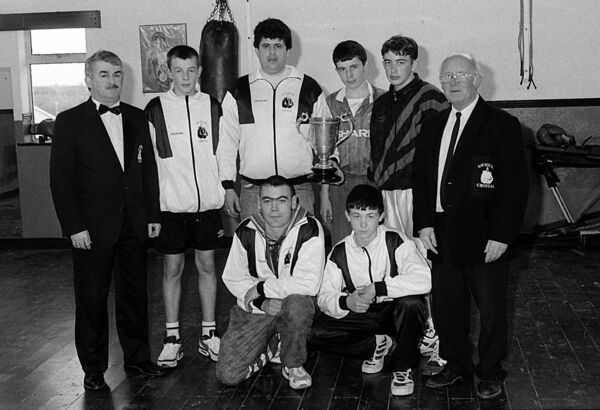
“But we’re very lucky here, to have had so many people who have stayed the course with GAA, soccer and boxing out here over the years.
“A bit of common sense had to be applied when it came to kids wanting to play the same way it did when it came to the summer outings. We knew some parents hadn’t a penny to spare but we never turned any child away on account of that. Those were the kids who needed the club the most and neighbours chipped in without ever drawing notice about the way they were helping. And that solidarity helped all our clubs to bed into the community and it also helped people moving into Ballybeg to quickly become part of the place.
“For example, people talk about refugees; well, in Clonard Park alone, we had four to five Vietnamese families who were here when the very first houses were allocated; some of them are still here and they’ve always been great neighbours – and we got some great soccer players from those houses. We had integration here before most of us had even heard of the word!”
Since 1975, the people of Ballybeg have had to face down several days and nights of upheaval due to activities carried out by a minority of people who never have and never will speak for the area. Willie’s attention turned to 1997, which remains one of the more unsettling times in Ballybeg’s history.
“I was coming down to work here in the Community Centre one Tuesday morning, and Josie English, the Lord of Mercy on him, who was a good friend, he was walking down the other side of the road and he shouted over to me: ‘have a look at that’. There was a squad car there which I didn’t think too much of as it wasn’t too unusual to see a squad car there at that hour of the morning. ‘Have a look again,’ Josie said to me, so I did and there was a bungalow burned to the ground. That was a real tipping point for me so I went to see Colette Byrne, who was the City Council’s Housing Officer at the time and I explained the fear that many families were living in at the time – and she was incredibly helpful. I never forgot that. We knew that something had to be done within the community, so in October of that year, we’d formed the Ballybeg Action Group.
“Mary O’Halloran, who was a councillor at the time, she came out to see for herself what was going on and asked what she could do to help us. We’ve always been lucky when it’s come to strong women, willing to go that extra mile for us – and I can’t forget Una Ryan in all of this. Another brilliant woman.”
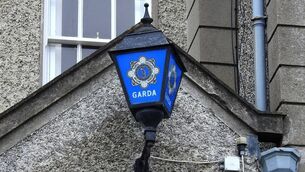
At a time when then Garda Chief Superintendent Sean O’Halloran acknowledged that a lack of resources was an issue in the city, Ballybeg’s reputation began to increasingly suffer.
“Our kids couldn’t give Ballybeg as an address if they were looking for a reference; they’d have to use their grandparents’ address in the hope of getting a fair hearing at an interview and so on, which was just wrong. They were getting called names. They were being discriminated. But as a group, we stood together right from the start and up until my wife Biddy (who died in April 2023) became unwell, I was on that group’s committee and it was a fantastic organisation to be part of.
“We held firm through tough times, and while we lost two brilliant key workers from community development due to cutbacks – Liz Riches and Sarah Jane Duggan (in and around 2011) – we kept our centre open.”
The spirit of Ballybeg’s community guardians, including Willie, helped to turn the tide. “It had to be something unique as action groups go, but in our first six to seven years we recommended a host of people for housing to the Council, and the Council took what we said fully on board.
“Throughout all of that time, the Council never had to deal with a complaint about anyone we had recommended to them. The Council showed us great respect, and we gave it back to the Council in spades. That trust was crucial during the tough times.
“As a group, we had seen where Ballybeg could have gone to without that trust and without that co-operation. We travelled to Moyross in Limerick and to other estates in Dublin and Cork – and we’d Gardaí and Health Board officials with us on those trips – and those were eye-opening days for all of us.”
Willie continued: “Things were very fraught here at the time; there was talk that only vigilantes could sort this out. But I knew that wouldn’t cut it. The people causing the trouble were our own people; lads that were only 15, 16 years of age. They had nothing – not that that excuses what they did in any way – but they had nowhere to go either. So I went to most of them myself, sat with them and talked to them. I spoke plainly to each of them; I told them what they were doing was pointing fingers of suspicion at their mothers and fathers, so much so that some of them felt they couldn’t go to Mass."
“One by one, each one of those lads came back to me and told me they’d smarten up, that they’d go with me. About three or four years later, I was on my way to the soccer club and there were 10 young fellas out, acting like young fellas often do, throwing stones at a lamp post. One of them saw me coming, turned around to his mates and said: ‘Stop throwing stones, here’s Willie Moore.’ That mightn’t have meant much to someone else, but it meant a lot to me. That was a show of respect.
“And look, I know we had bother again in 2014, and that was obviously a very tough time for many families and for those running our local clubs. But in the space of seven months, thanks to the Brick by Brick fundraiser we ran in response to that trouble and the amazing support we got from both within and outside the community, the GAA Club had a fantastic new clubhouse. It wasn’t the first time we turned a terrible negative into an incredible positive. That’s what community spirit makes possible. Sure you could only be proud of that kind of reaction.”
Directly opposite where we met for our interview, the Clachán apartment development on the site of Ryan’s Bar is thankfully taking shape.
The mature trees on Ballybeg Drive are standing proudly tall and there’s a palpable air of calm as Willie and I crossed the road, just a short stroll from Waterford’s Fire Station, the local playground and Tesco.
Before we went our separate ways, I asked Willie what services he’d like to see take root in Ballybeg. He didn’t hesitate when replying.
“Well, there’s two that spring to mind straight away. If I live to see a doctor opening a surgery here, that’d be a great day. And it’d be brilliant to have a Credit Union here. That’d be such a positive development for our community. Oh, and one other thing: it’d be great to have someone from our area representing us in the Council chamber; that would be brilliant…I’ve three ‘Bs’ in my life and they’ve all blessed me: Biddy, the Lord of Mercy on her, the place I came from, Bunclody and, of course, Ballybeg. I just love the estate.” Following a customarily friendly farewell with Willie, a decorative slogan emblazoned upon a nearby gable end caught the eye on the drive home. ‘Better Days’, it declares. Sounds about right.