View from the Green Room: Irish Chamber Orchestra stand and deliver dazzling Mozart concert
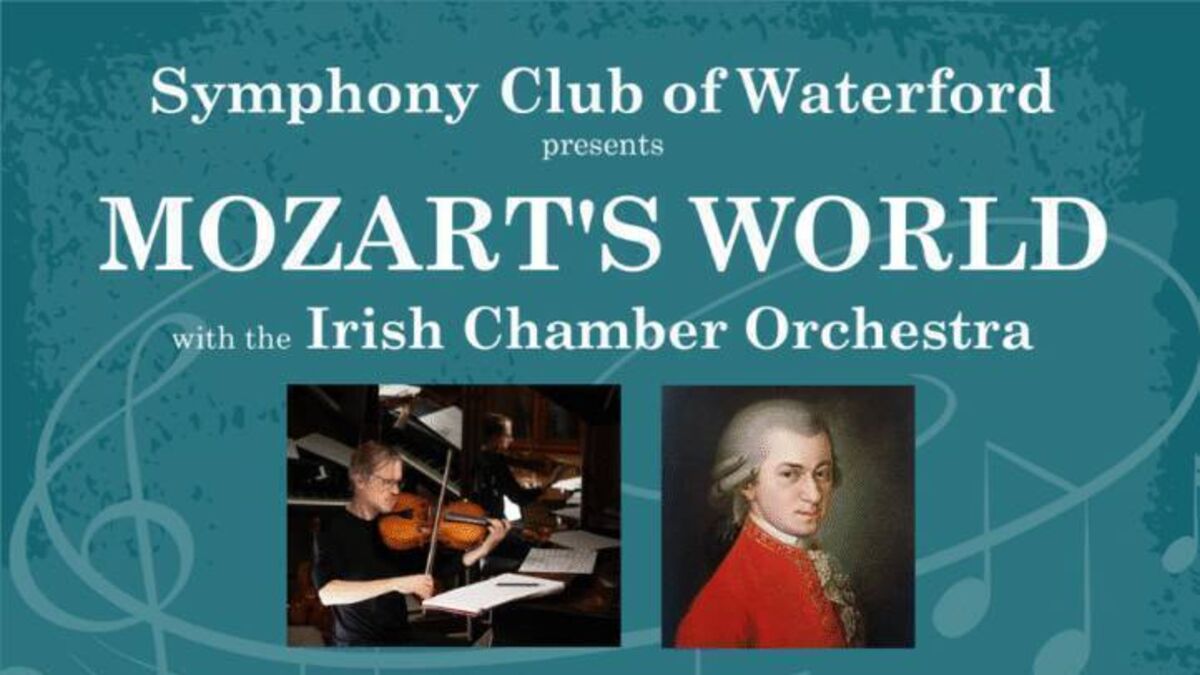
Symphony Club of Waterford presented Mozart's World at the Cathedral of the Most Holy Trinity.
The Symphony Club of Waterford brings the world of young Mozart to the Cathedral of the Most Holy Trinity within in Barronstrand Street to this bright, late spring, Saturday night courtesy of the excellent Irish Chamber Orchestra.
I love this orchestra. Everything is on the table because they play with a passion that is infectious.
They’ve got a new Musical Director on board this year. Henning Kraggerud directs with his violin – dated 12 years before Mozart was born – from the front of the orchestra and expects his tightly-knit ensemble to stand, feel and express the force of the music with their facial expressions and body language. The whole experience is one of energy and passion that reaches out and involves the audience.
It’s hard to imagine that a man who died at the age of 35 could have a ‘young period’ but so it is. Mozart (1756-91) composed his first symphony when he was only eight years of age and tonight’s Symphony No. 29 in 1774 at the ripe old age of 18. He had just returned from Vienna where, having heard Haydn’s work, he moved from the polished ‘entertainment’ of his early compositions to works of more substance, such as tonight’s Symphony No. 29.
The first movement opens with a musical hook with a trademark eight-note drop that is subsequently worked and re-worked around the orchestra. A tender cantabile in the Andante follows before the mood changes with a vigorous minuet that’s marked by an insistent rhythm and strong bursts of passion as the drama works its way to the finale. The finale is filled with energy and fun – complete with decorative trills and grace notes and, would you believe, hunting calls!
The Violin Sonata No. 21 is written, appropriately, in a minor key as it was composed shortly after the death of his mother, Anna Maria Mozart, in 1778. The mood of the work certainly reflects the mixture of present grief and cherished warmth of their past relationship. There’s deep feeling here in the bitter-sweet melody that’s shared between Henning Kraggerud’s moving violin work and the adorable accompaniment on David Gerrard’s harpsichord.
The concert closes out with Mozart’s Violin Concerto No. 5 – better known as the Turkish Symphony. Turkish culture enjoyed a considerable fashion in eighteenth-century Europe with Turkish coffee, Turkish subjects in dramas and paintings, popular stories about Turkey in many operas, and many rulers creating janissary, or elite corps, for their armies. Those janissary bands included not only loud wind instruments like fifes and extra loud flutes but also exotic percussion instruments like cymbals, triangles, and various drums that many European composers began to use for special effects. It’s an exciting piece with duel-like conversations between solo violin and orchestra that’s reflected in the body language of all the players.
There’s a very moving melody in the slow movement and a minuet that catches fire in show off phrases for violin.
Mozart throws the proverbial kitchen sink at the final Rondeau with flourishes from all the orchestra’s voices before the violin brings order with a reminder of that earlier minuet.
Tonight’s curtain call is the orchestral curtain call to die for as the players sashayed down the aisles with a repeat of the final Rondeau.
You could say that tonight we had two standing ovations. Well done Irish Chamber Orchestra!