At The Movies with James Phelan: A film illuminated by the humanity of Catherine Corless
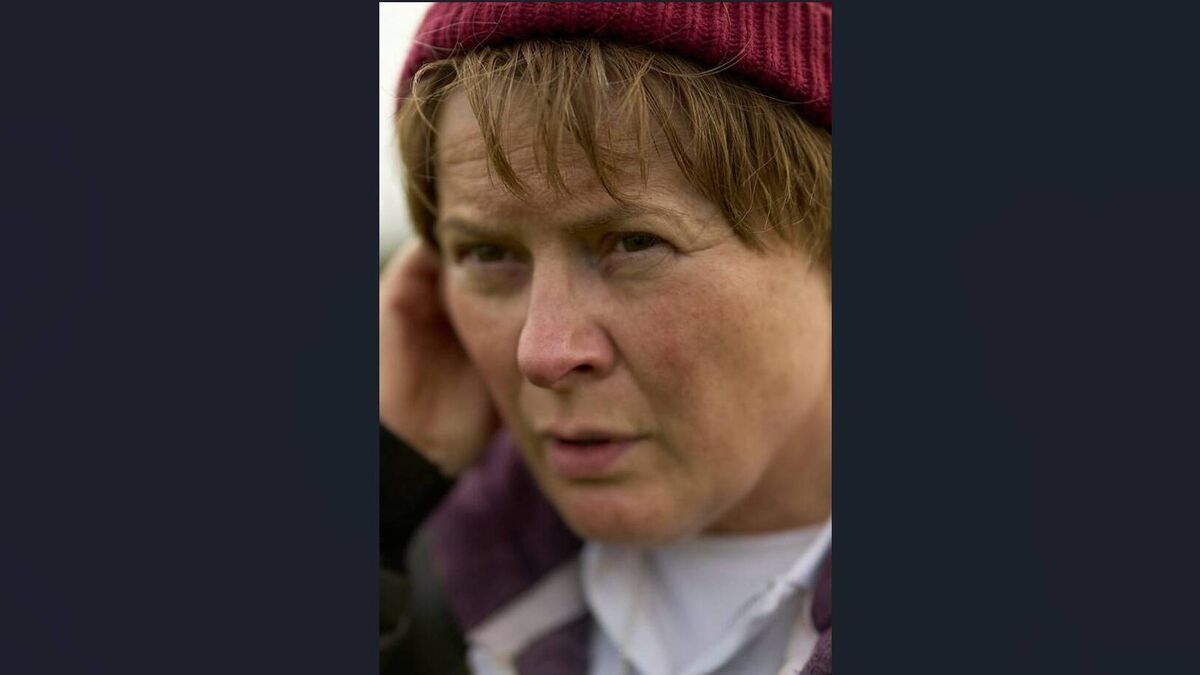
Monica Dolan as Catherine Corless in 'The Lost Children of Tuam'.
Truth be told, I usually prefer film as utter escapism. Yet here is a film filled with truth where we cannot escape the facts. As Irish people, we can’t look away now, while having to acknowledge that we did for decades when it came to Mother and Baby homes.
Years before she came to national prominence, Catherine Corless needed a history subject to investigate for a night class in Galway. The Tuam native chose to delve into the former institution for unmarried mothers and their children that once dominated the town.
Her diligent probing quickly exposes records of an astonishing infant mortality rate at the home. And conversely, she discovers a complete lack of records of any subsequent burial of these forgotten children.
As expertly depicted in an earthy unfussy performance by Monica Dolan, Catherine is an unintentional crusader and campaigner who nearly longs to disprove her own terrible theory of the fate of these deceased and disappeared children.
However, after interviewing two local witnesses about some teen hijinks that accidentally unearthed some bones on the convent’s former grounds, the true scale of the cover-up snaps into haunting focus.
Viewed from the outside, this might sound like a tough night at the cinema and while it has moments that hit in the guts and tear ducts, this film is illuminated by the central glowing humanity of Catherine. Her quiet persistent crusade is observed with a naturalistic, near documentary style that draws us in rather than detaches us.
It’s to director Frank Berry’s immense credit that he pulls us into and through the story with a subtle propulsion. Surprisingly many scenes are very short. Some utterly silent. Others only have a couple of lines of dialogue. And then he moves on. Relentlessly. Like Catherine.
Going on about the length of a worthy project like this may weirdly seem like a waste of time but Berry and his collaborators really have achieved miraculous use of just 84 minutes. (In fact, other running times suggest it clocks in at only 77 minutes.) Either way, the discipline and lack of ego on display is inspiring.
Here is a filmmaker that doesn’t equate or confuse length with importance. To be blunt, Irish audiences couldn’t complain if an exploration into the facts of Tuam ran to three hours or so.
Yet the creative team behind this film is not interested in pushing shocking details in our faces. They are interested in stirring our souls and sparking something in our collective conscience.
The pace is brisk but never rushed. I can’t tell from this distance if the succinctness was found on the script page or in the editing suite but the unrelenting urgency is cleverly directly at odds with the glacial response of officialdom to Catherine’s expose.
In keeping with this stealthily compelling velocity throughout, Catherine and her husband’s eventual sit-down with the nuns’ order is over in a petulant flash.
Dolan is marvellous in the main role with sterling support from Andrew Bennett as a life partner who knows their lives will be changed inexorably the deeper his wife digs.
Yet in the end, the film keeps returning to the voiceless and brutally discarded victims who were denied basic dignity in their brief lives and denied even more after their unnecessary deaths.
This film is vital viewing. It should be watched, studied and even celebrated in a contemplative manner. Awards will surely follow for an unforgettable film that wants us to never forget what and who was lost.