At The Movies: Verity plays with audience's sense of belief
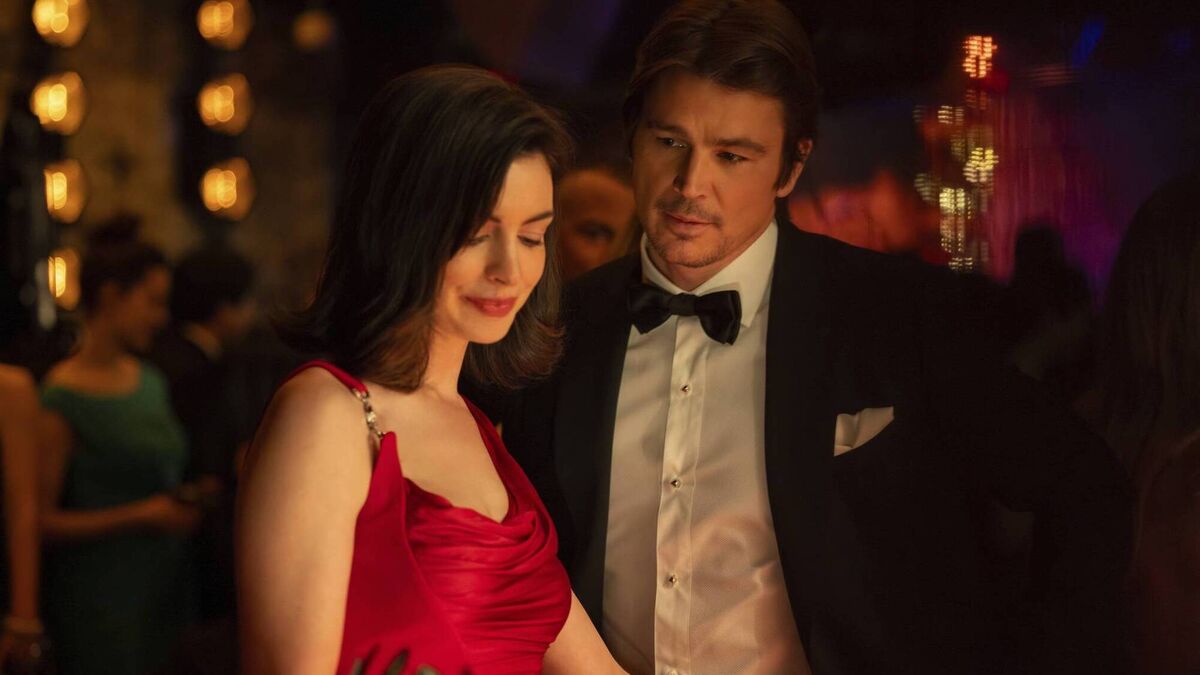
Anne Hathaway and Josh Hartnett in 'Verity'.
If I have a favourite way for a film to start, it’s probably the summoning of a usually poor, somewhat desperate main character to an affluent house to be hired on some seemingly innocuous assignment. It’s the stock in trade of thrillers especially. Everything from ‘The Girl with the Dragon Tattoo’ to the recent ‘The Housemaid’ has some variation on this scene.
‘Verity’ shakes the formula up a little as we first meet struggling novelist Lowen Ashleigh (Dakota Johnson) invited to a mysterious meeting at her publishing house. On her way there, Lowen is literally broadsided by a random road accident. It’s the best scene in the film and it arrives early, raising hopes that the audience is in for a twisty treat capable of continually shocking and surprising us.
Understandably shaken, Lowen can barely concentrate in the subsequent secret conclave where she is offered to ghostwrite novels for a best-selling author Verity Crawford (Anne Hathaway).
Verity is a publishing giant who has been in a paralysing car crash that has been kept under wraps. She is only partially through a lucrative series of books and the publishers and Verity’s husband Jeremy (Josh Hartnett) believe that Lowen can mimic the voice and style of the more famous writer on the page. With the public none the wiser.
It’s a clever starting point mirroring real-life concerns and genuine dilemmas within the publishing world. Sometimes not even death can derail a literary juggernaut if the gravy train can be kept on track. Soon Lowen is whisked off to Verity’s palatial and remote Vermont estate where the incapacitated author has left copious notes for the rest of her saga.
Sworn to secrecy, Lowen witnesses Verity’s seemingly catatonic state firsthand. The celebrated author is cared for by a skeleton crew of staff and a doting Jeremy. It’s an unnerving set up and Lowen is disturbed further when she finds a confessional transcript of Verity’s innermost thoughts that pierce the veneer of a perfect life and marriage.
This film is based on a Colleen Hoover novel and I can only guess at how tricky an adaptation this was. Films about characters mostly writing and reading are inherently tricky. Director Michael Showalter works overtime at trying to visualise the competing accounts of slippery fact and lightly fictionalised fact but is only partially successful. In these condensed, narrowly focused films, every single element needs to sing. In this, there’s a nurse who could have been a source of suspicion or complication but no one takes the time to fold her into the inaction.
What this genre piece does well is allow the audience vicarious access to how the elite rich allegedly live. So, there is ample architectural envy and fashion envy in watching these affluent characters luxuriate in a fancy home while looking fetching in designer duds. Granted, they are stressed and intermittently in danger, but don’t they look smashing?
Elsewhere the film gives little sense of an outside world wondering why a highly visible author (who is famous enough to partake in a globally known hot wings challenge) has suddenly turned reclusive. But then this is a film that doesn’t want certain questions asked or even considered.
I’m going to issue a rare spoiler alert here for something that is eminently guessable. So, let’s get it out in the open – Verity is faking her condition. Yet the film is illogical from her perspective. What exactly is Verity waiting for in making her escape? There is ample opportunity. The delay in implementing her masterplan makes no sense from her side.
Equally the film hinges on Lowen’s slow reading of Verity’s confession. So, if Lowen knuckled down and just read it in one sitting, the whole film would play out far too fast for filmmakers who desire to drag this out.
‘Verity’ wants to play with an audience which is fair enough but they should play fair. By the time yet another hidden written testimony shows up, I think the audience are mentally on their way home.
Indicative of the problems here is the recurring imagery of teeth and bitten lips littered across the film. In surer hands, this oral fixation would mean something. Here it’s so meaningless that in the back of my brain, I belatedly started to consider if this film was populated with vampires. Now that would have been a twist!