Mouth-watering descriptions of food pair badly with boring characters
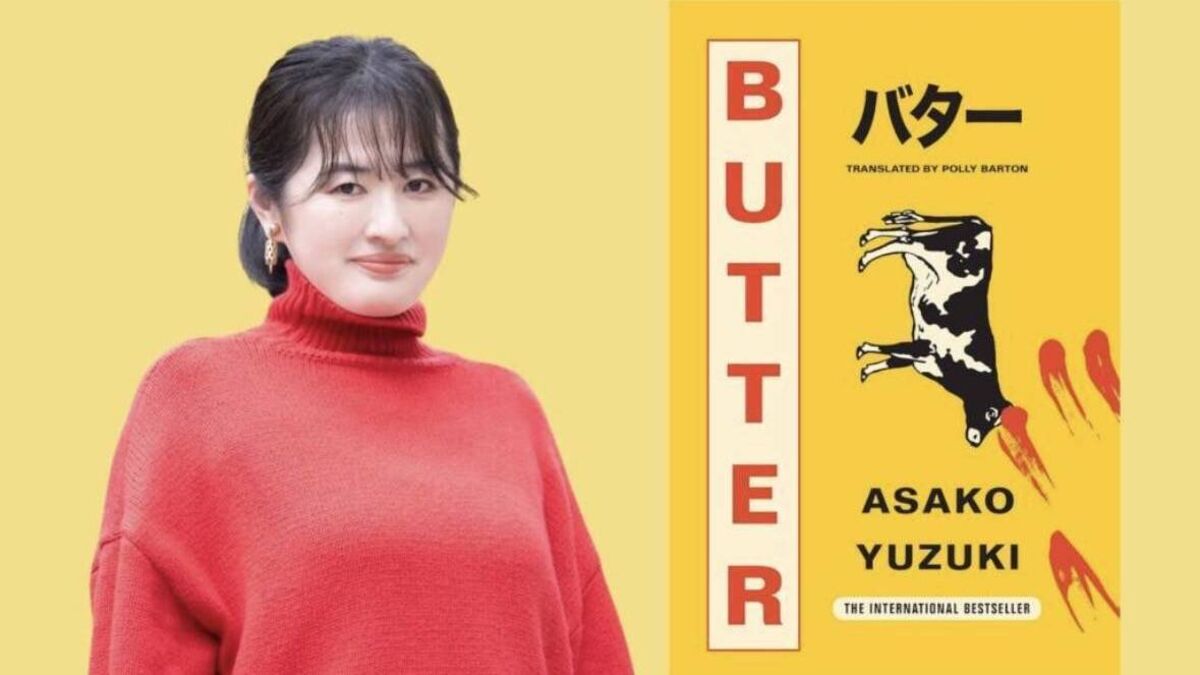
Butter by Asako Yuzuki
When I finished Butter, I really wanted to have loved it. It was the perfect book, given to me for Christmas. The story follows Rika, a young, single workaholic journalist who decides to try to get an exclusive interview with Japan’s most notorious serial killer.
Published in 2017 by one of Japan’s most successful authors, Asako Yuzuki, it wasn’t published in English until 2024. Since then, it has become an instant best-seller praised by the Guardian for exploring social stigma and obesity and the Sunday Times as "a full-fat Michelin-starred treat".
I assumed it would be a sensual and dark mystery novel with food at its heart, maybe Japan’s answer to Anthony Bourdain’s Kitchen Confidential, all told through a feminist perspective. Honestly, from the get go, that already felt like a bit too much going on.
Instead, I spent over 400 pages in the company of a neurotic and lonely workaholic. Rika is not very funny; she is described as rather thin and masculine-looking - something she is happy about. When we meet her, she lives as an ascetic monk. Rika’s work as a journalist is not glamorous; she has to go to boring dinners and listen to politicians drone on, she works most weekends and feels guilty for ever taking time oï¬. In the rare time, she does cook.
In a career that is usually so romanticised, I didn’t like that the job I sought for so long was not everything I hoped and dreamed it would be.
Even the serial killer herself is no fun. Her physical descriptions are nauseatingly fat-phobic; she is one moment a condescending ‘woke’ feminist and the next a trad wife. All the writer gives us to humanise her is her sexually traumatic childhood, which is conflated with not only morality but also destiny.
The final main character was also my least favourite. Rika’s best friend, Reiko. A woman whose thinness and fragility are so important to Yuzuki that it is the climax of the novel. She is clearly in love with her best friend but refuses to acknowledge it, let alone act on it. Instead, she tags along with Rika like a kind of robotic doll - lovable but ultimately useless. She gave up her career to have a baby, and her husband no longer wants to have sex with her. She is clearly Rika’s foil but by only having two women feature in the novel it is impossible not to consider whether Yuzuki believes there are only two kinds of woman: those who want children and those who don’t.
But then, a strange thing happened. I moved on, kind of forgot about it. I went on holidays to Cleveland, Ohio. A fairly bizarre place to find yourself in granted, but I happen to know it rather well. I took my friend Mary with me and showed her around the United States for her first visit to the country.
My boyfriend didn’t buy me the book for no reason; I am a foodie. A rather snobbish one at that. But it was Mary’s first time in the US and I wanted to indulge her. She really wanted to try Taco Bell. I hadn’t eaten fast food in about eight months but what the hell. The week continued in such a manner. We ate Dairy Queen, Reese’s Peanut Butter Cups and Korean Corn Dogs to our heart’s content.
When I returned home, I wasn’t too hungry; all the junk food completely ruined my appetite. Almost by accident, I did exactly what Rika does in one of the best scenes in the book. I made myself some rice and added cold butter and a splash of soy sauce. The result was so phenomenal, I felt I had to write this review on my evening oï¬ just to make sure I could do it justice.
I realised that what this book is all about was hidden in plain sight. Whilst reading the book, I disregarded the theme of food and cooking as a plot device. An easy way to chart Rika’s hero’s journey to enlightenment. Food represents her relationship with her father, her relationship to a patriarchal society, her identity as a woman, as a friend, as a sexual being.
But having been to a country where good food is prohibitively expensive, and the fast food chains poisoning the masses are treated as deities in the culture, I am grateful that Butter exists. A week before we took Mary to Taco Bell, she had cooked me dinner. It was a simple ramen with fresh ginger and lots of scallions and mushrooms. It was so much more delicious than anything you could ever buy.
Thinking about that dinner, I am reminded of one of the final scenes in the book where all of the disparate side characters of the novel converge at a Japanese Thanksgiving dinner. A turkey, which has taken Rika three days to cook, is shared between them.
Perhaps I have taken my own personal food culture too much for granted. If reading Butter causes readers to re-examine their relationship with food, particularly the beauty of home cooking, then I think it is a valuable addition to the world.
It just wasn’t groundbreaking for me.â¯