We can all be better art-lovers; why we should look for art we know nothing about
What's the Story! - Libby Marchant's new column for the Waterford News & Star
We can all be better art-lovers; why we should look for art we know nothing about

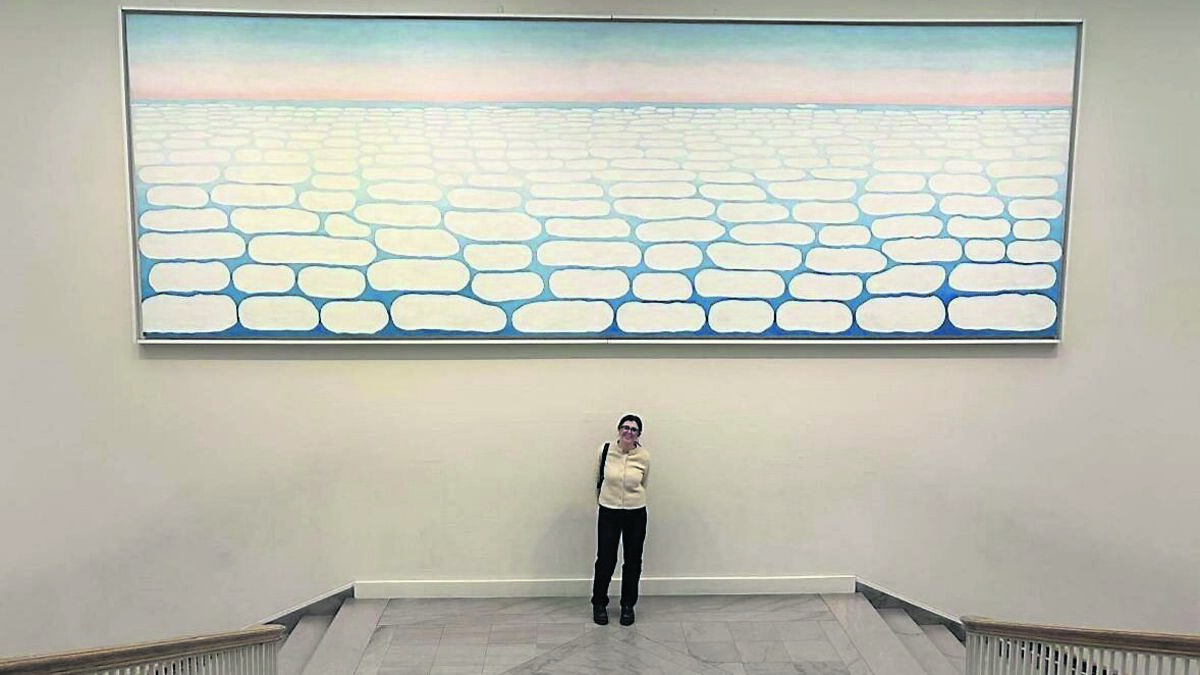
Libby Marchant in front of the artwork ‘Sky Above Clouds No. 4’ by Georgia O’Keefe in the Art Institute of Chicago.

In his column a couple of weeks ago, Joe Humphreys wrote about C Thi Nguyen’s “value capture” – the idea that we often value art, intelligence and success based on external metrics. Humphreys focuses mainly on how this may personally affect our experience of art. He describes his experience of rushing around a museum in Madrid in order to see the ‘top 20’ best works of art.

I had a similar experience when I visited the Art Institute in Chicago. Upon entering the building (having paid my 30 dollars, I may add), I was handed a pamphlet titled “When you only have an hour”, which had the locations of 15 ‘must-see masterpieces’ dotted across the gigantic building.

The concept of spending just one hour in what is probably the most comprehensive collection of modern American art in the world (as well as an extensive collection of Japanese, Renaissance, and post-Impressionist works) is appalling to me.

But in fairness, sometimes you really do only have an hour. The “When you only have an hour” pamphlet should be an invitation to ramble, relax and remember that you can always come back again.

If you were to follow the museum’s pamphlet, assuming you can teleport from one painting to another, you would have just four minutes to look at each painting.

I am disappointed by museum curators for taking the bait and gamifying the appreciation of art. It is a disservice to all of the hundreds of artists who are just as talented as the more recognisable names; going to an art gallery (or cinema, or bookshop for that matter) should be about experiencing something new rather than ticking off a checklist.

Some pieces of art rising above the others within a generation is an inevitability, but archivists, curators and critics should be acting in opposition to this impulse rather than facilitating it.

Christopher Marlowe inspired Shakespeare, Marcel Duchamp inspired Andy Warhol, and even Heated Rivalry takes themes and motifs from the novel Maurice, written in 1913 by E.M. Forster.

In the Chicago Institute of Art, next to the famous Nighthawks by Edward Hopper, is The River by O. Louis Guglielmi. Like in Hopper’s work, the people featured in The River are expressionless, engulfed by the shadows of a railing that resembles bars. The river itself is barren: home to no boats or fish. The optimistic blue of the painting is exactly the kind of queasy artifice I love in American art.

I’d never heard of Guglielmi; he died in poverty and has been mainly lost to history despite being successful during his life. Why do we know Hopper but not Guglielmi? Shakespeare but not Marlowe? Warhol but not Duchamp?

There’s a reason why any arts journalist doing an interview will always ask any musician, filmmaker or writer who their influences are.

By learning about what influenced the art we love, not only does it give us a richer appreciation for the artwork, but it also shines a light on all of the unsung artists who deserve recognition for their contribution to culture.

Just as art is made within a certain context, it is consumed under another.

In science, there is something called ‘The Observer effect’. When atoms are observed, they change. Has a work of art ever changed before your very eyes?

Instead of racing through a museum, spending four minutes taking a picture of a work of art you haven’t asked yourself if you even like, why not become an active participant in the art-making process?

And if you’re reading this, wondering what the hell I’m on about, let me give you some suggestions:

  • Pick a film you enjoy, find the director’s name and watch all their films in chronological order: has your perception of the original film changed?
  • Invite two or three people in your life who often have different perspectives from you to read the same book. Discuss your thoughts with them. Record their thoughts. Re-read the book later and read back over the notes.
  • Pour yourself and your partner a drink, pick an album from an artist neither of you know much about. Listen to each song and try to guess what the overall album is trying to say, and what it might be influenced by.
  • Read books that were written over one hundred years ago.
  • Go to an artist’s studio and ask the artist about their process. There are plenty of studios in Ardmore, as well as the Kite Design studio in Waterford City Centre. It may feel daunting, but most artists are usually happy to talk about their work.
  • Go to an ‘arty’ event in Waterford. There’s often free wine and plenty of knowledgeable and interesting people who would love to chat about local art. GOMA and Waterford Gallery of Art often have exhibition launches, the library hosts writers’ workshops, and Garter Lane has Q&As at least once a month.


We live in a vibrant arts community; take advantage of it!

More in this section

Waterford News and Star