Fr Liam Power: Women’s Ministry to be explored at the National Synod of the Irish Church
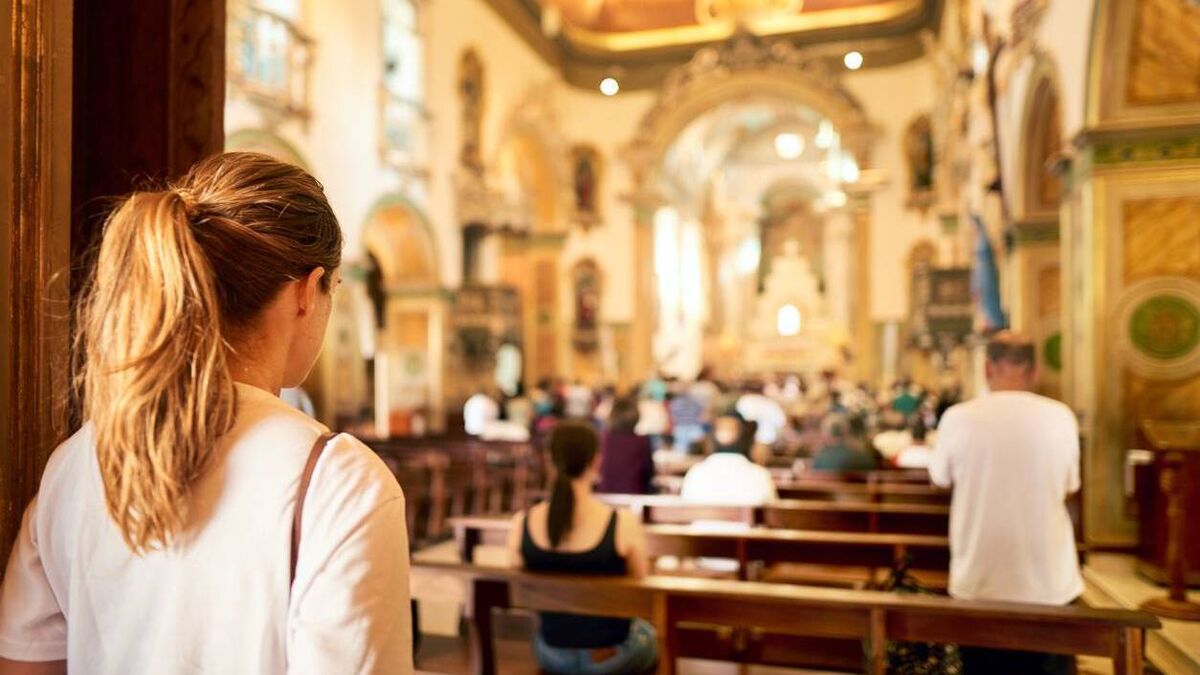
I believe that the Church has not taken on board how seriously its credibility is undermined by the exclusion of women from many areas of Church life and ministry.
The Church in Ireland is preparing for a National Synodal Assembly, which is scheduled for October 17 to be held in Gormanstown, County Meath. A working document has been published, which marks the culmination of a process of listening and dialogue, which was launched in 2021 entitled the Irish Synodal Pathway.
The fundamental question that was offered for the process of discernment was: “What does God want from the Church in Ireland at this time?”
Over the last five years, everyone was invited to participate in these ‘Conversations in the Spirit’ as they were called. The working document articulates the major themes, which emerged from the various consultation processes. It honours the outcomes of what was being heard over the last five years through prayer, listening and discernment by the People of God in Ireland today.
A number of themes emerged as key areas in the life of the Church in Ireland where renewal was considered necessary. These were identified as 1. Belonging, 2. Co-responsibility and Lay Ministry, 3. Family, 4. Formation and Catechesis, 5. Healing, 6. Women, 7. Youth.
Seven working groups were established to receive each priority through prayer study and ‘Conversation in the Spirit’ and to deepen the discernment by articulating practical proposals that might help the National Synodal Assembly consider how these priorities could be embodied in the life of the Church. These proposals are contained in the working document.
I would like to focus on proposals concerning the involvement of women in the Church.
I believe that the Church has not taken on board how seriously its credibility is undermined by the exclusion of women from many areas of Church life and ministry.
I know of many deeply spiritual women who would dearly love to belong to the faith community but in conscience are unable to commit. I know of some who were engaged as pastoral workers, who are highly skilled and theologically well qualified, but felt that they could not continue to support an institution that they experienced to be oppressive of women. They felt the Church discriminated against women in that elements of patriarchy and misogyny are still embedded in its structure.
Many women have simply walked away. Many who remain do so under protest.
It is so encouraging to see proposals contained in the working document that seek to redress this imbalance in our Church. The submission of the working group on women proposes that “the Church in Ireland advocate for ongoing exploration of women’s ministry, including the diaconate.”
The working group is particularly anxious to acknowledge and respect the call “for the full and equal inclusion of women in all areas of the life of the Church, including the ordained ministry,” a call which was voiced at all stages of the Irish Synodal Pathway.
The group wants to ensure that all areas of ministry open to women be fully explored and implemented at Diocesan and parish level. It is equally emphatic that the Synod continues to discern what may become possible for women, including the diaconate. This issue must be engaged with openly, seriously and in a theologically informed way.
Not only that but the Irish Bishops are exhorted to use their role and influence to advocate at Universal Church level for continued education and discussion about the ordination of women to the diaconate.
The working group on 'The Church as a Community of Belonging’ submitted a proposal recommending that “women, and women’s voices, be visible, heard, and valued in liturgy and public prayer at all levels of the Church in Ireland.”
The aim is to rebalance the Church’s unconscious bias so as to ensure that women experience themselves as included and respected in their full humanity.
To achieve this aim, texts and hymnals and other materials are to be thoroughly and systematically examined to ensure that the dignity of women be fully respected. For example, it is customary to use masculine pronouns exclusively when referring to the Divine. ‘Men’ is used as a collective noun when referring to both men and women. The Nicene Creed, which is recited most Sundays, proclaims that Jesus came from heaven “for us men and for our salvation.” Theologian Sandra Schneiders observed that women are ‘linguistically subsumed’ in formal liturgical texts.
Another proposal from the same working group exhorts the Synodal Assembly to rediscover female imagery for God that abounds in the Scriptures and in the experience of women mystics throughout the ages. Contemporary women’s voices must also be heard. The working group is mindful of the contribution of brilliant feminist theologians to modern theological scholarship. They have challenged patriarchal structures, and given us new insights into a model of Church as one of service, promoting inclusivity and equality and a collaborative style of leadership.
The document also envisages a national office for women as part of the structures supporting women's participation and ministry.
The National Synodal Assembly is truly an historic occasion for the Irish Church. The last Irish Synod was held in 1956 in Maynooth and it was presided over by bishops and clerical representatives. It was concerned solely with ecclesiastical law and discipline. The current synodal process is explicitly designed to involve lay women and men, priests, religious and bishops in a shared discernment. Its decisions are intended to guide a new vision for the Irish Church and to discern how Christian communities can offer meaning, community, reconciliation and hope within a rapidly changing society marked by increasing secularisation, rapid technological change and immigration.
I am very encouraged by the working document, particularly by its proposals on women in ministry.