SPECIAL REPORT - Sexual violence in Waterford: 'We're there for whatever needs survivors have'
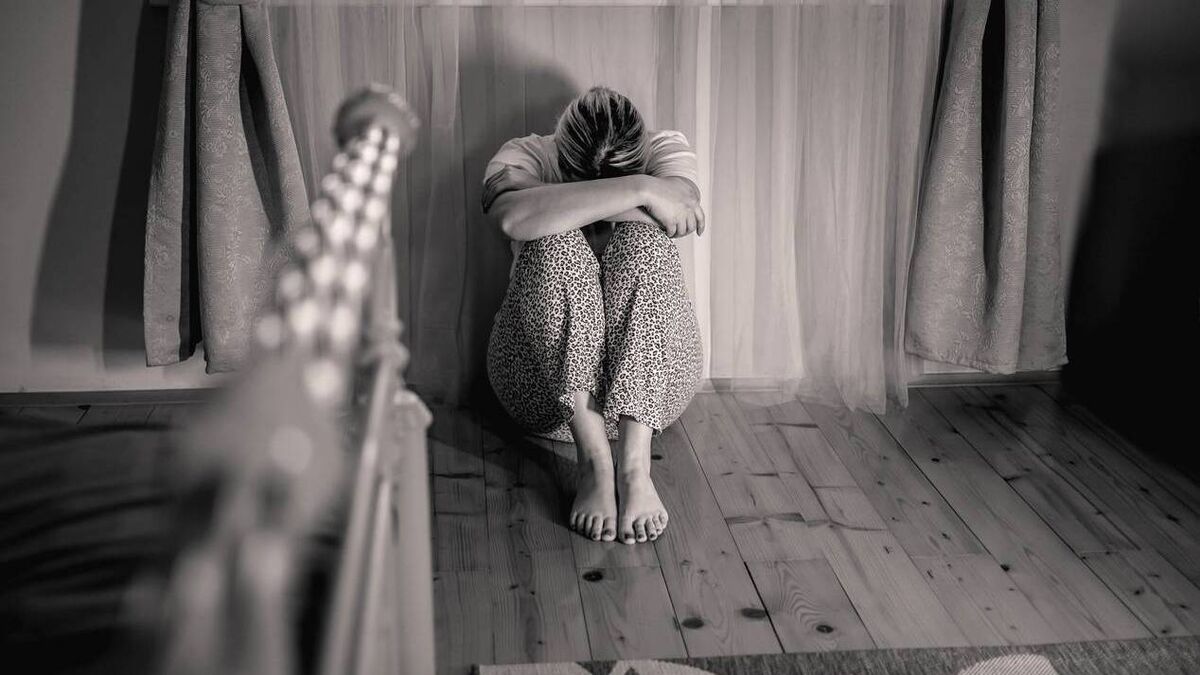
Last year Waterford Rape and Sexual Abuse Centre (WRSAC) provided free supports to those affected by sexual violence in the county through almost 2,000 counselling appointments and 1,000 helpline calls, alongside their various support services.
More than one in two women and over one in four men across Ireland have experienced sexual violence during their lifetime, according to the Central Statistics Office.
Just last year, Waterford Rape and Sexual Abuse Centre (WRSAC) provided free supports to those affected by sexual violence in the county through almost 2,000 counselling appointments and 1,000 helpline calls, alongside their various support services.
These figures, recorded through the Rape Crisis Ireland's database, show both the significant demand for specialist sexual violence services in Waterford and the importance of ensuring that survivors can access timely, confidential and appropriate support, Ivanna Youtchak, recently appointed Manager for WRSAC said.
In solidarity with survivors, community members, supporters and local advocates are coming together for a 'Support Survivors Coffee Morning' at Coach House Coffee in Kilmacthomas on Friday, December 4.
To learn more about what supports are available in Waterford for survivors of sexual violence, this reporter sat down with the people running local support services, including Waterford Rape and Sexual Abuse Centre and the Sexual Assault Treatment Unit (SATU) at University Hospital Waterford.
In a meeting room up the stairs of a small, discreet building along John's River, I met with Ivanna Youtchak and Barbara Resende of Waterford Rape and Sexual Abuse Centre, who both emphasised the importance of supporting survivors no matter who they are, how they've been assaulted, or when the assault took place.
"It's important to know that we're there for whatever needs survivors have," Barbara Resende, volunteer coordinator at WRSAC said, outlining the services offered at the centre and the freedom for survivors of sexual violence to choose their own path to recovery.
"You're not forced to do any counselling or to make a statement to the Gardaí," she explained, adding that the rules are different when minors are at risk but for adults, "there is no obligation".
The same is true for SATU treatments at UHW, Barbara added, "I think it's important that people know that they can go there and get medical help regardless of if they are going to the Gardaí or not.
"A lot of survivors are afraid to seek help because they think that if they disclose it to the doctor, they are going to be forced into getting the law enforcement involved. And that's not true."
The nurses working at the SATU in UHW are trained to deal with trauma, Barbara explained, and can perform smear tests and other services for survivors who may not feel comfortable with medical attention after their assault.
"They are very gentle and they're very respectful and nothing happens there without the survivor agreeing to it," Barbara added.
"One thing that is important to note is that if you're not sure if you want to report or not, you can do the forensic exam anyway and they will store the evidence for you for a whole year for you to decide what you want to do."
"Even if you had something that happened to you a long time ago," she said, "and you want to get yourself checked, you can. It doesn't have to be recent."
In another quiet, simple building, this time off the side of University Hospital Waterford, I met with Sinéad Boyle, Advanced Nurse Practitioner for the SATU.
The SATU itself has no signs or markers, one of the many efforts Sinéad and her team have gone through to ensure patient discretion and confidentiality, but it can be found easily enough by calling the unit ahead of time.
Inside their new premises, which they opened in December 2024 after working in a much smaller unit for the previous 20 years, they provide victims of sexual violence with care in the aftermath of an assault on a 24-hour basis, seven days a week, free of charge.
With pastel-painted walls, and paintings from Waterford Healing Arts Trust around every corner, the unit is dedicated to providing victims with as much comfort and distraction as possible.
Comprised of a welcoming reception room, a forensic examination room where exams can be done up to seven days after an assault, a separate room for follow-up appointments with a much less clinical design, and a shower room, the unit has been designed with patient needs at the centre of it.
Spare clothes are available for victims who want to change after their assault and a shower with care products is available for victims after examination, as well as fizzy drinks, tea, coffee, and biscuits.
The unit also houses a separate office where files are kept "under lock and key" away from all other hospital records.
Confidentiality is paramount at the unit, with Sinéad saying the unit is committed to putting patient needs before anything else and keeping their names off the SATU's records, instead filing them under incident numbers, which can be kept separate from any medical records or history a person has.
Any care given in the SATU or from a SATU referral is not only kept confidential, but also free of charge, Sinéad emphasised, whether it's a referral to another department in UHW or elsewhere.
The same goes for Garda intervention, she explained, where victims are not pushed to report their assault to Gardaí or pursue legal action at any stage. Their forensic exam can be stored in the unit for a year to decide – or with a hand-written request, it can be stored for two.
Their biggest source of referrals at the unit are by victims brought in by Gardaí, Sinead said, even when victims choose not to report the assault officially, but self-referrals are also a large number of cases seen in unit.
Regardless of the type of referral, or the victim, a volunteer from the WRSAC will meet with them at the SATU for additional support.
"We're so grateful for their volunteers," Sinéad said, "they never let us down."
While the SATU offers specialist medical and forensic care following sexual assault, WRSAC provides emotional support, accompaniment, and access to longer-term specialist counselling.
Volunteers at WRSAC undergo a rigorous and lengthy training programme before being added to the roster for the 24/7 accompaniment service, Barbara explained.
"To me, it's important that the survivors know that the volunteers are all vetted and they are very well trained," Barbara said.
Through the service, volunteers offer emotional support to survivors who are receiving treatment at the hospital's SATU, attending a court proceeding or meeting with Gardaí.
Some of the volunteers have been working with victims for over 20 years, Barbara explained, while others have only been there a year, and some even less, as their annual volunteer recruitment training has just begun.
The thinking behind it, she said, was that a lot of survivors haven't told their families or friends about an assault early on, and may not be ready to, so having a "non-medical" person with them who can offer support is important.
The volunteers can also offer support to family members who are there in support of survivors, she added, by giving them information about the services available for their loved one and taking the pressure off them.
Sometimes they have questions about things, she said, and "sometimes they don't want to talk, they don't want to engage, and that's no problem at all."
The first step, she explained, is giving survivors back control over their lives.
"There's not enough awareness that there is a specially trained unit within the Garda station in Waterford," Ivanna said, adding that the gardaí in the unit are very well trained in dealing with trauma and victims of sexual violence.
Gardaí will also take victim statements at WRSAC or the SATU premises, rather than the Garda station for people who may feel uncomfortable at the Garda Station, she added.
Navigating the criminal justice system following sexual violence can be extremely challenging for survivors of sexual violence, with victims treated as witnesses in their own cases.
Because of this, WRSAC's volunteer service also provides support when victims go through the legal system after an assault.
A lot of people aren't aware of how legal cases are structured when there is a sex crime involved, Barbara said, and may not understand that the state is prosecuting the perpetrator, not the victim.
This means if you're there as a victim, you are there as a key witness for the prosecution, not as a person who has representatives next to you, so when victims arrive to court, they often see their perpetrators surrounded by people, while they often aren't.
This often gives victims a "sense of loneliness", she said, so having someone with you in court who understands the system and can guide you through proceedings and around the court can be a great relief.
"It can be devastating," she said, "people tend to see sexual violence as a thing that happens at one night, one moment, or one hour, and then that's it, and you immediately go to heal.
"And it's not, it's a long process. It can be devastating for survivors to go through that, it's exhausting. What we do here is try to cover as much as we can of this gap of loneliness that comes with sexual violence. They don't have to deal with this in silence or alone," Ivanna said, "There are supports in place."
"There's still a long way to make it really good for survivors, but there has been a lot of progress as well," she added.
About 20% of the people seen at the Waterford RSAC are men, Ivanna said, a figure she thought might be surprising to some people.
"I think it's important that we understand that sexual violence can happen to any group," Barbara said.
"It can happen to you even when you're older. Sometimes people have this misconception that it only happens to young women, but it's not true. Anyone can be affected and you shouldn't feel embarrassed to seek help if you feel that you are different or that you are not the victim face that you [usually see]."
"It's very important to highlight that the support is available for anyone, regardless [of who they are]," Ivanna added.
Through a team of six counsellors specifically trained to help survivors of sexual violence, some of whom have been working at the centre for over 30 years, the centre runs a counselling service which sees a huge variety of clients from age 14 up to people in their 70s who have experienced a recent assault or historic sexual violence or institutional abuse.
Although there is a wait list for people looking for counselling appointments through WRSAC due to high demand, "it's not too long", Ivanna said, as WRSAC assesses individual circumstances and support needs, rather than simply allocating appointments in chronological order. And while some survivors may have to wait for counselling, the centre provides information and initial support during that period.
"We're not going to leave the person with no support whatsoever," she said.
The families and friends of victims of sexual violence often don't know how to support them in their recovery, and sometimes actions made with the best intentions aren't the best for victims, Ivanna explained, and that's what the coffee morning is about, "how to be there and support others".
"If somebody, one of your friends, talks to you about it and you don't know what to do, you're a bit unsure how to help, you can give us a call. We'll be happy to have a chat and help however we can," Barbara added.
“Our data tells us that around one in three survivors wait more than a decade before disclosing their experience of sexual violence, and that friends and family are often the first people they turn to," Ivanna said.
"How we listen, respond and support someone who discloses sexual violence can make a real difference to their recovery and their willingness to seek further help.”
WRSAC 1800 296 296, text: 087 2233730; Oasis House (Domestic Abuse Services) 1800 264 364; Waterford Women’s Centre 051 351918; Waterford Gardai - Protective Services Unit: 051 305372, Victim Services Office: 051 305371.