Phoenix: Do different medical provision rules apply for Cork?
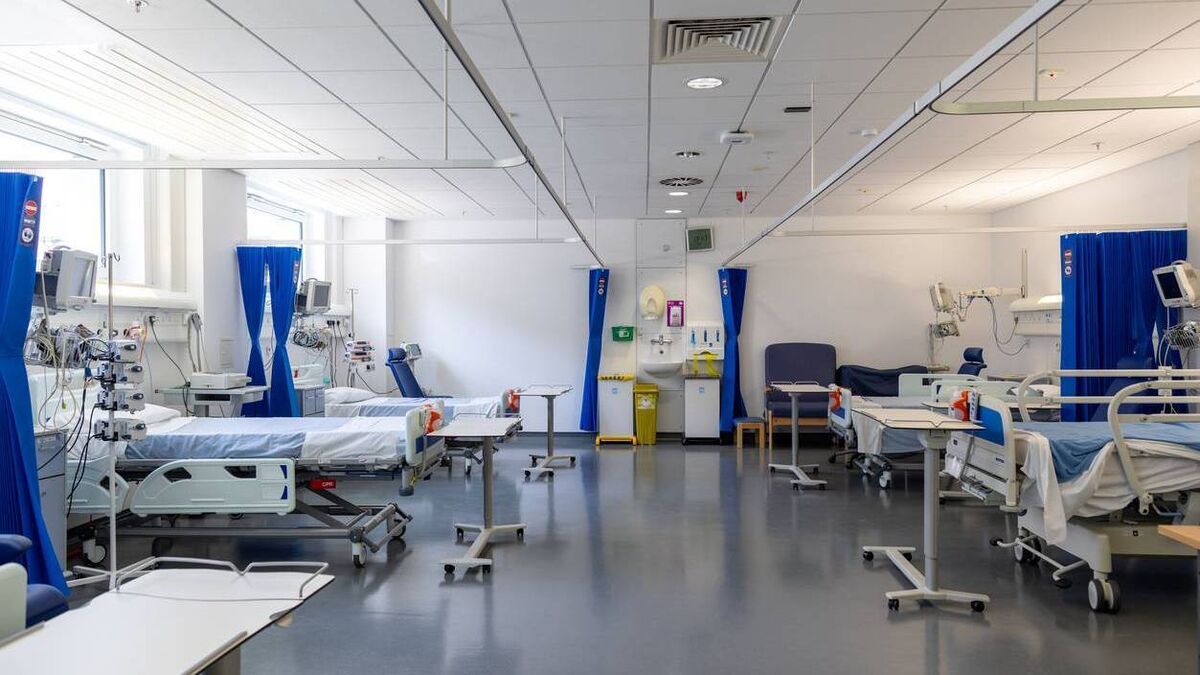
The Minister for Health, Jennifer Carroll MacNeill, told the Dáil that Cork has had 233 people just recruited into the hospital, "the highest by some distance of any hospital in this country".
Anyone in Waterford reading about the recent carry on in Cork University Hospital (CUH) must wonder what’s going on. It certainly seems to be that “much wants more” while University Hospital Waterford (UHW) must do “more with less”.
CUH is obviously a bigger and much better resourced hospital than UHW. HSE stats show that for the first 10 months of 2026 CUH had 82,265 ED attendances and admitted 22,396 (27%), while UHW had 68,032 ED attendances and admitted 13,226 (19%).
Are people in Cork generally sicker than those in Waterford or the south east? Had CUH admitted on the same level as UHW they would have admitted c16,000 people. Had UHW admitted on the same level as CUH, they would have admitted c18,000 people. Do different rules apply to medical provision in Cork?
Waterford suffered particularly badly while under the control of the HSE’s Cork-based South, South-West Hospital Group post 2011. Investment was poured into CUH while UHW was almost starved in a move widely interpreted as an attempt to reduce it to Model 3 hospital status.
There was obvious political cover for that activity.
The long controversy over 24/7 cardiology and the unfulfilled promises of investment and staffing for UHW taught us a hard lesson about Cork empire builders in medicine and third-level education. What happened to Waterford in the past decade may now happen to Cork as Dublin interests flex their muscles.
Micheál Martin, who suddenly looks like a lame duck, must watch from the sidelines with the dilemma of supporting CUH or his Minister for Health. CUH may be understaffed when compared with similar hospitals internationally but it would have been wiser for its management to examine comparable Irish hospitals before claims of understaffing and danger to patient safety were put in the public domain. But then, when you have massive political cover for your actions as CUH had, staff recruitment wouldn’t be a problem?
Amy Campbell reported in The Examiner on October 10, “Staffing constraints at CUH have seen it lose half of its CT scanning capacity, leaving a waiting list that includes 300 people in urgent need of a scan. The collapse of the service was confirmed by CUH chief Jennifer Kearney who, in a scathing letter over recruitment, told HSE management, “the hospital is not safe ahead of the coming winter”.
Ms Kearney said that “50% of scanning capacity has been lost in 2026 due to staff shortages". Meanwhile, a cost effective, after hours UHW scanning service, which delivered over 13,000 scans in the past five years has been cancelled by the HSE. Minister Mary Butler please note!
Louise Burn reported in The Examiner on October 26, “Health Minister Jennifer Carroll MacNeill argued that CUH has received a greater allocation of staff than any hospital but still has some of the highest trolley numbers.”
The minister told the Dáil that, “Cork, another place where there's been an articulation of patient safety and recruitment challenges, has had 233 people just recruited into the hospital, that's the highest by some distance of any hospital in this country. Yet there are 40 to 44 people on trolleys.”
She questioned why CUH lagged behind Dublin hospitals, arguing that Beaumont Hospital and CUH faced the “same demand pressures”, had both recruited staff, and had the same needs up to 2027. She questioned why Beaumont’s performance was “different to Cork”.
“You tell me why one of the biggest, busiest hospitals in this country, in an area of particular socio-economic disadvantage, notwithstanding the pressures that they face, has 10 people on trolleys but Cork has 44? The reality is that many hospitals have improved significantly over this year, but there are about six or seven hospitals that have not.”
The Minister suggested the problem lay in CUH’s allocation of resources.
“CUH has hired 233 people. Why has it not prioritised resources for that CT scanner as Beaumont did?”
The Minister's criticism came days after CUH Chief, Jennifer Kearney told the Irish Hospital Consultants Association that “moving back to Ireland after working in the British health system is like stepping back in time”.
She had previously written to HSE leadership warning about gaps in care because of staffing shortages. Ms Kearney said the situation is “getting worse" as only seven posts have been approved for CUH, warning that the “gap is getting wider” between what is needed and what they have.
She acknowledged CUH has hired new staff, saying more than 120 of these were for the new surgical hub, and warned that the hospital is “overspending” on agency staff to fill gaps. CUH now suggests it needs 1,000 extra staff! How many must UHW realistically need?
UHW rarely, if ever, has people on trolleys as its ED is particularly well managed. Mind you, that has not brought any great reward as promised investments in ward blocks, multi-storey car parking and vital Out Patients Departments have not appeared. You will recall that when UHW moved to 24/7 interventional cardiology, it sought 23 staff to do so. Only 10 were sanctioned. And, while the CUH surgical hub has commenced operations with 120 staff, the similar UHW surgical hub has had only 50 staff allocated. It remains unopened.
In that context, the National Treatment Purchase Fund (NTPF) figures for October 2026 show that UHW (5th highest nationally) had 6,150 people awaiting inpatient treatment versus CUH with 2,085 (16th nationally) and UHW had 52,830 (3rd highest) awaiting outpatient treatment versus CUH with 29,264 (11th nationally). Could the national media focus on that perpetual inequality for a change please?
Vast sums of money have gone to Dublin and Cork medical facilities, while UHW remains the lowest-resourced Model 4 hospital in the country. If Micheál Martin’s reign ends in 2027, we will see a more determined centralisation to Dublin of HSE financial resources. Would that be any better for UHW and Waterford?
Meanwhile, as our local politicians interpret the auguries, you may have noticed that US healthcare company Dexcom opened a new, IDA-sponsored, €300 million facility to employ 1,000 people last week, in Athenry, Co. Galway. Taoiseach Micheál Martin said “Dexcom’s employment strategy was a great boost to the west of Ireland.” Indeed. How long has it been since we have seen a boost like that here?