Harnessing the Déise: Engagement - the people are having their say but will it make a difference?
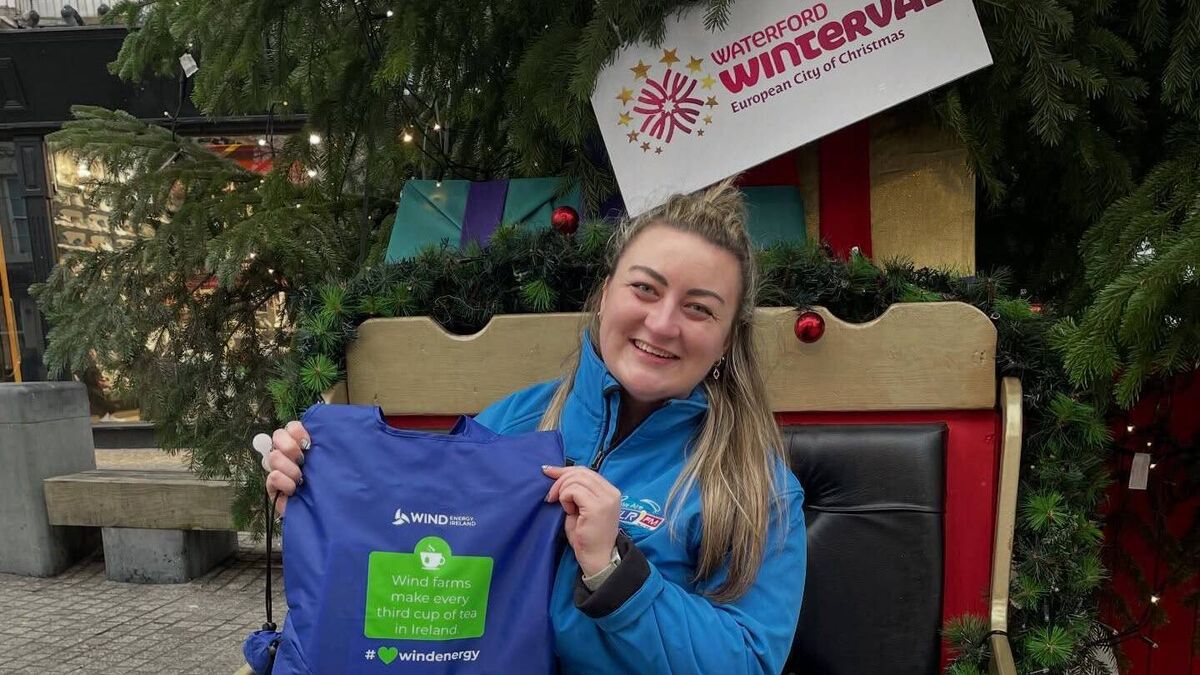
Wind Energy Ireland held an engagement event in conjunction with WLR FM during Winterval last year.
People power cannot be discounted or dismissed - one only has to look at the widespread impact of the recent fuel protests, or the successful campaign against the proposed data centre in Kilmeaden.
Acutely aware that any resistance to offshore wind energy farms may delay, disrupt, or curtail their development, all stakeholders involved in the Tonn Nua project have hit the ground running, engaging in unprecedented levels of dialogue with the communities set to be affected by its development and construction.
From the Department of Climate, Energy and the Environment (DCEE), to Wind Energy Ireland, to ESB and Eirgrid, a sustained programme of engagement is ongoing as they seek to inform and educate but also listen to questions and concerns.
Ongoing, meaningful engagement is critical to ensure there is buy-in from all affected parties, says Sinn Féin TD for Waterford Conor McGuinness. He recently visited the town of Eyemouth in the Scottish Borders as part of a trip to see the 54-turbine Neart na Gaoithe offshore wind farm.
What really struck him, McGuinness says, was the level of engagement with local residents and particularly the local fishing industry.
“To be fair, the Scottish government, they really drove home the fact that there had to be consultation, not just at the beginning of the planning process, but right through the planning process, right through development and after commissioning,” he explains. “And that process, that communication and that liaison between the operators and the local fishing industry will continue. It will continue for the lifetime of the wind farm."
Bringing people on board when it comes to projects of this magnitude is perhaps easier said than done. The pressure these projects will put on the public purse is not inconsiderable, and convincing people of their value is indeed a full-time job.
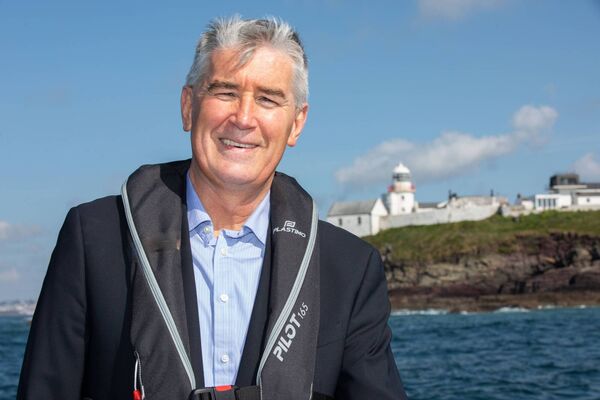
Captain Brian Fitzgerald is a former Navy captain who was appointed as the community liaison officer for the National Designated Maritime Area Plan for offshore renewable energy at the DCEE.
“I know everything to do with this space by looking at it from the sea perspective,” he tells the Waterford News & Star. “So I put myself out on the sea and I look back in, as opposed to standing on the land looking out. That's just the perspective I can bring to things, and it gives me great empathy and relations with the local community.”
Ireland’s climate action targets say there must be 37GW of energy generated from offshore wind by 2050. Just 1GW, Fitzgerald says, requires an investment in the region of €3 billion.
“That means if we're going to do 37GW, you're talking about a capital expenditure of north of €120 billion to put that infrastructure into the sea.”
On top of that, he notes, is the development expenditure, which is underway at the moment, as upfront surveys and de-risking exercises take place.
“So you have to look at the operational expenditure that will take place over the life of the project for 25 years, and I can't see any other way of describing this other than it being a maritime industrial revolution,” Fitzgerald asserts.
“That's 24 children's hospitals.”
Fitzgerald says the people he meets are generally well-versed when it comes to climate change, and also increasingly aware of issues, such as energy security and supply, especially following the recent outbreak of the war in Iran and the blockade of the Straits of Hormuz.
“And such is our knowledge of the wind in this country that we named the West Coast after it by calling it the Wild Atlantic Way. So, by stark contrast with the fossil fuel pipeline, where we are at the very end of the pipeline, Ireland sits at the very front of the renewable energy pipeline.” There is widespread appreciation that wind, both onshore and offshore, is Ireland’s version of the oil fields of the middle east, he says.
“Other countries looking at Ireland ask, perhaps reasonably, how come we haven't harnessed this yet? And that's also the vast majority of the people that I speak to.
"They understand that. And there is this attitude of, would you get on with it?”
But while Fitzgerald says it is “good news” for coastal communities that a new industry may be on the way, he admits that not all engagement is as positive. Environmental concerns and pushback from the local fishing industry in places have also been a hallmark of the many conversations he has had with citizens in the south east. Concerns about the visibility of the turbines also crop up regularly.
“There's nothing unreasonable about that,” he says. “But generally what happens is the worried voices, because they have a perfectly understandable emotional connection with this, they generally turn up to events and engagements and consultations for the purpose of having their speak. And that is highly desirable. But the vast majority don't necessarily turn up because they just have adopted that position of ‘just get on with it’.”
“It’s quite obvious where the voices are, and certainly from my engagements, where the voices are that are worried,” Fitzgerald adds. “And before there was ever a wind farm spoken about in Ireland in the modern era, the fishing industry was already on its knees, and I absolutely feel for them.”
Thankfully, he says, State has provided for a forum for the fishing industry and the offshore renewable energy industry to talk together and “iron out any difficulties” in the form of the Seafood Offshore Renewable Energy Working Group.
“That's been sitting down for four years, and huge advances and strides have been made there to find solutions for everybody.”
There is also significant engagement ongoing with environmental action groups and non-Governmental organisations (NGOs). According to Fitzgerald, this input is seen as “invaluable” as the project remains in its planning stages.
EirGrid will be responsible for the necessary transmission infrastructure to connect the Tonn Nua offshore wind farm to the national grid, which will most likely involve substations in East Cork and South Wexford. For the past five years Sinead Dooley has been its head of public engagement. She also chairs the EU Pact for Engagement, a European Commission initiative aimed at developing public acceptance for clean energy infrastructure.
Dooley was in the news last week for her criticism of the lack of strong and visible political support for large-scale renewable energy projects and what she called “scaremongering” leading to public opposition. These comments were made during her appearance at the Cop31 climate summit in Turkey.
Before that trip, she spoke to the News & Star about how her role was created in a bid to avoid the “resistance” that has historically stymied the development of major infrastructural projects in Ireland.
“It was established because over the years, large infrastructure projects have met with resistance from communities, the general public, and some of the biggest projects across the country we failed to deliver because of the lack of public acceptance, and the lack of political support,” she explains. “So it was based on that and EirGrid's acknowledgement that more needs to be done within communities in terms of substantive public engagement.”
Every country has the same problem in terms of lack of public acceptance and general understanding when it comes to offshore wind farms, she adds. “But there are very few examples of substantive public engagement across Europe that we can point to.”
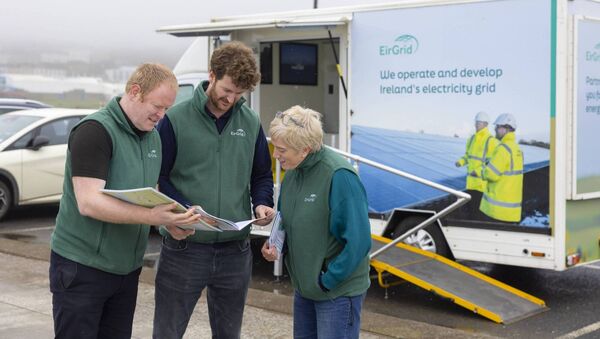
EirGrid’s Powering Up Offshore - South Coast programme involves an extensive programme of public engagement, as well as technical and environmental studies. Dooley is clearly passionate about her work, speaking extensively about the level of engagement with the Seafood ORE and environmental groups, as well as in local communities where Eirgrid has held a number of public information events. These give residents, landowners, businesses and community groups an opportunity to meet the project team, learn more about the proposals and provide feedback, she says.
“The amount of feedback we get is phenomenal at these events and the local insights that we get at these events are absolutely invaluable to help us with the delivery of the project as well,” she says. This could be as simple as suggesting where best to run a cable. Dooley calls this “grassroots” engagement.
“For example, it's hugely important to me that all of my community engagement officers are from the region and are living in the region that they're working in.”
Dooley is also acutely conscious of “preaching to the converted”.
“There's no point in us talking to one another about it. We're all in favour of it. It's to get the hardest to reach and to get them involved in the conversation, to give their feedback.”
Eirgrid’s 12-week public consultation on the proposed electricity grid infrastructure in Cork and Wexford to connect future offshore wind generation off Ireland’s south coast is ongoing and will run for another three weeks. This sets out emerging options for landfall locations, offshore cable corridors, offshore substations, grid connections and onshore transmission cable routes.
As part of this process, mobile information stands were set up in Bunmahon and Tramore recently, as well as a number of locations in Cork and Wexford. Eirgrid say these were positively received, with a good level of engagement from local communities.
“People generally recognised the need for renewable energy and the importance of developing the electricity infrastructure required to support Ireland's future energy needs. Most of the conversations focused on understanding the project and the wider role it could play in supporting Ireland's energy transition. Overall, the feedback was constructive and there was a genuine interest in learning more about the project.”
Transparency, Dooley says, is key. Building trust can only happen when they are upfront about how the project might evolve as time goes on, she believes.
“I think it's important that the public knows well that there's no cutting corners here,” she says. “Sometimes people fear that there's going to be exemptions in place that will exclude them from the process. But we are a state authority, so all of our environmental impact assessments will be in place. All of our planning requirements will be met. We go over and above in terms of our obligations.”
As development director for the Tonn Nua offshore wind project, ESB’s Patricia Comiskey has been meeting stakeholders since before ESB/Ørsted even won the bid. The ESB is still growing its team, however, so has decided to focus on events already planned in the region, before ramping up its own programme of engagement next year.
“We selected regional events that we felt would enable us to engage with a broad cross-section of stakeholders, including local communities, businesses, environmental NGOs and representatives,” Comiskey explains.
These are as diverse as they are many - from an International Women’s Day breakfast back in March, to the Vitamin Sea festival in Tramore back in June, as well as industry events and conferences.
“This work has allowed us to achieve significant initial reach and begin developing our stakeholder network, which will be so important for the project."
The ESB has just wrapped up their seabed mapping survey on the Tonn Nua site.
“During this we had great engagement with the local fishermen and other users on site, including the Marine Institute who were carrying out their fisheries surveys independent of our work,” Comiskey notes.
The Tonn Nua project team has met with over 65 fishermen in the region to discuss the surveys, through local meetings and numerous pier visits - they also have co-operation agreements in place with a significant number of them.
“The engagement so far has been largely positive, and we hope to continue this throughout the lifetime of the project,” according to Comiskey. “Fisheries engagement is a particular priority given the potential interaction between offshore activities and existing fishing activity, and we are continuing to work with the sector as surveys and project plans develop.”
This engagement can take many forms; for example, the ESB is currently working with Bord Iascaigh Mhara, the Department of Agriculture, Food and the Marine, and local fisheries representatives on a novel sustainability initiative in Dunmore East focused on the management of offshore waste, called “Fishing for Litter”.
“The work is looking at practical measures, including improved signage in Dunmore East, recycling of old fishing pots and gear, and a dedicated engagement session, with activities for fishermen and the wider community,” Comiskey explains.
Next year will see the beginning of the Scoping Report for the Environmental Impact Assessment. Comiskey says this will offer a further opportunity to organise a series of dedicated events to gather the views of local representatives, communities and industry. They are also actively planning to have local liaison in place.
“The intention is to build on the relationships established this year, move from introductory engagement into more detailed consultation and use the feedback received to help inform the project’s environmental assessment and design as it develops.”
Beyond individual ORE projects, educating and informing people on what wind energy actually is and how it works is crucial as the green transition continues. Originally from Waterford, Yvonne O’Brien Bogdanovic is regional public affairs manager for Wind Energy Ireland.
“One of the things that we try to do is try to help people understand this, and most people in the wind industry love explaining and creating that understanding,” she says.
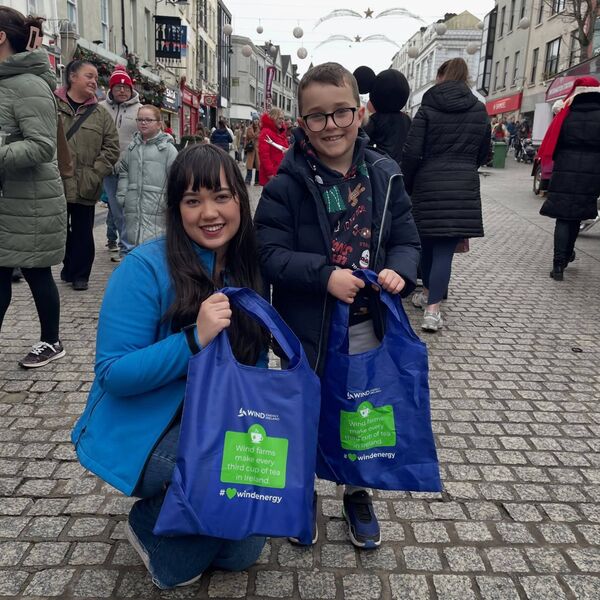
One initiative was a 12-week series that ran on WLR FM late last year called ‘Watts Up’, where various types of renewables, including onshore wind and offshore wind, were discussed. Wind Energy Ireland also sponsored an outside broadcast with WLR FM during Winterval last year.
“We were trying to give people a sense of the different elements, like energy storage, where does solar fit in, you know, how does the grid fit into this, and to give people who aren't normally involved in renewable energy, a sense of how it all works, and where all the pieces fit together,” O’Brien Bogdanovic says. “We're trying to take the technical jargon out of this and to make it easy for people to understand what's going to happen in the kind of terms that people talk about everyday.” They are also also working hard to dispel myths and misperceptions around offshore wind farms and renewable energy.
“It's such a big topic and there's such misinformation and disinformation that floats about in relation to it that really our encouragement is for people to try and find out what they need to know about it from good, reliable sources,” O’Brien Bogdanovic says.
“That’s not always ourselves, we're the industry body and, of course, we're going to be pro this and saying things that people might want to investigate more, but we want to encourage that because online forums are just full of stuff that leads people up the garden path.”
Tonn Nua, and whatever its final form will take, is far from a done deal, Fitzgerald points out. “The whole thing still has to go through planning permission. So the public have to remain fully in the consideration of this and their rights are fully protected throughout. There's no railroading, there is no such thing. All of the processes remain fully available to them.”