Fr Liam Power: The Experience of The Camino
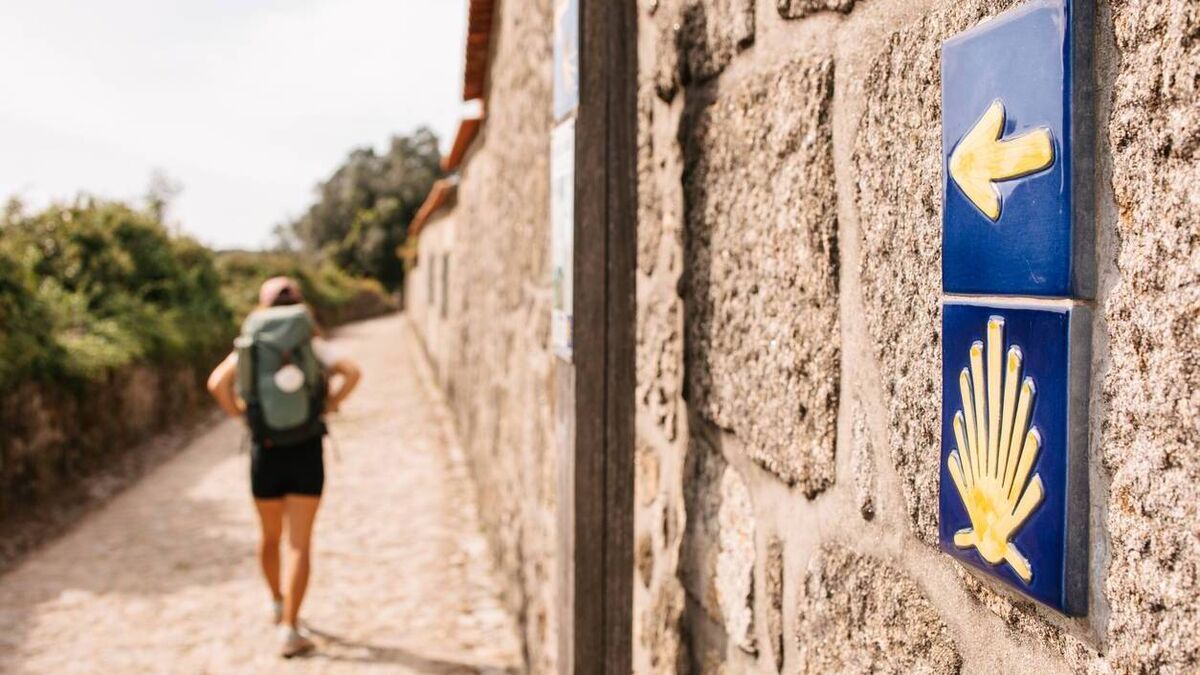
We discovered that the Camino trek is less about the geographical destination (Cathedral Square in Santiago); it is more about a journey inward, a spiritual journey.
I had always wanted to walk the Camino. I had listened to so many stories from people who had traversed sections of the many Camino routes in Northern Spain. They all agreed it was a life-transforming experience.
So this year, I decided to organise a pilgrimage on the Camino for parishioners. With Eoin O’Neill as leader and guide, 15 parishioners embarked on a 130km trek on the Portuguese Camino to Santiago de Compostela.
(The cathedral in Santiago is reputed to be the burial place of St James, one of the apostles. The Camino, or Way of St James, became a major pilgrimage route in medieval times. From the tenth century onwards, pilgrims from all parts of Europe embarked on the long and often hazardous journey to Santiago.)
Our small group of parishioners found the Camino adventure to be a deeply spiritual experience. The Camino began as a long walk towards Santiago. But gradually we discovered that something else was happening. Walking together through the Portuguese/ Spanish countryside, sometimes in silence, sometimes in very meaningful conversations, we discovered that the Camino trek is less about the geographical destination (Cathedral Square in Santiago); it is more about a journey inward, a spiritual journey.
We each carried a backpack. We were grateful for the advice setting out to keep it as light as possible. Along the route, we become conscious of the other burdens we carry - worries, disappointments, regrets, expectations. In the gentle, unhurried pace of Camino, fellow pilgrims and I were blessed to leave behind what no longer gives life. Unnecessary burdens discarded, we were learning to travel more lightly through life.
When I am away, I find myself calling the office regularly, checking on things in the parish, wondering if everything is alright.
This experience of Camino was different. Walking in silence or in conversation, which was, in a sense, soul-sharing, left no room for the phone. I had to let go of trying to control everything and just hand it over to the Lord and trust the very capable staff and volunteers in the parish. It was a painful realisation of how deeply my world and all our worlds can be shaped by hurry, achievement, competition and the pressure to accomplish more.
The inward journey led me to a deeper appreciation that our worth doesn't depend on what we achieve. It taught me much more… how much of my busyness is often just to avoid, or not face, difficult areas of hurt, regret, or unease in my life.
On the Camino, we have to live in the moment; we need only one plan for the day, one set of clothes, one foot in front of the other. So much of modern life is anxiety-producing. I often feel I have to fit about 50 options into the day and end up not doing justice to any of them. We have to learn to trust and leave the future in God’s hands.
There were times on the Camino when some of us wondered if we could keep going. When the road got hard, we wondered how our bodies would keep coping with the heat and rain and the uncertainty of the route.
Every one of us struggled at some point as we journeyed through the countryside; everyone got tired and maybe dehydrated. We discovered our limits, but we all managed to walk through these moments and into some deeper place where we could discover peace and healing. As the road opened up before us we learned to just live in the present, one step at a time.
The Camino taught us to be more attentive, more observant of the beauty around us. I noticed wildflowers that I would never have normally noticed; I would have simply rushed past. I was attentive to the bird song in the early morning, a beautiful sound, which can thrill the soul. But the primary experience was appreciation of life as a gift and rediscovering what truly nourishes the spirit.
It has to begin with listening, listening with the heart. In the quiet solitude of the Camino, many emotions begin to surface. But we all felt it to be a very safe place to share these deep experiences. One becomes much more attentive to fellow pilgrims. It was remarkable how everyone reached out to one another, offering mutual support and encouragement.
A real community was formed: compassion and solidarity abounded on the Camino.
Many found it to be life-transforming; burdens carried for years - grief, loss, or unnegotiated transitions - people could offload and experience great liberation.
On the trail, there is no room for pretence or hierarchy; all are equal. We were dressed in common pilgrim clothes; our humanity and vulnerability are on full display. I was taken down off my pedestal on one occasion. I tried to stand up on a raised plinth to give a blessing. I was told to come down; you are just one of us. No hierarchy here!
Entering Cathedral Square in Santiago was quite an emotional experience. We all arrived together, tired but exhilarated after such a wonderful odyssey.
Reflecting on our experience, we realised that we do not need to walk across Spain to become pilgrims. We can learn to walk more slowly through the ordinary experiences of our days, to listen more carefully, to relinquish unnecessary anxieties and to become more aware of God's presence.
In this sense, the Camino becomes a metaphor for the whole of human life.