Editorial: An ambitious vision for Ireland's oldest city and region
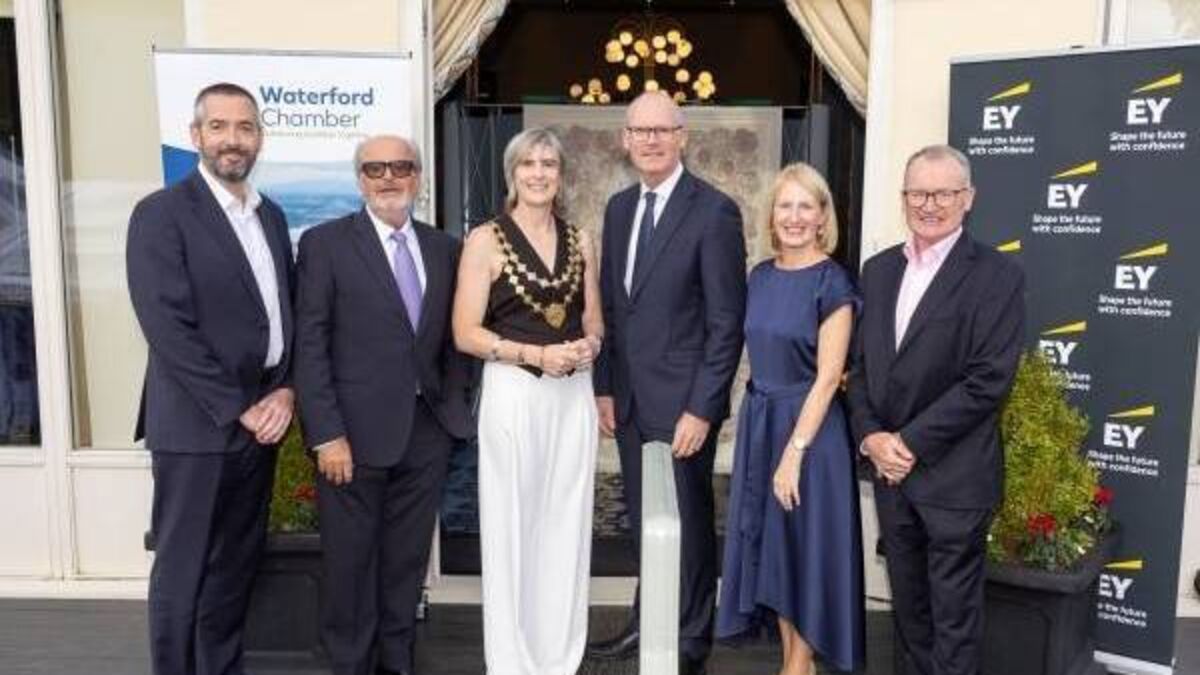
Waterford Chamber unveiled a long-term vision strategy for the future of Waterford and the Southeast, with Waterford & The South East 2075: A Regional Strategy for Prosperity & Connectivity. Photo: Waterford Chamber
Waterford has long watched on as other regions have prospered. Its fellow regional city of Galway bypassed it many decades ago in terms of population growth, and a trajectory of jobs, development and success ensued.
In more recent times Limerick has been the poster child for economic development, and success built upon a joined-up west of Ireland regional approach.
In all instances, business has been at the heart of the vision of these cities.
So, in turn, while the money is not yet on the table, Waterford Chamber's ambitious new long-term vision for the future of Waterford and the South East is heartening.
Titled 'Waterford & The South East 2075: A Regional Strategy for Prosperity & Connectivity', it was developed by Waterford Chamber following research and engagement led by Dr Ray Griffin of SETU, Gerald Hurley, CEO of Waterford Chamber, and Niall Harrington, Chair of Waterford Chamber's Infrastructure & Development Panel.
It is a confident long-term framework for transforming the region, through investment in infrastructure, housing, healthcare, higher education, energy, enterprise and connectivity.
It has introduced the concept of a regiopolis - a vision that puts Waterford at the centre of the South East as a highly connected, circular region.
The timing is excellent, given the ongoing redevelopment of Waterford Airport and a vital series of projects, currently in their infancy, to harness offshore wind energy off the Waterford coast.
Dr Ray Griffin, author of the South East Economic Monitor, has long been researching the brain drain from the South East, and its impact.
This strategy turns that story on its head, outlining a vision that would address all the negative metrics we have become accustomed to in Waterford.
It presents Waterford as a green port capital and a ‘university city of scale’ with 20,000 degree places in the county within 50 years.
It confidently sets out that a total investment of €40 to €50 billion will be needed between 2027 and 2075 to action the strategy, starting with an investment of €8 to €10 billion by 2035 for the foundational structures to be set.
The establishment of a South East Authority for Regeneration (SEAR) would be central, alongside infrastructural projects such as another city river crossing and an hourly Dublin to Waterford rail link.
The overall economic plan targets 45,000 net new jobs by 2075 through subplans, including the expansion of SETU, building an 18,000-job green energy and tech corridor, and growing regional health and cultural services. Housing is also a key aspect, with targets outlined.
The language is encouraging - identifying the South East as being poised for "tiger growth" of plus 8% per year, with an opportunity to double the regional economy from €20bn to €45bn by 2036.
The erosion of Waterford as a regional centre has happened over decades - this strategy recognises that it will take decades to turn that on its head. But even though this is a long-term vision, within 10 years it expects huge gains to be made.
Waterford has a long and illustrious history - a port city that over the centuries has been the centre of numerous economic and entrepreneurial success stories. This is a strategy worthy of the oldest city in Ireland, and a confident declaration by Waterford Chamber that Waterford can - and will - do this.
Watch this space.