Serious concerns raised over operation of town centre groups
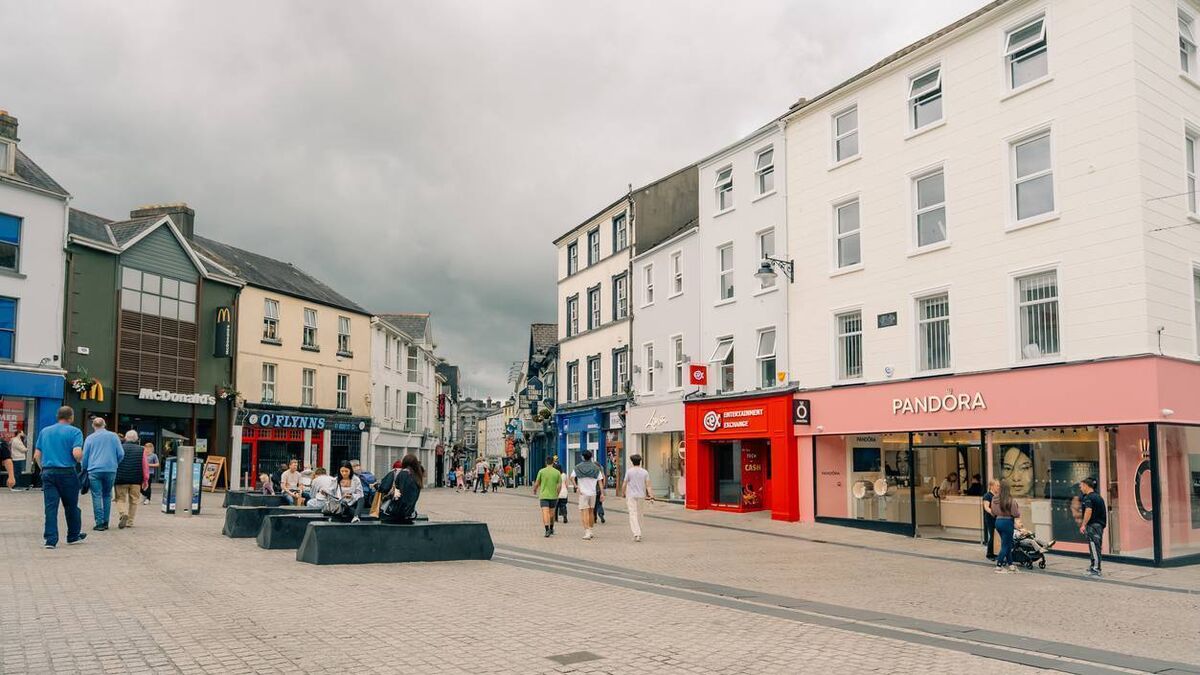
A review of the town centre groups has taken place, and a draft report has now been submitted.
Advisory town centre groups funded by the taxpayer are not operating as intended, and an overhaul has been suggested.
In recent times, elected members of Waterford City and County Council have sharply questioned what the role of these groups actually is, how they coordinate their business, and how membership is determined.
These concerns have now led to the creation of a 50-page draft review document, which analyses the terms of reference dictating each of the groups.
Last week, this report was rejected by councillors, who say that their concerns regarding membership of the groups have not been taken into consideration.
In 2013, three town centre groups were established; Waterford city, Tramore and Dungarvan.
The general goal of these groups was to act as advisory bodies for the Council, and to help improve vibrancy in Waterford’s main urban centres.
Whilst the Waterford and Tramore Groups still meet, Dungarvan’s last meeting was in 2023.
The day-to-day operation of the existing groups, including organising and holding meetings, carrying out research, updating of website, printing material etc, is all covered by the Council.
The establishment of these groups in 2013 coincided with a major overhaul within the local authority itself, with the abolition of the old Town Councils in Dungarvan, Tramore and Lismore, and the establishment of the newly amalgamated Waterford City and County Council in 2014.
A review of the town centre groups has taken place, and a draft report has now been submitted. It recommends restructuring or re-establishing the groups.
The review was conducted on foot of a number of issues, including a lack of clarity as to the role of the groups, confusion over who decided membership, a trend of unfocused and irregular meetings within the groups, and communicative lapses between the groups and the Council.
The report and its recommendations was largely rejected by elected members during last week’s Plenary meeting.
Councillors said that the existing town centre groups have failed in their original targets of injecting vibrancy into urban centres.
The members also expressed considerable concerns at the report’s recommendation that only a maximum of two elected councillors can sit on each of the groups.
Currently, the group’s members are drawn from across the business and community sectors in Waterford.
Some people have been members on groups for a long time, with little evidence of renewal or reconfirmation of membership.
A small number of city and county councillors also sit on each of the groups.
The recent report recommends that from now on, a maximum of two councillors can sit on each.
This finding was sharply rejected by councillors last week.
Fianna Fáil councillor, Eamon Quinlan, said he was "dismayed" when he read the report.
“Two councillors for each of these groups means that fundamentally the elected representatives will be outnumbered,” he said.
“The last thing we want is another bureaucracy setup where individuals in certain communities can elevate themselves without ever having to make themselves accountable.
“These are people who are unelected, and who are directing public money on public resources without ever having to make themselves electorally accountable. I fundamentally disagree with this, and I am not supporting it."
Meanwhile, Dungarvan-based councillor, Damien Geogeghan (FG), suggested that the lines are blurred between the individual function of the Plenary Council, District Councils, town teams, and further sub-divisional groups operating in Waterford.
He added that this issue began with the disestablishment of Town Councils in 2014.
“I have no problem saying it, my own party colleague at the time Phil Hogan destroyed local government when he got rid of Town Councils,” Cllr Geoghegan said.
“We used to have town councils delivering for our towns, and now all we have is a mishmash of groups, and the elected members who went out and knocked on doors to get elected have a secondary role.
“This report in front of us today is the outcome of that. This is a document where we’re trying to put humpty-dumpty back together again. I’m out,” Cllr Geoghegan said.
Sinn Féin councillor, Pat Fitzgerald, shared a similar sentiment, saying: “We have a Plenary Council, we have a Chamber of Commerce, we have a South East Regional Assembly. How many more entities do we really need?”
Independent city-based councillor, Donal Barry, said that his takeaway from the report is that Waterford must stop talking about its potential, and must now start realising it.
“Some of the structures of these groups are in place since 2013, and yet we’re still discussing communication, representation and accountability. I think all elected members should be kept informed and given the opportunity to contribute going forward. We need clarity on funding, a clear implementation plan, timelines, named responsibilities and regular progress updates."
Before any of its proposed recommendations can be enacted, the specifics of the report will now be discussed further at the Comeragh, Dungarvan/Lismore and Metropolitan Districts.