In Focus - Men's Development Network: 'A nonadversarial approach is crucial'
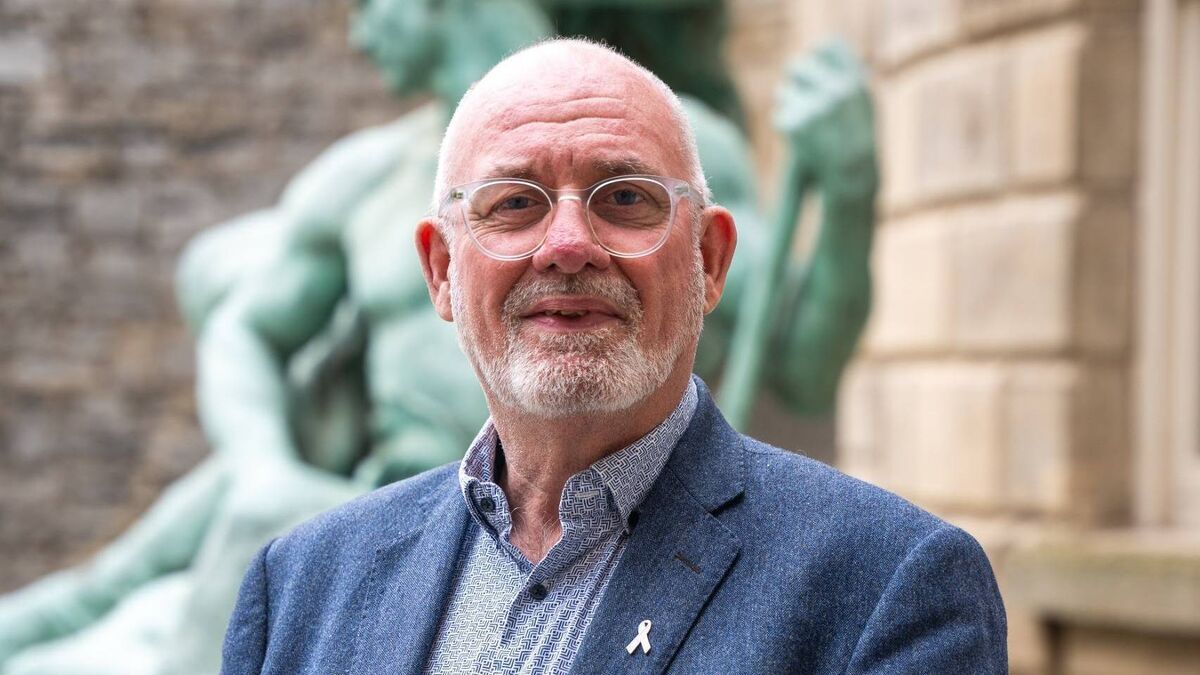
Sean Cooke, CEO of Men's Development Network
With offices located just off the quays, the Men’s Development Network’s roots are firmly planted in Waterford City, even if their organisation has grown to a national scale since its humble beginnings.
Established in 1997, they now lead the White Ribbon Campaign in Ireland, a movement against gender-based violence that operates across 60 countries.
With a 30-year anniversary on the horizon, as well as a national conference in the Aviva stadium on November 19, they’re busy on a big scale. Despite this, CEO Sean Cooke still finds the time to sit down with the Waterford News & Star to give an insight into the work they do.
Aiming to summarise, he says the Men’s Development Network (MDN) engages with men and boys around their health and wellbeing, gender equality and ending gender-based violence by striving for a more equal society.
“The MDN was started by a group of men who came together to support one another to be the best fathers, partners, uncles - whatever they could be,” explains Sean.
“The core aspects of the work is very much around encouraging men to be their most authentic selves and to strive towards a society that is equal,” he said.
As we talk in their O’Connell Street headquarters, chatter can be heard in the corridor, of staff and service users coming and going from their offices, an accurate illustration of how consistently busy their organisation is.
Due to the range of services the MDN runs, these people could be here for any number of reasons - but as he describes the different kinds of work they do, Sean clarifies that a non-adversarial approach is a crucial constant in their work.
He explains that this is especially important when dealing with young men and teenagers, something that the MDN provide training to post-primary school staff in.
The training in question is the ‘Post-primary Schools Programme’, which aims to support all staff (not just teachers) in dealing with gender-based issues in schools.
First launched in 2022, 11 schools across the country have since gotten involved, with the MDN recently putting out an appeal to Waterford schools to get on board too.
Sean explained that the reason they started the programme was the feedback they received from teachers dealing with these issues in the classroom, describing how some aren’t confident enough in their ability to challenge them.
Their training aims to build confidence among staff in challenging harmful gender norms and educating students about healthy relationships and equality.
Part of the reason this issue has started to become more common is the way attitudes among some young people are being influenced by the internet, which Sean says has emboldened them in the language that they use around gender.
“Certainly, women teachers are finding that really challenging,” says Sean. “It’s sometimes done in a way that’s really harmful.”
“In some cases, the young men in question are actually thinking ‘this is only rising somebody',” says Sean.
“We can go and justify it based on that. But there’s an intention there, with the particular subject they’re choosing. They know it's going to cause a reaction, and they know it's going to cause harm, and they go ahead.”
He points out that these kinds of interactions can’t always be dealt with the way a typical classroom disruption is.
“If you’re going to challenge a teenager, and you do it in front of their peers, there’s an element of shaming and one-upmanship attached to that,” he says.
“It’s important that you take them aside, you do show them respect, you show them dignity but also challenge the behaviour in a respectful way. We’re trying to give teachers that kind of training and to instil it at an organisational level.”
The MDN’s goal here is not to educate in a student curriculum kind of training programme. Instead, they look at it as encouraging a sustainable cultural change within a school.
“The White Ribbon Schools Programme has been very much around training teachers, training the Board of Management, training the staff within the school to build a culture of change, to build an infrastructure within that organisation,” he said.
“I know students and teachers turn over, but if you build some kind of infrastructure within the college, there’s a greater chance that these things will have a sustainable impact.”
While the MDN are encouraging more schools to get involved with the training, scale is an elephant in the room that’s hard to ignore.
There are roughly 370,000 secondary school students in Ireland, spread across 768 schools, which makes it virtually impossible for the programme to reach everybody. It would be a costly exercise, and Sean says he has yet to see the political will to undertake it.
He believes another challenge they face is that ultimately, schools have the goal of teaching the curriculum, and as a result other things can be viewed as a chore.
“Anything outside your reading, writing, arithmetic, is not going to be recognised by the department. If you achieve great things with an extracurricular thing, you won’t receive any extra resources.
“There's no gratification mechanism or acknowledgement mechanism in relation to that.”
It’s not all hopeless, however. The MDN have been involved in the National Curriculum and Assessment Group, where they have begun to use the language of how to engage men and boys that they suggested.
Their invitational, strengths-based approach to it has been incorporated in terms of the language used within the new curriculum developing around the SPHE.
While this is progress, there is still a long way to go - for example, making these kinds of skills a requirement for learning in the teaching colleges is just one of the many ideas presented by Sean.
While it is certainly a challenging and evidently arduous journey the MDN has set itself on, the progress they are already making is encouraging and gives the distinct impression that the task is in safe hands.