'Nothing has changed' - Waterford Council stands firm against controversial windfarm plan
Waterford City and County Council has confirmed its opposition to the proposed Dyrick Hill Wind Farm.
The council recommended to An Bord Pleanala in 2023, that the strategic infrastructure project, which would see 12 wind turbines built in the Knockmealdown mountains, be refused.
The board subsequently refused permission.
However, that decision was quashed at the High Court earlier this month, which has reactivated the case.
At a special sitting of the Dungarvan-Lismore District Council, Senior planner Aisling O’Sullivan said the council and its elected members have been asked to resubmit their view on the project.
Now Coimisiún Pleanála is asking the council to submit its comments and recommendations as well as comment on whether the board should exercise its powers to “depart from” the Waterford City and County Council Development Plan.
“So basically, they want us to comment on what we think of our development plan being materially contravened to facilitate this development, and we are to do so in light of the Climate Action and Carbon Development Act 2015,” said Ms O’Sullivan.
Ms O’Sullivan went on to tell the councillors that nothing has changed for the council.
While they agree renewable energy projects should be facilitated, they need to be done in a way to protect the area they intend to build on.
Furthermore, the council is of the view that the development plan was written in line with the most recent legislation on climate action and should only be contravened in exceptional cases, of which this is not.
“Basically, we are just reiterating our position that we held in 2023. That nothing has changed, I suppose, policy-wise from Waterford City and County Council’s perspective, and we ask that the board uphold our original recommendation that the application is refused,“ said Ms O’Sullivan.
Councillors present agreed unanimously to approve the council’s submission, with some expressing frustration at being asked again.
Cllr Niamh O’Donovan said this was a waste of time for both the council's planners and the elected members.
The Modeligo councillor said that she acknowledged that every effort is being made to make sure Ireland meets its climate targets but nothing has changed ecologically or in terms of the county development plan.
“To reactivate a case, it’s actually infuriating when we have done all of this before.
“Nothing seems to have changed. It’s a lot of time that our valued planners in our councils have to spend.
“But the reality of this, I would actually call it time-wasting.
“I wasn’t part of the development plan, but I am living very close to Dyrick Hill here, and I welcome the general consensus around the room today that nothing has changed," said Cllr O’Donovan.
Cathaoirleach, Cllr John Pratt also felt the process was a waste of time.
“Our position hasn’t changed. If it was a no-go area then, it’s a no-go area now, in our opinion. Like why do we come up with our rules if they are not actually implemented,” said Cllr Pratt.
Cllr Damien Geoghegan proposed a unanimous vote in support of the planning application, whose view on the matter has not changed.
Cllr Geoghegan also noted that the previous council made this decision and that was upheld by the current one, which is a significant part of the Waterford council’s position.
“What we agreed at that time is that the proposed development would materially contravene our development plan, particularly policies around our landscape and wind energy, so things haven’t changed for us,” said Cllr Geoghegan.
Cllr Thomas Phelan seconded the proposal, saying: “I wasn’t in favour of this at the time; nothing has changed.
“As Aisling said, our stance and our policies were all after the Climate Change Act, so it's not as though we haven’t taken these things into account.
“So in fact it would be kind of strange if we suddenly changed our minds.”
Cllr Pratt concluded by that it was important the old council and new council come together on the matter.
EM Power is proposing to build 12 wind turbines on Dyrick Hill which would be in operation for 15 years.
But the council say that this area is a no-go area for wind farm development and is considered a “most sensitive area.”
The most important thing to note here is that the council don’t get to decide.
The project is what's called a Strategic Infrastructure Development, which means the state is the decision-maker; in this case, Coimisiún Pleanála.
The council’s role is to either support or oppose the development and, if they oppose it, issue a set of recommendations to mitigate the effects of the project in the area.
That area is home to a plethora of flora and fauna, some of which is protected.
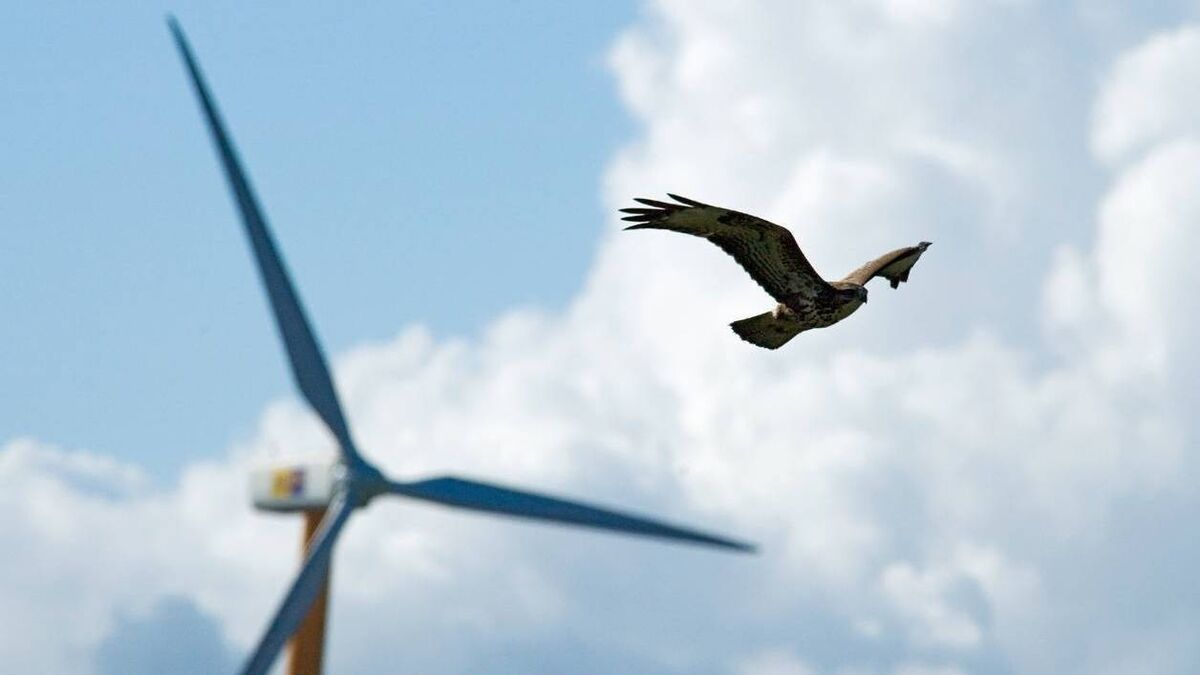
EM Power’s own ecological studies showed the presence of hen harriers, buzzards, kestrels, stock doves, peregrine and many more.
Birds like the hen harrier and peregrine are protected under Annex 1 of the EU Birds Directive.
Their assessment also showed bats in the area, which are also protected.
EM Power say they can mitigate the harm to wildlife in the area and would monitor the turbines to see if they have an impact.
But Waterford County Council say the project should not go ahead at all for both the visual amenity for humans and to preserve the precious biodiversity living in the area.
The county develop plan protects the area, and in order for the project to go ahead, that would have to be contravened.
The area also borders the Premier County and so Tipperary County Council submit its view of the development to the original application.
They said that while the development was not in Tipperary, the visual impacts of the wind farm would be shared in the neighbouring county.
They too opposed the project.
Coillte, the Knockmealdown Protection Group, TD Mattie McGrath, FuturEnergy, the Irish Peatland Conservation Council and a number of individuals also submitted objections to the proposal.
Following the reactivation of the application, Tipperary TD Mattie McGrath responded on social media saying the case was not only a threat to communities in Waterford and Tipperary but also local democracy.
"This case also raises a much wider issue about the value being placed on local democracy. County Development Plans cannot simply be ignored by big business, they are adopted by democratically elected councillors following extensive public consultation and are intended to reflect the needs, priorities and wishes of local communities.
"The fact that this project was previously refused, in part because it conflicted with planning policy and an identified wind energy exclusion zone, has left many people questioning whether the development plans for Waterford and Tipperary are being respected at all," said Deputy McGrath.
A decision on the reactivated case is due in November.