A new name for a new bridge
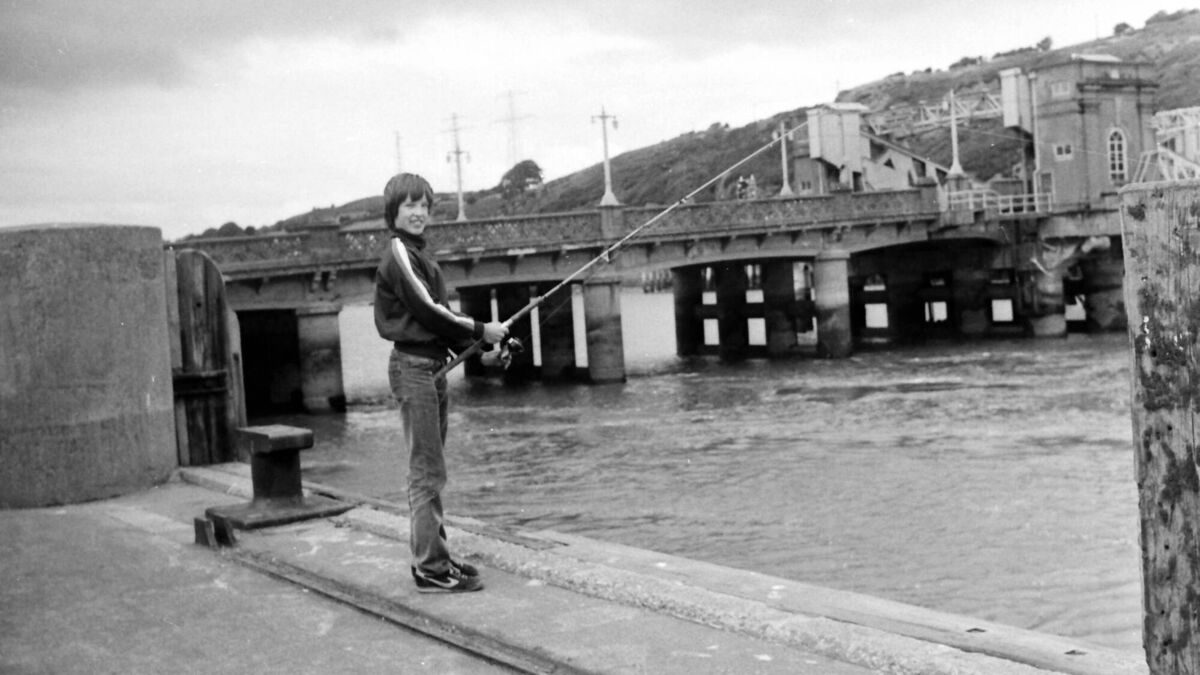
John Clooney, doing a spot of fishing on The Quay from the River Suir back in 1982.
In a densely forested country, rivers were the motorways of ancient Ireland. Any item bigger than you could carry in your hands would travel by boat.
The three sister rivers of the Nore, Suir and the Barrow drain or access one-fifth of Ireland’s land mass. Whoever controlled access to these rivers controlled access to the countryside and the ports as they developed.
The importance of this transport network was recognised by the Vikings, who settled Waterford in 914, and their importance to the development of this corner of our island nation cannot be overstated.
As trade grew more complex and people’s need and desire to travel grew, the ferries that plied their trade at Waterford could no longer meet these demands, and it became apparent that only a permanent bridge would suffice.
In 1793, a significant sum of £30,000 was raised (to be repaid by a toll) to construct a bridge over 800 feet in width. The man chosen for the task was an American engineer, Lemuel Cox, who specified that only oak from his native America would suffice.
This wooden construction opened to the fee-paying public in 1794.
It was a significant achievement for the time – a practical solution to move people and goods across the wide, tidal river – and it became a familiar part of the city for well over a century. No record of an official name for the bridge can be found, and, being the first of its kind, it was probably referred to as “The Bridge”. However, Irish people love a good nickname, and it quickly started being referred to as ‘Timbertoes’.
Timbertoes did its job for decades, but wooden bridges age, and, with changing traffic and the industrial pressures of the 19th and early 20th centuries, the need for a stronger, more modern crossing grew.
In 1913, a new bridge was formally opened by John Redmond MP – and for many years it was simply called the Redmond Bridge (or John Redmond Bridge). It symbolised early 20th-century civic pride – a step up from timber to a more robust structure, better suited for motor traffic, trams, and heavier loads of the modern age.
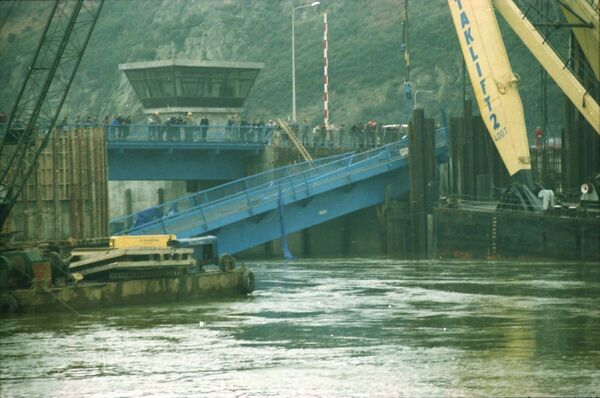
Fast forward to the latter half of the 20th century: the city centre’s bridge had to keep pace with ever-increasing traffic demands, and by the 1980’s the Redmond Bridge was judged insufficient. Enter the Rice Bridge – officially the Edmund (or Brother Edmund Ignatius) Rice Bridge – built in stages during the 1980s and opened in its first phase in 1984, completed by 1986. The construction of this bridge wasn’t without incident, when a crane cable snapped, causing part of the new lifting section of the bridge to fall into the river below.
What had been a dream for decades was realised in 2009 when the second road bridge at Waterford opened – the River Suir Bridge, now officially named the Thomas Francis Meagher Bridge. This construction marvel is a landmark: 445 metres long and over 100 metres high, with fans of stay-cables that lift the deck above the river. It wasn’t just about looks, though; the bridge allowed heavy traffic to avoid the city centre, easing congestion and reducing journey times on a national route. Appropriately, archaeological work necessitated by the bypass led to major discoveries at Woodstown on the banks of the Suir, and we gained a greater understanding of the early Viking settlements.
When we look at the evolution of Waterford and its bridges, some points become evident. Bridges are mirrors of their era. Timbertoes was practical and local; Redmond Bridge reflected early 20th-century civic ambition; Rice Bridge answered late-20th-century traffic needs; the Meagher Bridge shows 21st-century engineering and regional planning ambitions.
Each replacement or new build reveals changing technologies and priorities – from wood and local materials to concrete and steel, to cable-stayed design with long, unobstructed spans. Engineering choices follow economics, politics, and social patterns – everything from tolls and private subscriptions in those early days to the national road projects of recent years.
The latest bridge project represents these trends coming full circle. The previously mentioned bridges all shared one common purpose: to facilitate greater levels of traffic. Interestingly, the latest bridge bucks this trend: its purpose is to reduce traffic on our roads and to facilitate and encourage more sustainable modes of travel across the river at the heart of the city.
The new sustainable transport bridge is more or less complete; it lies in wait until construction on the North Quay catches up with its progress.
These bridges are not just impressive feats of engineering. The names chosen for them (whether by council vote or affectionately bestowed by their users) indicate their importance in the psyche of Waterford people.
Bridges are also memory-keepers. In days gone by, people would reminisce about the wooden “Timbertoes”, and city archives keep photos of crowds at the opening of Redmond Bridge in 1913. The dramatic events during the final stages of the completion of the Rice Bridge in 1986 were watched by crowds of bystanders. I was one of the people who proposed the name of the Thomas Francis Meagher Bridge and was lucky enough to attend the naming ceremony of that bridge.
Today we have a nameless bridge to nowhere. The march of progress will provide a destination to the North Quays, and it is up to the people of Waterford to provide a name.
For a name, perhaps we should look at the river it crosses. Suir is an old Gaelic term meaning “sister”, and as we know, it is one of the three sisters that flow into Waterford Estuary, which over time have played such a role in the development of our county. The oldest city in Ireland has sadly overlooked the importance of our maritime heritage, and, as a society, we have failed to recognise the contribution made by the women of Waterford and the surrounding counties. Now, as we have a bridge with no name, perhaps we have a chance to remedy these oversights.
A fitting name for our new bridge would be Droichead na Deirfiúracha, or Sisters Bridge in English. This name acknowledges the importance of the waterways to the people of the South East, and as our new bridge is progressive in its purpose, it should also be progressive in its naming, acknowledging the role of women in our society.