'Witch hunt': Charges of perverting course of justice dropped against three Limerick gardaí
David Raleigh
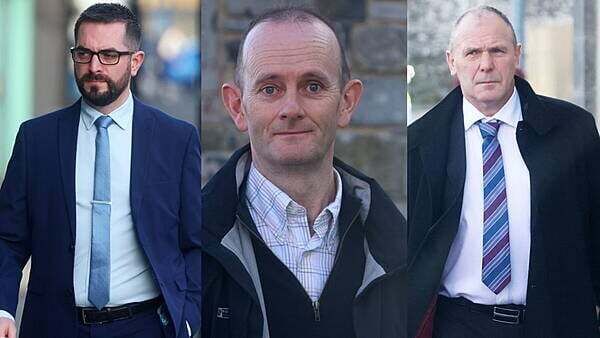
Three Limerick-based gardaí walked free from court with their innocence intact after enduring a “six-year hell” and “witch hunt”, having faced unproven accusations of perverting the course of justice.
The State officially withdrew a total of 33 charges against Garda Peter O'Donnell, Garda Paul Baynham and Garda Niall Deegan on Wednesday.
The three gardaí, who had denied any wrongdoing, were suspended from the Limerick Garda Divisional Roads Policing Unit in 2019, following a garda probe into alleged unlawful interference by gardaí into potential or pending road traffic prosecutions.
The probe was focused entirely on the Limerick Garda Division and led by the Garda National Bureau of Criminal Investigation (GNBCI), based out of Garda offices at Harcourt Square, Dublin.
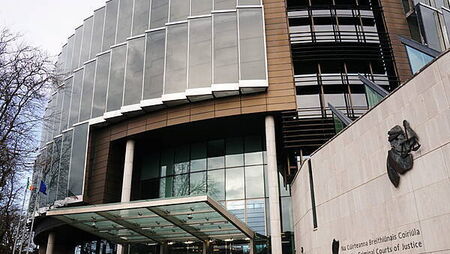
On Wednesday, at Limerick Circuit Criminal Court, prosecuting barrister, senior counsel Carl Hanahoe, withdrew all of the charges by entering in court a "nolle prosequi", a Latin term meaning ‘do not prosecute’.
The GNBCI investigation had led to charges of perverting the course of justice being brought against a total of seven gardaí and a retired superintendent.
Last January, the other four accused gardaí, including Sergeant Anne Marie Hassett, Sergeant Michelle Leahy, Garda Tom McGlinchey, Garda Colm Geary, and retired Superintendent Eamon O'Neill, were each acquitted by a jury following a nine-week trial held at Limerick Circuit Criminal Court.
The five accused defence counsels argued the case was centred around the long-standing practice of “garda discretion” whereby gardaí use their own common sense when dealing with members of the public.
The prosecution had argued that preferential treatment was given to certain members of the public because of their association with Eamon O’Neill when he was a Superintendent in the Limerick Division, which was denied.
Hassett and O'Neill, who are married, have initiated High Court proceedings against the State seeking damages.
Speaking outside the courthouse on Wednesday, Garda Frank Thornton, Garda Representative Association, Limerick Division, said Gardaí O’Donnell, Baynham and Deegan had suffered a “six-year hell” while waiting for the matter to come before the courts.
Thornton said the GRA’s “sense of relief” at the withdrawal of the charges was “hampered by a suffocating emotion of anger and disbelief that our colleagues and their families have had to endure more than six years of exile, suffering, personal anguish, and character assassination”.
“As a Division, the members in the Limerick Division have shown unmeasurable resilience in maintaining the highest possible standard of service to the people of Limerick while our confidence and morale has been shattered,” said Thornton.
Thornton said he had “continuously highlighted the absolute necessity for an independent appeals process for the An Garda Síochána Suspension Policy”.
“These members along with other members throughout the country, are living proof that the Garda Commissioner must include an independent appeals process for the An Garda Síochána Suspension Policy, and anything less is a dire dilution of our basic employee rights and entitlements to fair, independent due process,” he said.
“What has unfolded here in Limerick with this witch hunt, is a stark reminder to all, that an independent public inquiry of this investigation is not an option for the Minister for Justice, it’s an absolute necessity.”
“The Taoiseach and Tánaiste have agreed with a review, but I believe that the only review possible is one in the form of an independent public inquiry.”
Thornton said: “The people of Ireland deserve answers as to how over 2,500 lifesaver offences were simply struck out, due to this botched investigation, while our colleagues were suspended.”
Gardaí who are not present in court through suspension or otherwise are not available to prosecute cases in court, and therefore a judge can decide to strike out or withdraw the charges.
Garda Commissioner Justin Kelly and Minister for Justice Jim O’Callaghan have previously indicated that they did not believe an independent report was necessary.
Thornton said he was “concerned with what appears to be a closing of the ranks between the Garda Commissioner and Minister for Justice, who recently appeared to sing from the same hymn sheet of “nothing to see here move on””.
“An Garda Síochána is founded on trust and transparency; therefore, let our leaders lead the way now with an independent public inquiry,” added Thornton.
Solicitor Liz Hughes of Hughes Murphy, representing Gardaí Baynham, O’Donnell and Deegan, said the three Gardaí “would like to acknowledge the support from their families and friends and colleagues, who saw daily the toll this took on them and whose reassurance kept them going”.
“The complaint against these members was always without foundation,” said Hughes.
The solicitor said the “precedent” of garda discretion “has long been set by custom and practice, and was “long established” in Irish society taking the view “that the Guard on the front line has common sense and the wit to apply it”.
“From the moment I was first instructed in these matters I was of this view, and I have not wavered ever since.”
“Garda Management is just as well aware as we are of this custom and practice established over many generations of Community Policing. “
“What’s more, Garda Frank Thornton, in his role as then President of the GRA, took every opportunity to remind them of this, articulating that one Division and certain Members in particular were being treated unequally and unfairly.”
“Garda Management could have listened but seemingly refused to,” said Hughes.
Hughes called for “public inquiry” to “address these matters and the questions as to how this happened, and the consequences that flowed from it”.
Garda Headquarters and the Department of Justice have been asked for comment.