At the Movies with James Phelan: The death of Robin Hood
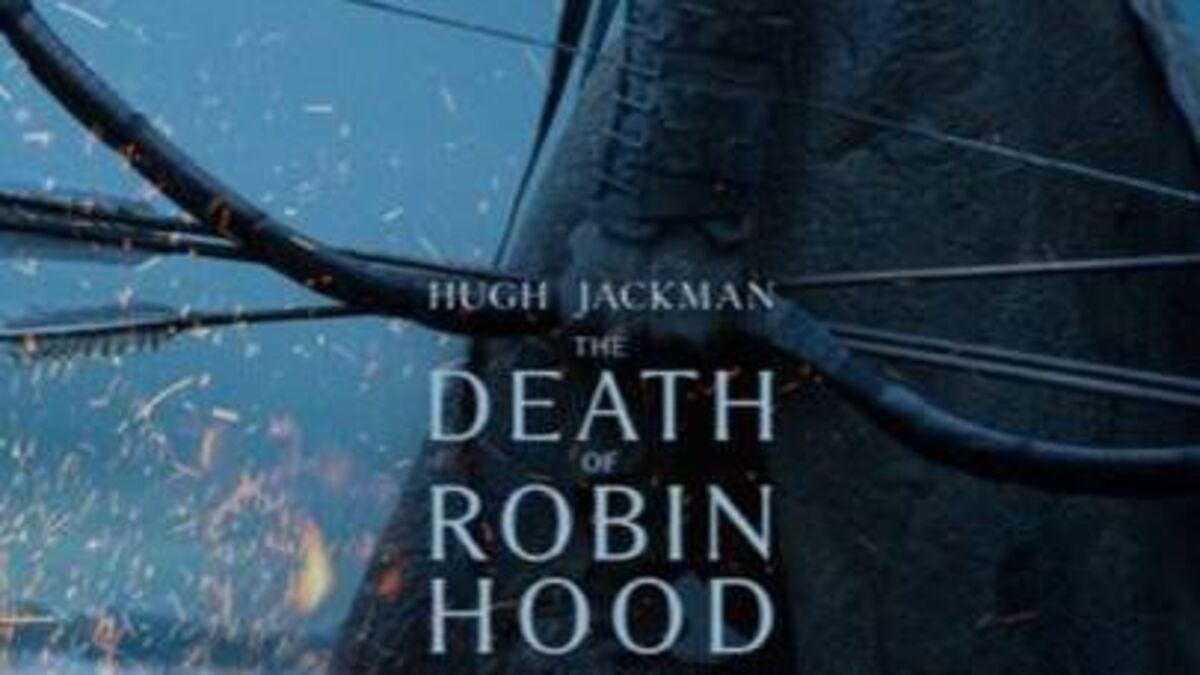
The Death of Robin Hood
Banish any thoughts you might have of Robin Hoods past. Forget everything from Errol Flynn to Kevin Costner. Let go of notions of a sun-dappled Sherwood Forest and merry men.
Cast aside even earlier cinematic attempts to deliver a grittier version of the archer, like Ridley Scott’s 2010 take. Because this boundlessly bleak film is intent on burying the legend. Beneath layers of grief and guilt so deep that even the inherent entertainment value of the piece is nearly extinguished.
The flame of interest and intrigue just about stays alive for the audience but this is a bracing creation that openly defies the conventions of mainstream movies. Need an example? Early on, a young boy flees after witnessing a murder. Screenwriting rules dictate that there’s no way our main character is going to fire an arrow at an innocent kid.
One arrow through the head later and we are considerably wiser and primed for sinking further into this blood and mud-soaked exploration of a life of sin. And the search for a good death. In the lead role, Hugh Jackman studiously shuts down his star wattage to serve a script and vision that evokes an era where everyday survival is a brutal and grubby battle for scarce resources.
We first meet Robin in an ice-blasted mountain enclave where he is already, to quote a famous Keats' poem, ‘half in love with easeful death’. Nothing is easy for Robin, though. So even when exhausted assassins climb to his hermit lair, he shows them hospitality at first. Yet when things turn cutthroat, his ingrained will to survive and murderous muscle memory won’t allow him to succumb to amateur attempts on his life.
Is he seeking to take pride in his own demise? It would be unusual in the context of the film because this is a legend stripped of any grandeur or lightness. Due to the trail of anonymous dead he has left in his wake over decades, there is no shortage of wronged mourners willing to climb this mountain to kill him.
Robin is lured from his peak by Little John who has sought to escape his outlaw infamy by posing as a farmer called Edward. The reunited duo’s attempts to win John’s family back with violence would almost be darkly funny if it wasn’t so devastatingly bleak and gruesomely graphic.
For the folly of backing up his blood brother, Robin sustains a litany of life-threatening injuries. He is spirited away to a monastic settlement on an island where one benign nun Sister Brigid (Jodie Comer) sets to healing a man who is broken in every sense.
Comer immediately enlivens and brightens the film with her baseline excellence. And there’s a hint of a redemptive arc in Robin’s faltering efforts to shape the future of two youngsters that he feels increasingly responsible for.
In truth, I found the first half of this film a very grim grind. The unremitting bleakness and barely illuminated blackness of the visuals is probably courtesy of the kind of cinematography virtuosity that wins awards. But, frankly, an audience doesn’t really care whether a scene is lit by moonlight or candlelight.
Just give us characters we can see and care about. And that’s what makes ‘The Death of Robin Hood’ such a curious beast. You can see the attraction of the role for Jackman. There must be certain roles an actor gives up on as he ages. Hamlet? Batman? Robin Hood? Surely these parts are behind or beyond someone of Jackman’s vintage.
So, writer/ director Michael Sarnoski’s earthy late-life approach must have seemed like a gift from the gods. Jackman gives it his all. We struggle to judge his accent because he’s so damn taciturn. He exudes the weariness of a man reared in pain and soaked in conflict. His death in this film is literally death by a thousand cuts. All the scar tissue and cauterized wounds in the world can’t heal the horrors he has seen, endured and inflicted.
In keeping with a film so stubbornly adverse to easy story beats, the ending doesn’t serve up the expected outburst of cathartic violence either. I was fully expecting Robin to protect the island from invaders in one final stand but the film deprives us of that too. Instead, we get no pyrotechnics nor histrionics.
If this film doesn’t perform at the box office, there will be a million armchair experts pointing out how early and often Sarnoski went wrong. Incorrect decisions will be cited but really, this feels like a genuine uncompromised artistic effort masquerading as mainstream entertainment. I’m still deeply uncertain about whether I even like ‘The Death of Robin Hood’. But I know I admire it.