Roibí O'Rua: Waterford's Best Kept Arts Secret
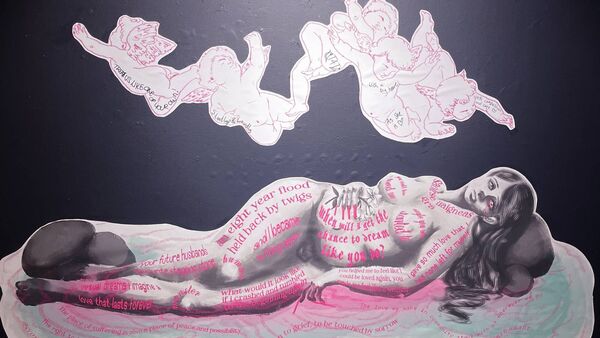
Roibí O'Rua feels art is a record of what makes us human
This year, Pride of the Déise / Bród na nDéise launched its first ever Artist Bursary, and Deise Doll Roibí O'Rua was the one to claim it. The Waterford-based trans artist, DJ, and musician is the creative force behind our 2026 official festival poster, supplement cover, and festival tee. We sat down with her to talk art, queerness, world-building, and why art is undeniable.
Truly, it means the world. While I described myself as 'Waterford's Best Kept Arts Secret' in a tongue-in-cheek kind of way, there is an element of truth behind it! Within my community, I'm known for being one of the dolls and a DJ; I used to work in arts admin, etc., but my vocation is that of an artist.
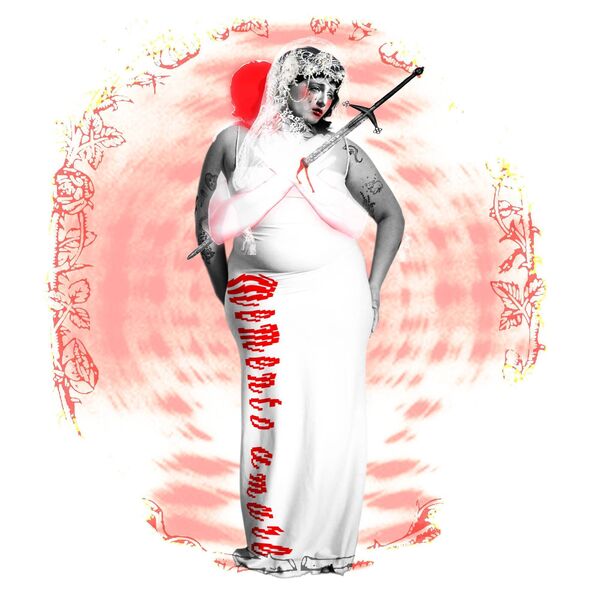
It's what I studied in college; most of my work opportunities have been visual arts-oriented, just not often in Waterford. With that being said, it's beautiful to be reaching a place as an artist where I can feel my hometown becoming a home for my work and my career, something as a teenager, I never would have thought possible.
For me, there's no reality in which they're not connected. While DJing, making music, and visual art may seem like different arts to others, they're more like petals of one flower to me. Everything that I do is rooted in queerness and queer culture; nightlife is such an integral part of that. The 'club' is a petri dish of culture and lived experiences - it's where the intersections of my identity thrive. My practice explores ideas through processes of world-building, utilising different disciplines as part of that, which allows me to communicate a richer world through my various works.
Ní dóigh liom go bhfuil freagra díreach agam ar seo. Tá an ealaín tábhachtach domsa mar dhuine, beag beann ar m'aiteachas - is soitheach nó creat í a ligeann dúinn cultúr a ghiniúint, eispéiris a phróiseáil, stair a thaifeadadh agus cumarsáid a dhéanamh ar bhealach nach gceadaíonn focail i gcónaí. Sílim gur féidir le m'aiteachas, mar sin, tábhacht na healaíne domsa a mhéadú. Má tá tú i do chónaí le féiniúlacht imeallaithe, brúnn tú i dtreo na n-ealaíon. Is minic gurb é an t-aon asraon don 'féin' is féidir leat a bheith agat, ceann atá gan staonadh ina ghlacadh leis an méid atá le rá agat.
Is cuimhin liom an chéad uair a tháinig mé ar an eolas faoin dealbh Sleeping Hermaphrodite - agus mé á fheiceáil go pearsanta sa Louvre níos déanaí. Bheinn i mo dhéagóir óg ag an am, ag déanamh taighde ar mhiotaseolaíocht agus ar dhealbha ársa, nuair a fuair mé an dealbh. Léirigh sé sinsearacht chultúrtha - nach raibh an chaoi a raibh mé ag mothú fúm féin, faoi m'inscne agus faoi mo ghnéasacht, chomh nua sin - go raibh daoine cosúil liomsa ann chomh fada siar leis na 100í R.Ch. Tá an ealaín tábhachtach domsa mar ní féidir í a shéanadh, is cuma cé chomh teibí, ársa nó esoteric is a d'fhéadfadh rud éigin a bheith. Is cruthúnas beo é go raibh daoine ag smaoineamh agus ag cruthú - is taifead é ar a ndéanann daonna sinn.
I don't think I have a direct answer for this. Art is important to me as a person, regardless of my queerness - it's a vessel or a framework that allows us to generate culture, process experiences, record histories, and communicate in a way that words don't always permit. I think my queerness can amplify what art's importance is for me. To exist with a marginalised identity pushes you towards the arts. It's often the only outlet for the 'self' that you can have, one that's unrelenting in its acceptance of what you have to say.
I remember the first time I became aware of the statue Sleeping Hermaphrodite - later getting to see it in person at the Louvre. I would have been a young teenager at the time, researching mythology and ancient statues, when I found the sculpture. It signalled a cultural ancestry - that the way I was feeling about myself, my gender, and my sexuality was nothing new, that as early as the 100s BCE, people like me existed. Art is important to me because it's undeniable, regardless of how abstract, ancient, or esoteric something may be. It's living proof that people were thinking and creating - it's a record of what makes us human.
My initial inspiration was from the aesthetics of queer liberation: symbols like the lowercase lambda as used in the 1970s by New York's Gay Rights Alliance, and the green carnation, popularised by Oscar Wilde as a symbol of homosexuality. In line with this year's theme, Super Queeroes, I also looked to the aesthetics of comic books, pulp magazines, and punk zines, drawing from intersections of superheroes and queerness.
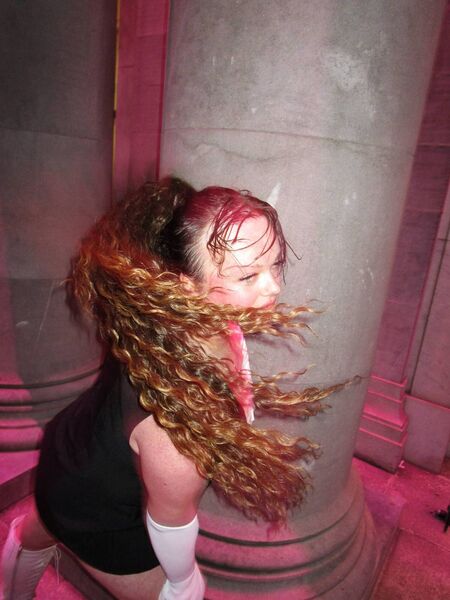
I'm most excited for people to see the crowd of protesting heroes, which is based on an image of Dublin Pride in 1993 found in the Irish Queer Archives. Each character is a unique hero with their own identity - I tried to make it so that the viewer would be able to see themselves in the crowd. The banner they're carrying is an often-quoted phrase from queer revolutionary Marsha P. Johnson, one that rings as true today as it did in the seventies:
"There is no pride for some of us without liberation for all of us."
Ní neart go chuir le chéile! Ceapaim le hÓige Aiteacha, ach go háirithe i mbailte beaga, is féidir nós a chruthú scaradh óna chéile - sin mar a bhí sé i mo bhlianta féin mar dhéagóir. Bhí an chuid is mó do mo chairde na laethanta seo ina ndéagóirí aeracha, 'amach' ag an am céanna liomsa, ach níl sé ach inár mbeatha fásta ina gcuirimid fios ar a chéile. Táim uaigneach don déagóir ina raibh mé agus cad a d'fhéadfadh bí di dá dtabharfá mé, agus mo mhuintir, cead dúinn féin a chéile a lorg amach. Tá i bhfad níos mó ann dúinn ná fios ag aon duine ar bith - bain leas as.
Ní neart go chuir le chéile - there's no strength without coming together! I think queer youth, particularly in small towns, can develop a habit of distancing themselves from one another - at least that was the case in my own adolescence. A lot of my closest friends now were also out, queer teenagers at the same time I was, but we've only gotten to know each other in adulthood. I lament for my teenage self and what could have been if I, and my current circle, had allowed ourselves to seek each other out. There are a lot more of us than any one person could fathom - take advantage of that.
Solidarity. As a trans woman who has witnessed the rise and fall of mainstream tolerance of my community since my teen years, I'm looking forward to having people around me and getting to feel at home in my city, even if only for a while. We are always here for each other - but Pride amplifies that. It offers a framework for our audacity, our safety, our expression, that the rest of the year we don't necessarily get to have. We should strive to feel that kind of liberation always.