Getting Quare Boaty: A Throwback to '90s Suirside Cruising
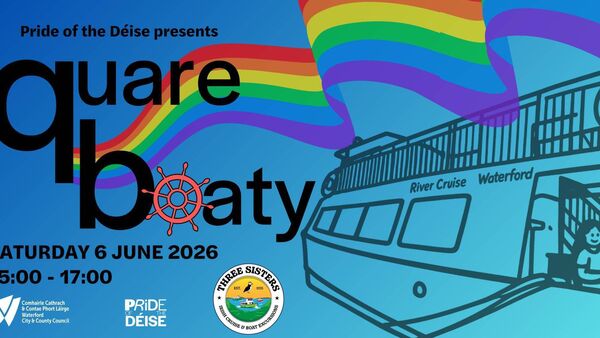
Quare Boaty will take place on Saturday, June 6, from 3pm top 5pm
It was the summer of 1999.
At the Waterford Cineplex, audiences were queuing for 'The Matrix', 'Notting Hill', '10 Things I Hate About You', and - for the younger crowd - 'the Rugrats Movie'.
The city was going about its business and tucked into page 34 of the Munster Express, between film reviews and a preview of a Red Kettle production at the Theatre Royal, was a small notice that deserves a second look.
'July 9–11 sees the return of Waterford's Pride Festival, which is a celebration of the diversity of the gay, lesbian, bisexual and transgendered community.'
The return. Not the first. Waterford had been doing this already.
The 1999 programme was ambitious. A photography exhibition at Garter Lane, Colour in the Streets by Christopher Robson, documenting queer life in Dublin and New York through the decade. Workshops at Waterford Regional Youth Services covering coming out, relationships, health, poetry, and improvisational theatre. Live music. A beach party. A football match. A table quiz at Locky's Wine Bar, with prizes, the notice assured readers, for the most outrageous answers.
And on the Saturday, following a cruise on the river, the festivities continued at Garter Lane.
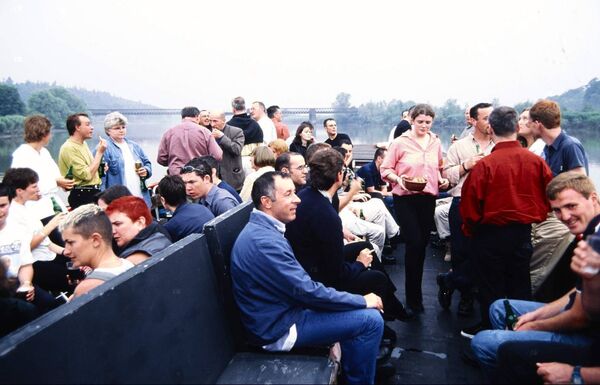
Now, for those unfamiliar with the wider cultural history of the word cruising, there is a text box nearby that may be of interest. What matters here is this: in the summer of 1999, while Waterford cinemagoers watched a film that its creators would later confirm was always an allegory for transformation and identity, a community was quietly, joyfully, defiantly getting on a boat.
Twenty-seven years later, Pride of the Déise is doing it again.
What is quietly remarkable (beyond the boat) is how much of that 1999 programme still exists in 2026.
This year's programme also features live music, poetry, youth events run in partnership with Waterford and South Tipperary Community Youth Services, theatre, a trip to the beach, football, and a continued partnership with Garter Lane Arts Centre that stretches back to those earliest festivals.
The names have changed. The community has grown. The city around it has changed enormously. And yet the instinct - to gather, to celebrate, to make space for every part of queer life - remains exactly the same.
What survives of that weekend is not just a newspaper notice. Photographer Christopher Robson (a Dublin architect, activist, and co-chair of the Gay and Lesbian Equality Network for over a decade) documented queer life in Ireland and New York throughout the 1990s, and his work from the 1999 Waterford Pride festival is held in the National Library of Ireland. Three photographs from that weekend have been digitised and are available to view in the NLI's online catalogue. They are an amazing record to have - not just of a festival, but of a community that existed, gathered, and made itself visible at a time when doing so still carried real weight.
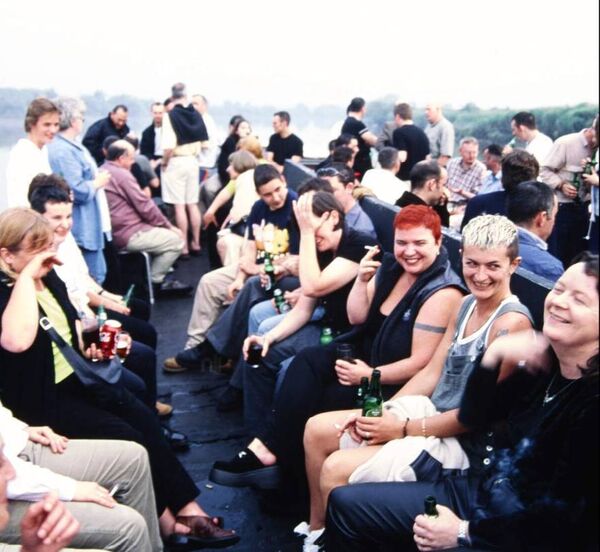
Quare Boaty, the grand finale of the POTD 2026 Festival, is a deliberate, affectionate homage to that tradition. On Saturday 6 June, the Barrow Princess - operated by Three Sisters Irish Cruise and Boat Excursions - sets sail from the quay at 3pm for two hours on the River Suir. Dr. Phil is on the decks. The bar is fully stocked. There are two levels to explore. And the community that has grown, changed, and endured across the decades since that 1999 notice will be on board together for one last bash.
It is, in the most straightforward sense, a boat party. It is also, in every sense that matters, a continuation. Waterford's queer community has been gathering, celebrating, and yes - cruising the river - for longer than many of its current members have been alive. Quare Boaty is not a new idea. It is a very old one, finally getting the send-off it deserves.
Tickets are €20. Limited availability at https://www.eventbrite.ie/e/quare-boaty-the-grand-finale-of-pride-of-the-deise-2026-tickets-1989150434496
cruising (n.) In LGBTQ+ slang, cruising originally referred to walking or travelling through a locality in search of a casual encounter - a "code word" used within queer communities as both a social signal and a protective mechanism in societies where homosexuality was criminalised or stigmatised. The term has Dutch origins, from kruisen, and entered queer argot long before it entered general usage.
Its double meaning - innocent travel by water or road, and something rather more knowing - has been a feature of queer language and culture for generations.