Pathologists find no evidence of ‘direct violence’ in Noah Donohoe’s death
By Claudia Savage, Press Association
There was no evidence of “direct violence” from a third party in the analysis of Noah Donohoe’s body, a group of pathologists have told the inquest into his death.
Three experts, including the pathologist who conducted Noah’s post-mortem examination, agreed that his cause of death was likely drowning, and evidence suggests he was alive when he encountered water in a storm drain.
Jurors at Belfast Coroner’s Court were shown a picture of Noah’s body that was not presented in court, as the pathologists discussed a “broad area of bruising” across his forehead.

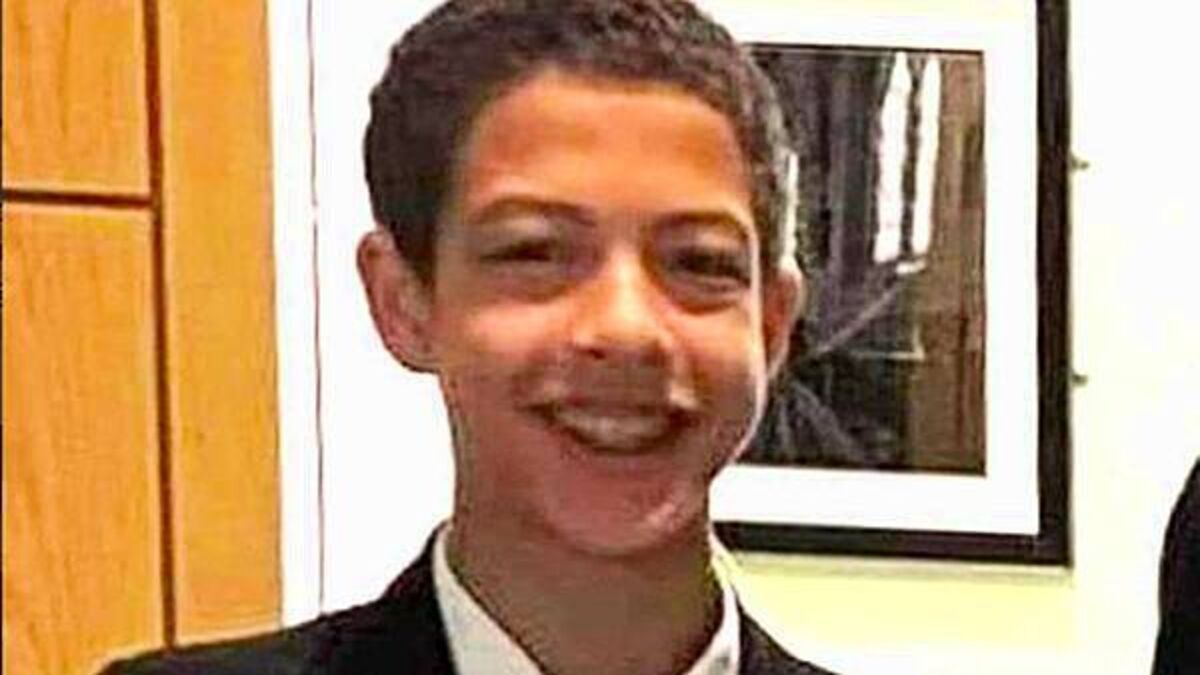
Noah, a pupil at St Malachy’s College, was 14 when his naked body was found in a storm drain tunnel in north Belfast in June 2020, six days after he left home on his bike to meet two friends in the Cavehill area of the city.
The jury were first read a statement from Dr Peter McSorley who examined Noah’s body near the storm drain in north Belfast where he was found in June 2020.
The coroner in the inquest, Justice Rooney, advised Noah’s mother Fiona Donohoe who was present in court to raise her hand if she felt she wanted a break given the distressing nature of the evidence, but Donohoe chose to stay for the entirety of proceedings.
Dr McSorley’s statement said Noah was in a “police body bag on grass at the side of road”, “unclothed” and “covered in what appeared to be a fine silt”.
He reported a “faint reddening of the skin of the entire forehead” and a “roughly circular whitish coloured lesion of the skin on the side of the forehead”.
He further said he could not find “any obvious signs of trauma such as bruising or swelling of the soft tissue” or injuries that implied that Noah had been assaulted by a third party, with injuries that “could be consistent with drowning”.
A statement was then read from Dr Marjorie Turner, consultant forensic pathologist who conducted Noah’s post-mortem examination on Saturday June 27th, six days after Noah was last seen and a day after the discovery of his body.
She said prior to the examination she had been briefed on the time he was last seen, knew he had been seen on CCTV falling off his bike, that he had been discovered face down in a culvert that was around a metre wide and would be varyingly full of tidal water and that hand marks were found on the wall of the culvert in that area.

The post-mortem examination noted Noah weighed 54kg, was of slim build and had short, black curly hair and natural teeth with braces.
His body was naked and coated in a brown “mudlike material” that was patchy on his front but more evenly coated across his back.
Dr Turner reported that almost the entirety of his forehead was covered in red, purple bruising, implying “significant blunt impact” and signs of bruising were present in areas across his arms and legs, as well as some abrasions ingrained with dirt.
There were no identified injuries to his back but the mud was “very adhered to skin” and there were no identified injuries to the genital area.
There was a “large body of fresh fluid” in the stomach consistent with him having swallowed a lot of water prior to death.
Dr Turner found “nothing to suggest involvement of another individual”, no bleeding on the brain externally or on incision that would imply a serious injury and a drug test was negative.
She said that “concussive symptoms” or Noah’s consciousness at time of death would be difficult to determine but this could have happened from an impact in the storm drain, and she determined the cause of death to be drowning.
A statement was then read from former state pathologist for Northern Ireland Professor Jack Crane, who supported Dr Turner’s prognosis of drowning, and that Noah’s head injury could have been an immediate precursor to drowning as a result of becoming unconscious and falling in a face down position.

With the caveat that it would be for an adolescent psychologist to determine, his statement also analysed Noah’s behaviour prior to entering the culvert, when he had been seen cycling naked.
He said it was typical of “an acute psychotic episode” and that the occurrence of such an episode with no underlying mental health conditions would suggest “acute drug intoxication” as a possible cause.
Prof Crane said that the removal of clothing is typical of drug use in a naive user for substances like cocaine, but also for “new generation synthetic cannabinoids”, commonly known as spice, and it is “unclear” if such substances would flag in a toxicological screening.
He concluded that the post-mortem examination findings when considered with circumstantial evidence would be consistent with Noah entering the storm drain and dying soon after.
A joint statement was then read from Dr Turner, Prof Crane and Dr Nathaniel Cary, a Home Office registered consultant forensic pathologist, all of whom appeared to the court, Dr Cary remotely.
On Noah’s post-mortem examination, they all agreed that his cause of death was drowning and that given the condition of his lungs that he was alive when he entered the water.
They agreed there was no positive evidence of a toxicological cause of death but that that could not be ruled out because of limits on toxicological analysis days after death.
They agreed there was no evidence of any cause of death related to direct violence or injuries that would suggest involvement of a third party but that this cannot be ruled out on pathological evidence.
The three pathologists agreed that Noah likely died closer to the time of his disappearance than the discovery of his body given the extent of decomposition.
The three were questioned together by Peter Coll, counsel to the coroner, who asked jurors to refer to the picture of Noah’s body, after saying he hoped to “minimise” its use as much possible.
He asked if the “sizable” bruise on Noah’s forehead was sustained while he was alive.
Prof Crane explained that bruising is a result of the bursting of blood vessels, saying “a little bruising can occur after death but when bruising is extensive such as in this case it indicated the person was still alive”.
Dr Turner agreed, as did Dr Cary who said the “broad area of bruising” strengthened the conclusion it happened when Noah was alive, adding that the broadness of the bruise “excludes weapons impact” which would produce a more precise bruise or “split or break skin”.
Dr Turner said the “pattern of bruise on Noah’s forehead does not suggest” weapons impact, and was more in line with impact of a “broad, flatish surface”.
Explaining her belief Noah did not receive that injury from falling off his bike prior to being in the storm drain, Dr Turner highlighted that he was wearing his helmet which would provide “some degree of protection”, with Dr Cary adding there “no abrasion on forehead or nose” that he would expect to see in someone making hard contact with tarmac.
The pathologists were questioned about the possible impact of hypothermia which Professor Crane said could have “contributed to disorientation and confusion making him more susceptible to drowning” but all three agreed the “likelihood is that he succumbed to drowning”.
The three were in agreement again on the conclusion that Noah likely died closer to the time of his disappearance – possible on the day or or day after – than to when his body was discovered.
Dr Turner said rigor mortis, a stiffening of the muscles that takes place after death, had already passed, suggesting Noah had been dead “quite a period of time before he’d been found”.
The inquest resumes on Wednesday.