Paris Olympics, Then and Now
In 1924, the first year that Ireland participated as an independent nation in the Olympics, my father, W.J. "Boy" Murphy as he was known, was a member of the boxing team.
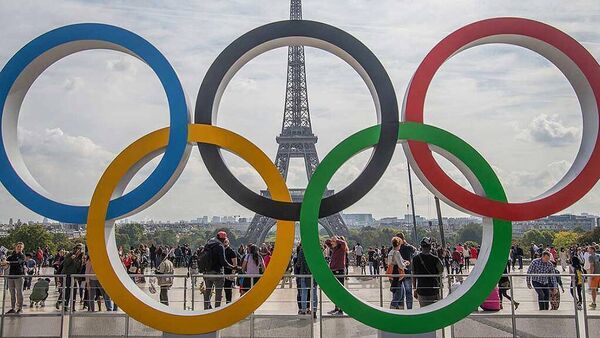
Watching world-class Irish Olympians competing over two weeks in Paris during the summer, I cast my mind back to the games held there, one hundred years ago in 1924.
That was the first year that Ireland participated as an independent nation and my father, W.J. "Boy” Murphy as he was known, was a member of the boxing team.
He was in the Irish National Army at the time. He was given the opportunity to turn professional but on his father’s advice he decided to stay an amateur, a decision he never regretted.
Instead, he joined An Garda Siochana in 1926 and went on to compete in the Amsterdam Olympics of 1928. He boxed successfully on international tours and won many national titles at Middle and Cruiser Weights.
I was an only child, born when my father was 52 years old. He passed away when I was 23. He was always a very gentle, soft spoken man and it was hard to imagine that he had ever slugged it out in the ring.
It was only when the Olympics were first televised by RTÉ in the sixties that I heard him speak about his memories of 1924 and 1928. He was a big fan of Mohammad Ali or Cassius Clay as he was known then.
When his fights were broadcast, there was a brilliant buzz and it prompted great chats about boxing. As he watched Ali, his shoulders would twitch and sway as he added to every punch thrown and shared the hurt of those received. One thing that sticks in my mind was my father’s mantra “the more the opponent hurts you, the less you show it.”
He believed this psychology often got him out of sticky situations and allowed him to win in the end.
In my teens, I hadn’t much time for hearing about things that happened long ago. Instead, I wanted to be left alone to enjoy the music of The Beatles or The Bee Gees.
Occasionally, concerts were broadcast from The Albert Hall. My father had often boxed there. Looking at the venue he would begin quietly, “if I had a penny for every time I boxed there…” Having heard this before, I would cheekily join in by the time he got to ‘penny’, as if to say I know, I know!
He collected loads of newspaper articles and photos during his career and carefully kept them in a special box. He seemed to know that a time would come when they would become very important to me. I can hear his voice, “Maura, they’ll be there for you when I’m gone.”
How right he was. As the years went by after his death, I began to appreciate the significance of his contribution to sport.
Now, that box would be the first thing to be grabbed in the event of a fire. I can think of so many questions I should have asked him, about that time.
I like to watch the film ‘Chariots of Fire’, which is set in the 1924 games, just to absorb the atmosphere, to see the elegantly dressed ladies, all with beautiful hats, to feel what the world was like back in those days.
On breaks between enjoying this year’s Games, I open my box of treasures to go back in time and read the old newsprint.
It’s fading, yellowed, and fragile, and I try to smooth out the creases and protect the frayed edges. The photographs have held up well. I gaze at my father as a youngster of twenty, training with his teammates at the Phoenix Park in preparation for their historic venture.
Their coach, a Scottish man named Tancy Lee, smiles and seems pleased with his charges. He was a former British champion and was quoted as saying: “He would teach men to fight without bullets.”
The welterweight Patrick Dwyer was the most successful member of the team. He had three wins and was beaten in the semi-finals.
My father was the next. He got a bye in the first round, beat a Polish man named Nowak by a technical knockout and then lost on points at the quarterfinal stage to a Canadian, by the name of Black.
Newspaper articles suggest that there was discontent with the judge’s decisions, in both their final fights. Now where have we heard that before? No boxing medals were won but certainly the path was laid for what has become our most successful Olympic sport.
He would have been thrilled to see the success we’ve had in this year’s Games.
None more so than that of the great boxer, Kelly Harrington who won her second gold medal.
He would have been impressed too by the golds won in swimming, rowing, gymnastics and the bronze medals also captured. How I would love to chat to him about it all.
If I had a chance now to hear more about his own experience, I would hang on every word. I’m so proud that my father was part of the team that held the Tricolour aloft when Ireland took its place among the nations for the very first time.