Waterford Council expands its EV fleet with HGV addition
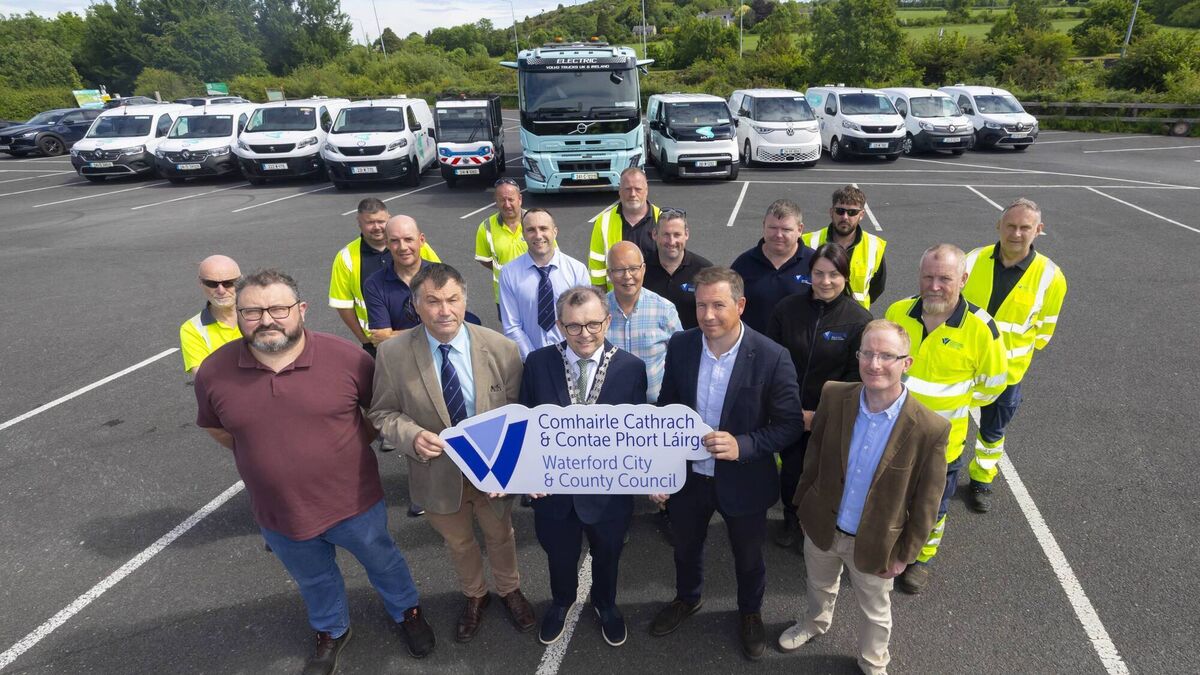
Mayor of Waterford City and County, Cllr. Seamus Ryan and staff of Waterford City and County Council's Roads and Environment departments with the Council's EV fleet.
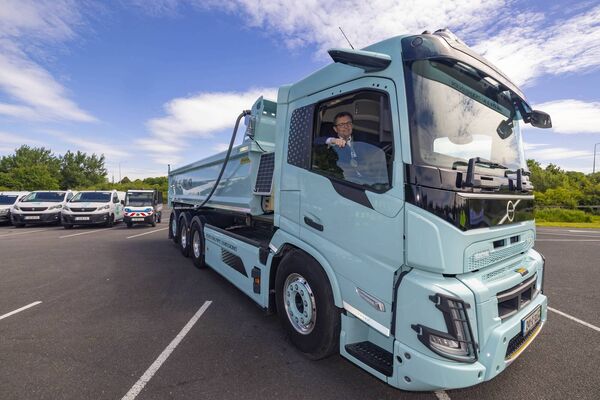
Waterford City and County Council has further expanded its electric vehicle (EV) fleet with the addition of a new fully electric heavy goods vehicle (HGV), marking another significant step in the local authority’s transition to low-carbon transport solutions.
The Volvo FMX, which is currently being trialled by the Council, has a gross combination weight of 46 tonnes, making it the largest electric vehicle in the Council’s fleet to date.
Based at the Carrickphierish depot, the truck has already demonstrated its capabilities by transporting full loads of stone from Kilmacow Quarry and delivering substantial waste loads to the Dunmore East landfill facility.
The addition of the electric truck brings the total number of EVs in the Council’s fleet to 22, with plans to deploy a further 10 electric vehicles before the end of the year.
Welcoming the expansion of the fleet, Mayor of Waterford City and County, Cllr. Seamus Ryan said: “Waterford City and County Council’s Climate Action Plan 2024–2029 outlines our commitment to reducing greenhouse gas emissions, improving climate resilience, and transitioning towards a low-carbon and sustainable future across Waterford City and County"
"Since 2012, Waterford City and County Council has been at the forefront of promoting and adopting electric vehicles, and we continue to implement practical measures to reduce our dependence on fossil fuels through the continued expansion of our EV fleet," he said.
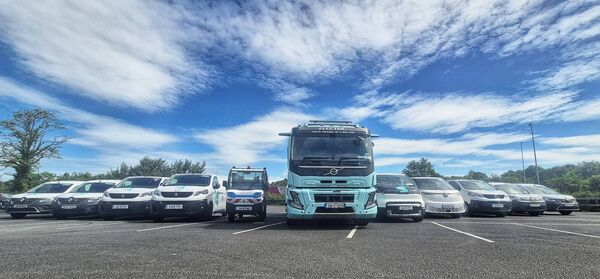
Gabriel Hynes, Director of Services, Waterford City and County Council, said the introduction of the electric HGV represented a major milestone for the organisation.
With regard to the pilot deployment of the fully electric HGV, within the local authority fleet, he said: "If successful and fully adopted, it will represent another major step forward in our commitment to embracing and promoting zero-emission transport technologies."
“With plans to increase the number of electric vehicles in our fleet to more than 30 by the end of the year, we also recognise the importance of interim measures for larger fleet vehicles," said Mr Hynes.
"For this reason, we have significantly increased the use of Hydrotreated Vegetable Oil (HVO), which has the potential to reduce vehicle emissions by up to 90%, and we encourage its adoption wherever feasible," he added.
Mr Hynes said the majority of the Council’s larger fleet vehicles have transitioned to HVO fuel, and together with the increased deployment of EVs, that has resulted in a 40% reduction in the council’s road diesel consumption.
Meanwhile, a spokesperson for the local authority said that to support the continued decarbonisation of its fleet, Waterford City and County Council is also investing in a range of new EV charging infrastructure projects.
"These measures will support the Climate Action Plan targets of reducing energy usage by 50% and greenhouse gas emissions by 51% by 2030," she said.