Phoenix: The plan's the thing!
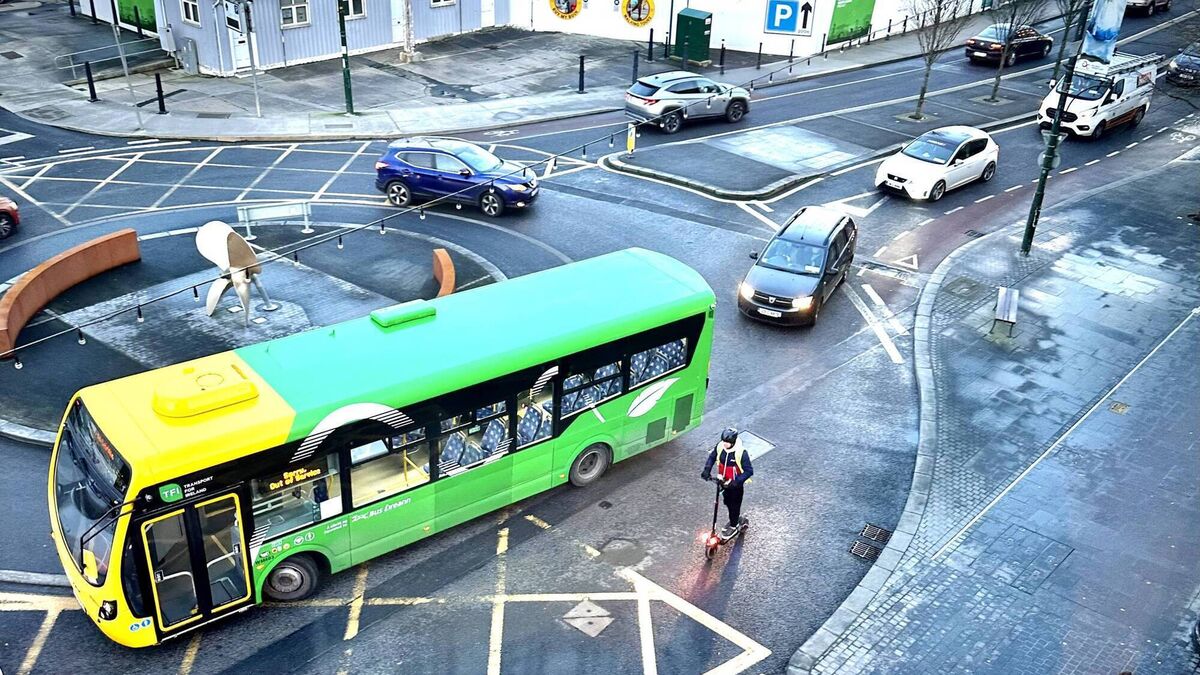
The difficulties Waterford city centre faces are exacerbated by traffic problems.
In an interesting piece in The Irish Times recently Michael McDowell related the story of a European planner asking Galway planners for their plan for that city. When they produced the city development plan, the European dismissed it saying, “this is a zoning plan, not a plan for the city”!
It’s hard to resist the temptation to ask if it’s exactly the same in Waterford City. That’s not to suggest that our planners are not doing their job, but rather that the Irish system of planning seems to be constrained by set legislative patterns without much vision.
Obviously, good leadership and ambition makes a huge difference on what should actually be done with any city. For instance, should we consider returning the Cross, the junction of Patrick Street and Broad Street, to its original pre-1962 width? Should we do the same with Peter Street down as far as Arundel Square? Should we insist that City Square reopen as the public street it always was before 1993?
Again, the Cork Road from Bath Street to the Outer Ring Road is a typical American stroad, a hybrid mixture between a street and a road. Half the people want to use it slowly as a street, while others want to whiz towards some destination. It is the epitome of American-style planning with stores and shops set back from the street, all fronted by car parking. Could we not insist that these developments, starting with Morris’s DIY, are, say, three-story apartments over a shop or business with parking to the rear? You see this all over Europe.
Imagine if Woodies and Aldi had been set out to the edge of the footpath? It would create a completely different impression, as would Jysk, Supermacs and all the other premises along the route. And for God’s sake, can we not do something with the old Yellow House pub? Directly opposite a multi-million Euro new development!
What struck me last week was the huge number of houses being built locally. Large sites in Ferrybank, Lacken, Carrickphierish and Williamstown are well known, but now a large site next to the River Cottage on the Dunmore Road has been cleared, and work is well underway on another development on the junction of the Cork Road and Witch’s Lane.
Several other sites have received planning permission, with work expected to commence in the New Year. Including Tramore, which has excellent bus services, as a dormitory suburb of the city in the mix, shows the same difficulties.
All of these sites have one thing in common; they are all on the periphery of the city. Some are three miles at least from the Clock Tower, which by the way is still stopped at eleven minutes past eleven. Tramore is seven miles from the city centre.
If we are to have a living city, vitality and footfall in the city centre are essential. People must be able to access the city centre easily without thinking it’s a head-wrecking chore. We have city bus services in Waterford, but the preferred mode of transport is the private car.
Invariably, anyone seeking to access the city centre from any of the new housing developments, using car or bus, often faces long delays on both inward and outward journeys. The city road network is radial and of ancient scale and width, and not given to easily facilitating bus routes without compromising traffic.
Should we be penciling in a city light rail service? The difficulties Waterford city centre faces are exacerbated by traffic problems. Yet we still push new housing developments outwards, while suitable brownfield sites for housing in the city linger undeveloped or as surface car parks. The whole New Street, Back Lane, Stephen Street site being a case in point. How long can it remain rotting and undeveloped? Imagine the impression it would make on an incoming FDI investor? It is not sufficient at council for the matter to be batted away with platitudes when our city is in competition for its commercial life.
The worry is that things, which are planned and promised by council, seem to take forever to execute. You know the list of projects by now, Parade Quay, Munster Express offices, George's Street Presbyteries etc. Maybe our council doesn’t have the money to do as much as it wishes, other than road works and traffic calming measures. Maybe it’s a question of priorities, but in that context I believe that the remit of council is to do those things which present the city as a progressive, well-designed and maintained urban area. We obviously have capable people.
How long is it since any street in Waterford city had new lamp standards installed and overhead cables placed in underground ducting? Parts of the city look like west frontier towns, with masses of wires strung from poles and buildings. Parts of Patrick Street, Catherine Street, O’Connell Street and Bridge Street are particularly poor. This is not good enough in and around the historic city centre.
Dunmore Road out to UHW is strewn with overhead wires and parts of the Cork Road between Bath Street and the RSC have wires and poles more suited to some battered old business park. We have to do better.
Road works on the Tramore Road outside the Hook and Ladder restaurant are transforming an ill-designed road entrance into a small urban garden, while similar small works in Passage Road and Lower Newtown have had a dramatic visual impact.
In a recent visit to Cork, it seemed that every town and village had new powder-coated, well-designed lamp standards and lighting. Overhead wires were seldom to be seen and, on asking, I was informed that most broadband cables were underground. Why can we not do that?
There was a rolling programme of such works some years ago, as much of the original 1970s underground work seems to now be faulty with consequent lighting failures. That work programme seems to have stopped, presumably from a lack of funds.
Anyway, the point is that Waterford is a city with enormous potential and a wonderfully varied built environment just waiting to be properly presented. Visionary planning is probably the key.