Fr Liam Power: The Season of Lent
During these holy seasons, both Muslims and Christians focus on prayer, fasting and almsgiving, while commemorating key moments in their respective religious histories.
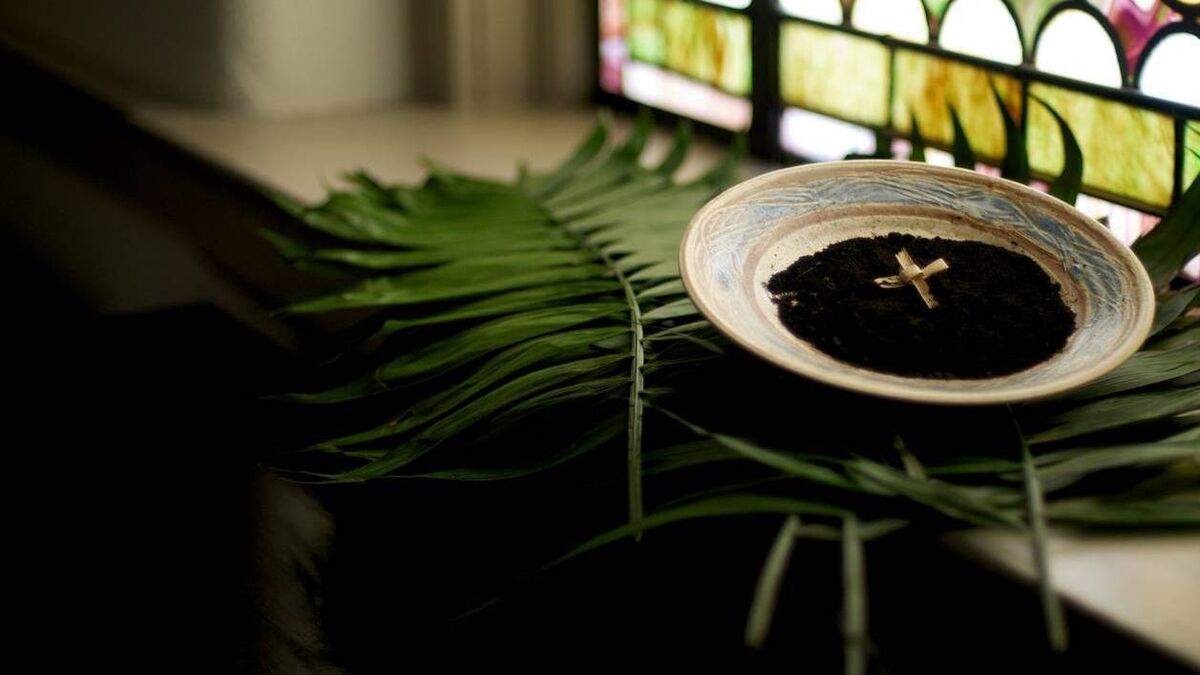
The Christian Churches throughout the world celebrated the beginning of Lent on Ash Wednesday, which this year fell on February 18. The Ash Wednesday ritual is still as popular as ever. Many people came to be anointed on the forehead with blessed ashes in the shape of a cross. The ashes represent the charred remains of burned palm branches from the previous Palm Sunday, symbolising repentance, sorrow for sin and failure and, of course, mortality.
Many people who do not regularly attend the sacraments turned up at church. This means that the ritual speaks to people at a deep spiritual level. I will reflect on the meaning and traditional practices of Lent below (fasting, almsgiving and prayer). But first, I want to draw attention to the fact that this year, the Islamic month of Ramadan and the Christian Season of Lent commenced at the same time.
During these holy seasons, both Muslims and Christians focus on prayer, fasting and almsgiving, while commemorating key moments in their respective religious histories. As Christians anticipate the Passion, Death and Resurrection of Jesus, Muslims commemorate the revelation of the Quran to the Prophet Muhammad.
The Declaration on Religious Freedom, (one of the documents issued at the Second Vatican Council), declared that the Church holds Muslims in high “esteem”, and it encourages collaboration between Catholics and Muslims — and indeed all people of good will — to “promote together for the benefit of all mankind social justice and moral welfare, as well as peace and freedom.”
Members of both faith groups are already doing this in countless ways in many countries. For example, in the face of ICE (Immigration and Customs Enforcement) raids in the United States, which have traumatised both communities and led to the detention of both Catholic and Muslim community leaders, Catholic and Muslim clergy, like Bishop Michael Pham and Imam Taha Hassane in San Diego, have been gathering at courthouses to support immigrants threatened with detention.
As we mark Lent and Ramadan, we could explore ways of cooperating to promote justice and peace and to share spirituality.
With this in mind, I was taken aback to hear that people were being asked to sign a petition to protest against the construction of a mosque on the quay. The right to religious freedom is guaranteed in the Constitution. We should not forget that Catholics were denied such freedom in the era of the penal laws.
Fasting, almsgiving and prayer sum up traditional penitential practices of Lent. In many ways, these practices are replicated in modern, more secular versions, which seek to promote wellness and inner spiritual transformation. I’m thinking of the many detox programmes on offer.
Tradition has always connected the discipline of the body with practices of faith to eliminate things that block growth to maturity.
Pope Leo, in his Lenten message, sees fasting as a visible way to turn away from wrongdoing and evil in our lives.
We could say that fasting can make us feel our independence more actively. We might take life less for granted and become more aware of the needs of others, those who experience life as a fight for survival.
Modern forms of this traditional practice might include fasting from social media or reducing screen time, whether it be scrolling on the tablet or sitting in front of the television. Experts in spiritual transformation recommend that the time saved might be spent in solitude, sitting as it were with ourselves, to experience what it is to be lonely and to need someone else.
The fruit of this investment in solitude can lead to more authentic sharing and deeper levels of intimacy as we become more aware of our vulnerability and of our need for authentic relationships, both with God and with others.
Almsgiving is a long-standing tradition in the Church. We take the money we might normally spend on ourselves and donate it to the poor. We won't eliminate poverty, but it helps to remind us that the God of the earth belongs to all of us. It creates a consciousness that what we do for others enhances our own spiritual growth. Spiritual writers suggest that the practice of almsgiving can help us become more actively aware of the difference between wants and needs.
Prayer is, of course, central to the Christian life. Traditionally, we were recommended to spend some time reading the bible or other books in our spiritual traditions. Prayer helps us acknowledge that we cannot crack or solve the great mysteries of life or arrive at quick answers. When we face the mysteries of suffering and death, and, of course, evil in the world, we are at a great loss. Prayer is recommended because it can help us get in touch with our ignorance and open us to the riches of the wisdom offered in Christianity, the larger sense of life in the mystery of God, as one writer put it.
Viewed positively, these traditional disciplines can put us in touch with a new and more authentic sense of self and make us more open to the great mystery of life and accept our vulnerability and dependence on a power greater than ourselves.