Fr Liam Power: A Christian response to the war in Iran
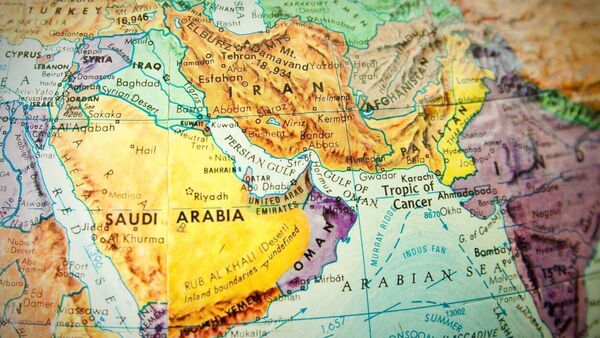
We are also witnessing destruction rippling throughout the Middle East.
It was a shocking experience to wake up on the morning of March 1 to hear news reports that the United States and Israel had unleashed a ferocious attack on Iran, killing the supreme leader Ayatollah Ali Khamenei during the first wave of strikes. An extremely reckless and immoral action in my view. I was horrified.
To date, as of March 18, almost 3,114 people have been killed, of which 207 were children.
Christian leaders throughout the world (theologians, bishops, leaders of Christian organisations such as Trocaire) have unequivocally condemned this war. Christians, following the example of Jesus, respect human life and abhor violence. Rather than engage in a violent self-defence, Jesus faced death by crucifixion. Many Christians believe that peace is an absolute value and that violence is never justified.
However, Christians recognise that lasting peace is impossible without justice (which includes the right to freedom and to self-defence). Sometimes the demands of justice and the imperative of non-violence can be in conflict. That is why the Christan tradition also endorses the doctrine of the Just War. It allows for exceptions to the ethic of non-violence.
Theologically, the doctrine is grounded in the resurrection of Jesus, which represents the victory of God over sin and death. Christians believe that they should cooperate in the building of a more just earthly society.
The criteria for the Just War Theory set down the conditions under which an exception to the general prohibition of violence can be made.
Firstly, the decision to resort to arms can only be made by a legitimate authority. In the case of the war in Iran, it is highly likely that the war is illegal. Switzerland, traditionally a neutral country, has declared it so.
According to the United States Constitution, Congress (The Senate and House of Representatives) must authorise major military attacks. Congress was not consulted. Also, in International Law, the United Nations Charter prohibits the use of force against another country unless authorised by the UN Security Council (The United States is a founding member of the UN). No such authorisation was granted.
There must be a just cause to engage in war. In the modern world, it is argued that the only just cause is defence against attack. President Trump was incorrect when he claimed that Iran was about to attack American forces. Also, peaceful alternatives to the use of force must have been exhausted. International mechanisms such as the UN must have been fully engaged to make every effort to avert war.
A third criterion states that there must be proportionality between the good that is to be achieved and the harm caused. All the effects, which can be expected to flow from hostilities, must be weighed up.
Apart from the lives lost, an estimated 3,114 so far, including 190 school children, we have soaring oil and gas prices. The poor will be hit hardest by increases in the price of fuel and heating oil. Drastic reductions in supply of fuel will destabilise economies across the world.
We are also witnessing destruction rippling throughout the Middle East. There is a potential for future terrorism to be unleashed in the Gulf area for generations to come.
The war is costing over $1 billion per day, yet the Trump government has drastically reduced spending on healthcare and has formally shut down the US Agency for International Development.
According to the Just War Theory, there must be a clear statement of purpose. In this case, we ask ourselves what does Trump hope to achieve. So far Mr Trump has failed to provide a coherent rationale for going to war. Some stated goals are inconsistent and indeed contradictory.
He says he wants to bring about a regime change. Analysts claim this is highly unlikely to succeed, as there is only a very weak opposition in Iran and those protesting the regime have fled the country.
The government has a firm grip on power. It will be impossible to achieve a regime change without a ground-force invasion. Such an action will only serve to prolong the war and risk escalating the conflict by dragging other Gulf states into the war, thus destabilising the whole Middle Eastern region.
Trump wants to prevent Iran from becoming a nuclear power. The airstrikes may have delayed the nuclear programme, but it won’t destroy the knowledge or capability.
Cardinal Robert McElroy in Washington has proclaimed that the war is not morally legitimate under just war teaching. I have argued that it fails to satisfy any one of the criteria to justify an attack on Iran.
Pope Leo has called on Mr Trump to stop the spiral of violence before it becomes an irreparable abyss, warning that the conflict could become a tragedy of enormous proportions.
It is heartening to see that European leaders will not support this war. Let’s hope that Christians throughout the United States will do all in their power to oppose this war through mass demonstrations, organised protests and lobbying of politicians…just as they did in opposing the Vietnam War and forcing Congress to agree to a peaceful resolution.