Catherine Drea: Uncovering Herstory
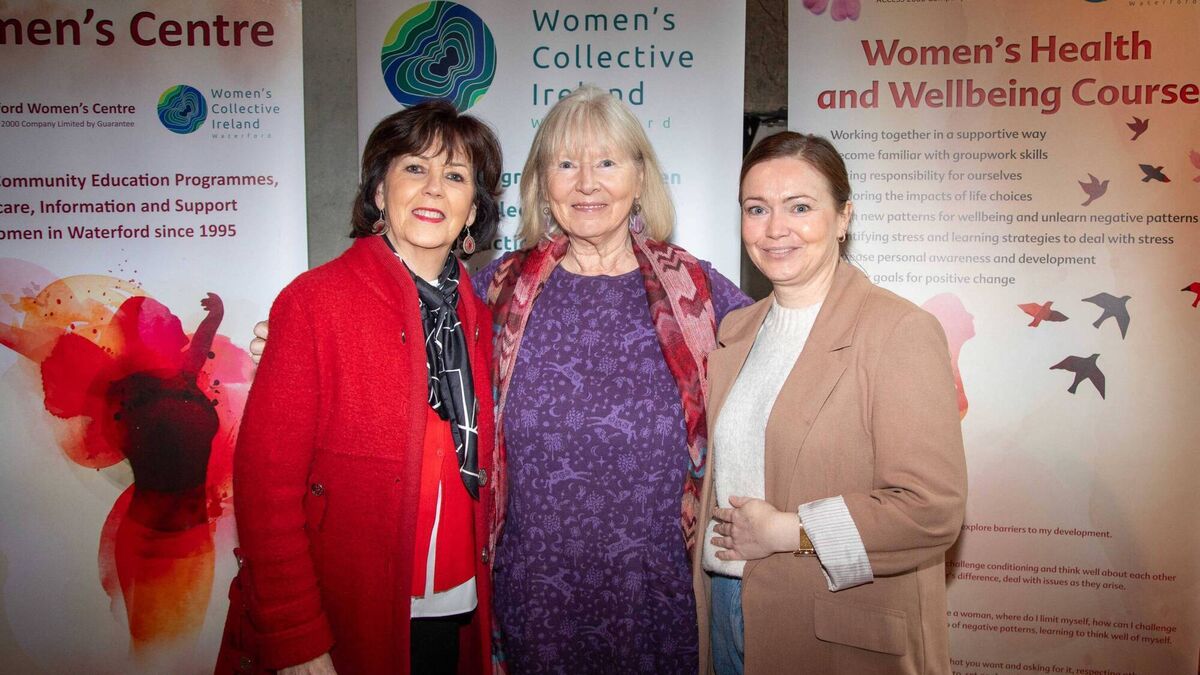
Waterford Women’s Centre celebrated International Women’s Day with an event hosted by Head Curator Cliona Purcell of Waterford Museum of Treasures, and opened by Ann Darlington, Chairwoman of Waterford Women’s Centre. Pictured at the event were Joan Quinlan, Waterford News & Star columnist Catherine Drea and Louise Kelly, Oasis House. Photo: John Power
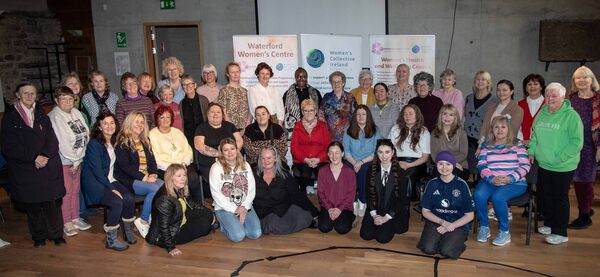
So there we were, just two women in the crowd. It was International Women's Day this year and a large group was present to hear a talk on women in history, or herstory as we like to call it, by Cliona Purcell, Head Curator of Waterford Museum of Treasures.
Maybe it was the fascinating stories about female Viking warriors and their spears, found buried under the shopping centre that made me nudge my old co-conspirator and say, “I’m thinking that it was 40 years ago that the pair of us organised the first International Women’s Day!”
“Are you sure?” says she.
“Well my youngest has just turned 40 and he was there on my lap as a small baby, so that’s how I always know the exact number of years that have passed.”
“I wonder should we say something about it here?” says she. We both sit back and ponder this thought. While we listen to the stories of our ancestor sisters my mind wanders back to Ireland in the 1980s. This was a time when women were not only excluded and lacking basic human rights, but were called brazen hussies if they had too much to say about it. A country where there was no divorce, no contraception, being gay was still illegal and childcare was down to grannies to provide.
International Women’s Day first came about at the close of the United Nations Decade for Women when March 8 was designated and adopted by women around the world. The first one in Waterford was held in the old Garter Lane with a beautiful poster designed by artist Sheila Naughton, which we still treasure to this day.
There was an afternoon workshop on employment, which at the time was a vital issue for women struggling with returning to work after the ending of the marriage bar and with little support for mothers in particular. That evening there was a big crowd for music, chat, celebration and gorgeous food provided by Liz McKay, who ran a cafe in the basement of that lovely building.
So many women who turned up that night come to mind; the lovely Renee Lumley, and her friends from the Widows Association, May O'Brien who was a powerful leader of the Irish Countrywomen's Association, and many young women, (who nowadays are the older women!!!) who just wanted to meet each other and change everything about being a woman in Ireland.
It was such a success that we went on to organise follow-up events every year after that. These events were always a mixture of political activism, celebration and fun. There was so much that needed changing that we were never short of a key issue that needed highlighting.
Some of the great events were, for example, when we invited the newly elected President Mary Robinson to the Ardree Hotel and we packed the place out with women who got a chance to hear her and meet her in person. I think we celebrated Mary for years!
Then there was the time Nell McCafferty challenged the Mayor and finished up the evening with a wee drinks party in her hotel room. There were many panels of feminist women, including politicians like Monica Barnes and Katherine Bulbulia.
Then there was the glorious night in the current Garter Lane when Miss Brown to You, with Jane O’Brien Moran, Emer Ward Powell and Carrie Crowley, gigged for the gathered crowd.
Another year Nuala O’Faolain read from her book Are You Somebody and we gossiped away for an afternoon about it. It was that day that our dear friend, the late Lisa Kristiansson, showed her Swedish side by dancing around impatiently on the steps of Garter Lane, bemoaning the Irish habit of arriving late to absolutely everything.
“Where are they?!”
“Oh they’ll be here!” we reassured her. But every year the same would happen!
Behind the scenes as the years went on there were many, many women who played their part in these events until eventually a Waterford Federation of Women’s Organisations was formed. The aim was to be inclusive of everyone and send delegates to what was then the National Women’s Council. These meetings were held above the old Munster Bar.
Then, following Ireland’s admission to the EU, we saw an opportunity to apply to an EU fund called New Opportunities for Women or NOW. Between the pair of us we drew up an application, which proposed two sister Women’s Centres in the South East, one in Wexford and one in Waterford.
The funding was awarded and this led to the set up of the Waterford Women’s Centre. It is the Women’s Centre that continues the tradition of celebrating Women’s Day every year, as do lots of groups and organisations here and all over the country.
Back in the museum, we discover that the person who created the Irish Tricolour was a certain Emilia Eleanor Hamilton, in Fairview Dublin, in 1830! While Wexford and Waterford continue to argue about who first flew the flag in 1848 and where, Emilia rests in an unmarked grave and has been completely forgotten. So what’s new?
My right-hand woman elbows me, “Maybe we better say something?”
“Well if we don’t we mightn’t be here to mention it next time!”
So we do and we also issue an invitation to celebrate the big one in 2036 when it will be 50 years!