Books I really do think you should read (and a goodbye)
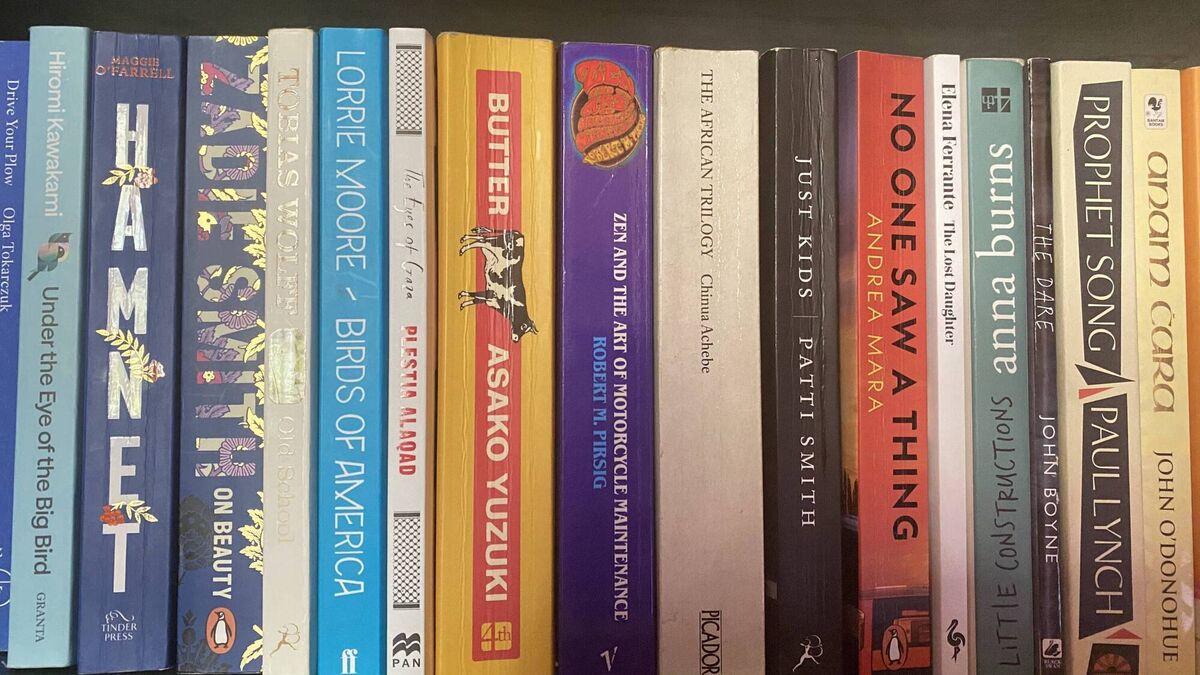
A sneak peek of my bookshelf at the moment.
Alas, my friend, we have reached the end of ‘What’s the Story’. I have thoroughly enjoyed writing these book columns over the last few months and I hope you found them somewhat enjoyable to read.
So as a special treat, I have made a list of books I really do think you should read. Feel free to stick this column on your fridge or desk.
Robin Wall Kimmerer is a Potawatomi botanist who writes about nature from an indigenous American perspective.
Kimmerer will take you deep into the snowy woods to harvest maple syrup and then knee-deep in the marshes to ‘go shopping’ for plants to eat and then off to a glassy lake, sitting in a kayak, contemplating the nature of time itself.
This is a side of the United States I’d never seen or heard about. A miasma of different habitats and cultures - all in harmony with the land.
For nature lovers, science nerds and history buffs, this book will be a revelation. But her sheer narrative capabilities are enough in and of themselves to enthrall. She is a storyteller. Expertly balancing the personal, political and ecological - braiding them into something beautiful, much like sweetgrass.
If you like Wes Anderson films, you are going to like Márquez. His work is quirky, charming and sometimes devastating.
The story is about Florentino and Fermina, and if you look up of the plot on Wikipedia it is absurdly convoluted and seems almost purposefully complicated. But Marquez is such a brilliant writer, you’d go anywhere with him. The descriptions of daily life are so exquisite, it makes the somewhat complicated plot worth bearing with.
It takes place in an unnamed city somewhere on the Caribbean Sea in Columbia between 1880 and 1930. It's about dreams versus reality, the line between love and obsession and the effect years of longing has on a person’s spirit.
On the surface it is almost a screwball comedy but there is an incredible depth to this story. Critics are divided between calling it a love story or something more sinister. I like to think it's both. A celebration of love but a warning of the cost.
Speaking of love, I first read this book on the 24-hour sail from Waterford to the Isles of Scilly. All this to say, it was a fairly intense regimen of reading for four hours straight and then sleeping for four hours straight. I read it over the course of a single day.
Obviously I don’t expect your experience to be as extreme as mine, but I don’t doubt that it will be just as profound.
There are a lot of influencers who quote from this book, but they often miss the radical political ideas that bell hooks (Gloria Jean Watkins, better known by her pen name stylized in lower case) introduced. For example, she first suggested the idea that capitalism corrodes communities. This is just one of her many theories and insights into love in all its forms.
Don’t be put off by this - it's far from political propaganda or bitter and argumentative. It is a glorious beacon of love, respect, and compassion. It feels like getting advice from the wisest woman you know. Not always what you want to hear, but important nonetheless.
Love takes work, hooks argues, exactly the opposite of the ‘protect your peace’ nonsense that influencers peddle.
I can’t put what hooks was trying to achieve better than she could herself, so here is what she says about the project at the end of the introduction: "I write of love to bear witness both to the danger in this movement, and to call for a return to love. Redeemed and restored, love returns us to the promise of everlasting life. When we love, we can let our hearts speak."
James Joyce might be among one of the greatest writers of the English language. Like, ever. In three hundred years' time (if we haven’t gone extinct by then), people may consider Shakespeare and Joyce equally important.
What I’m trying to say is even if modernism isn’t your thing - it's not really mine - if you read this collection of short stories, it will be impossible not to recognise it as a work of pure genius.
Dubliners is definitely his most accessible text yet you miss out on none of the richness of his prose, the innovation of his style.
It was published in 1914 and is an almost anthropological study of the middle class of Dublin at a time when nationalism was at its height. The first three stories deal with children and then as the collection continues, the main characters become progressively older. In many ways, it's a snapshot of a moment in history from as many angles as possible.
It is truly unfathomable to me that this is Smith’s first novel. Set in the mid-70s, it follows a community of people in Willesden where, at the time, lived London’s highest population of Irish, Carribbeans and Latinos.
It deals with the fall out of World War II on middle-aged veterans, the racism of 1990’s diet culture and the importance of having a good Indian restaurant in your neighbourhood.
It's similar to ‘Love in the Time of Cholera’ in that it has an ensemble of various colourful characters who all piss each other off and help each other out in various absurd ways. However, there’s no one else able to profile London quite like Smith. It's such an intimate look at her characters' inner lives, you feel like you’re standing in the room right there with them.