Catherine Drea: Who are the teachers of the future
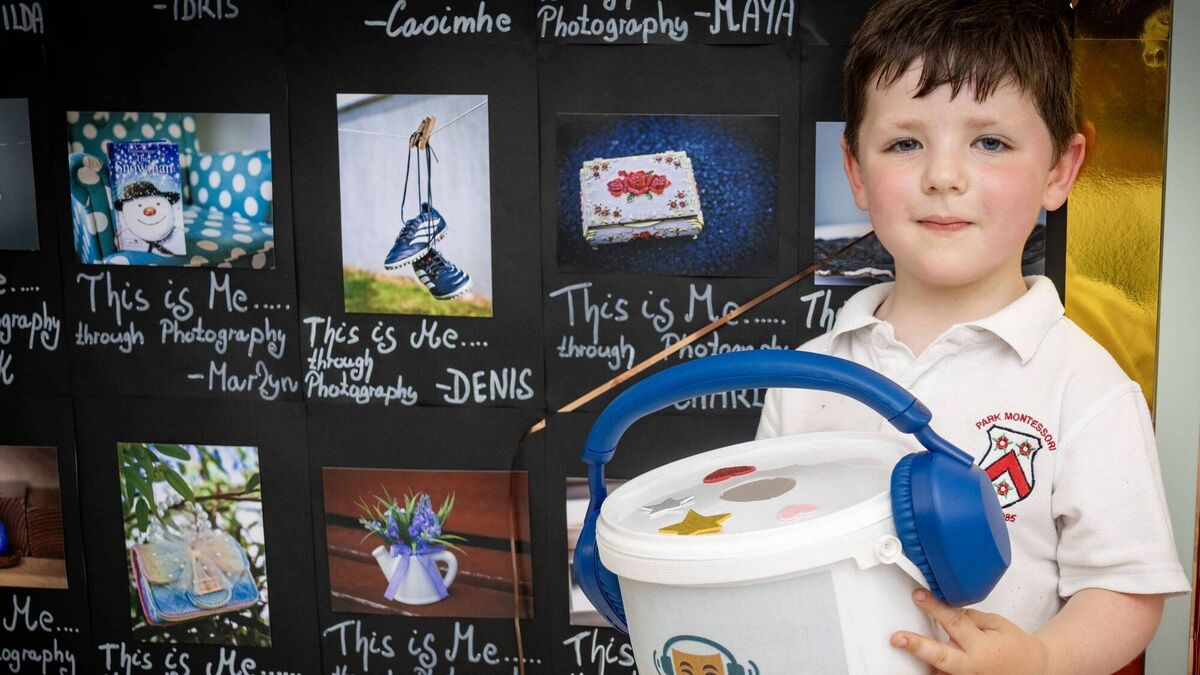
Brandon, pictured at Park Montessori School for the children's annual end of term Art Exhibition in aid of Scene and Heard Productions. Photo: Joe Evans
I’ve been talking to some very relieved post Leaving Cert students. Their comments are always interesting. They are, of course, exhausted and trepidatious. What surprises me every year is that some of them are confident, happy, and sure about their future paths.
At that stage I certainly was anything but. Those of us girls who made it through school were offered a typing and shorthand course, a Civil Service Entry test, or if we were one of the so-called brainy ones, a nursing training.
How things have changed. Some of these routes to glory did lead to career satisfaction and financial independence, but only if you were lucky and stayed single. I think I was amongst the first generation to start work after the lifting of the Marriage Bar, which prohibited married women from working. Hard to imagine anything like that now.
You often hear people describing a wonderful teacher who made a difference to their lives. Sometimes we can overestimate what making a difference actually means, it’s probably not rocket science!
One teacher who made a difference was Stephen Harrington, who encouraged Andy Burnham to go to university. Of course, Burnham didn’t want to go and continually said it wouldn’t be for the likes of him. Something many of us can relate to, especially when it comes to the likes of Cambridge University, one of the most prestigious in the world. Apparently, Andy was right and when he eventually turned up at Cambridge he found it very difficult in reality.
However, years later Andy Burnham couldn’t stop thanking his old teacher for encouraging him into something that was completely outside his comfort zone. In the end as we now know that was probably a life-changing decision. His encouraging teacher Stephen Harrington will now be an important footnote in the career of the next British Prime Minister.
Perhaps the most famous teacher of all was Anne Sullivan who was the blind/deaf Helen Keller's tutor. It was Sullivan who recognized intelligence and creativity in a child who had been totally dismissed because of her disability. Sullivan was the daughter of Irish emigrants from Limerick who herself was visually impaired and was hired to tutor Helen Keller, who was famously difficult, wild and without speech.
Helen went on to become the first blind/deaf person to graduate from university. Anne accompanied her all the way. The two became very close friends and Anne died with Helen holding her hand. Her revolutionary educational method, of touch and feel when you don’t have words, won the day.
I’m interested in how adults outside of the immediate family can open doors for young people as the world is changing so much. Perhaps the future will require a greater openness to alternative education and skills. Most of all, life skills, making meaningful friends and enhancing creativity will become much more highly regarded.
Here’s why. The great critic of contemporary education is Sir Ken Robinson. As far back as 2006 Ken’s video “Do schools kill creativity?” went viral. (It was a TED talk and now has more than 80 million views). His main point was that for creative children, which of course is all children, creativity is as important in education as literacy. He championed the idea that all children are born with immense creative capacities and natural curiosity, but traditional educational systems try to "educate" these traits out of them by stigmatizing mistakes and favouring standardized curriculums and testing.
When I first saw this TED talk it immediately made sense. If I had one teacher who influenced how I would live my life it was the art teacher in my school. She was what I considered at the time an elderly lady and her art room was like a remote haven at the top of the building. Here she did very little teaching but the magic she created was to allow freedom and chat to the extent that you would want to stay there all day, pottering and painting.
The essence of what can go wrong for so many children is that their “mistakes” are under-appreciated. In Mrs B’s Art Room mistakes were considered experimentation and were celebrated as brave and inventive. While the English teacher fretted about my over-romanticising and failure to grasp the templates for Leaving Cert essays, the art teacher muddled along with vague references to exams or making a career in the world of art.
Ken Robinson believed even 20 years ago that gone are the days of educating children to become good workers. But then what are schools for? If nothing else, schools are about great teachers like Mrs B. Teachers who are open to change, create space for difference and value children's individual creativity.
The workplace is changing. We ain’t seen nothin’ yet! Besides working from home and spending most of the day online, Artificial Intelligence will create even more changes. Many basic administrative and office-based tasks will be replaced by AI, as will machine building. One thing that won’t ever be replaced though is the richness and potential of a teacher-pupil relationship where a difference can be made.
Teachers are vital and if they are supported to be open, positive and in awe of children’s creativity and the unique way they express it, they can become teachers of the future. We no longer need good workers, we need creative ones.
Who was your influential teacher and how did they do it?