'Your son should not have died' - Coroner finds Waterford's man’s death was due to medical misadventure
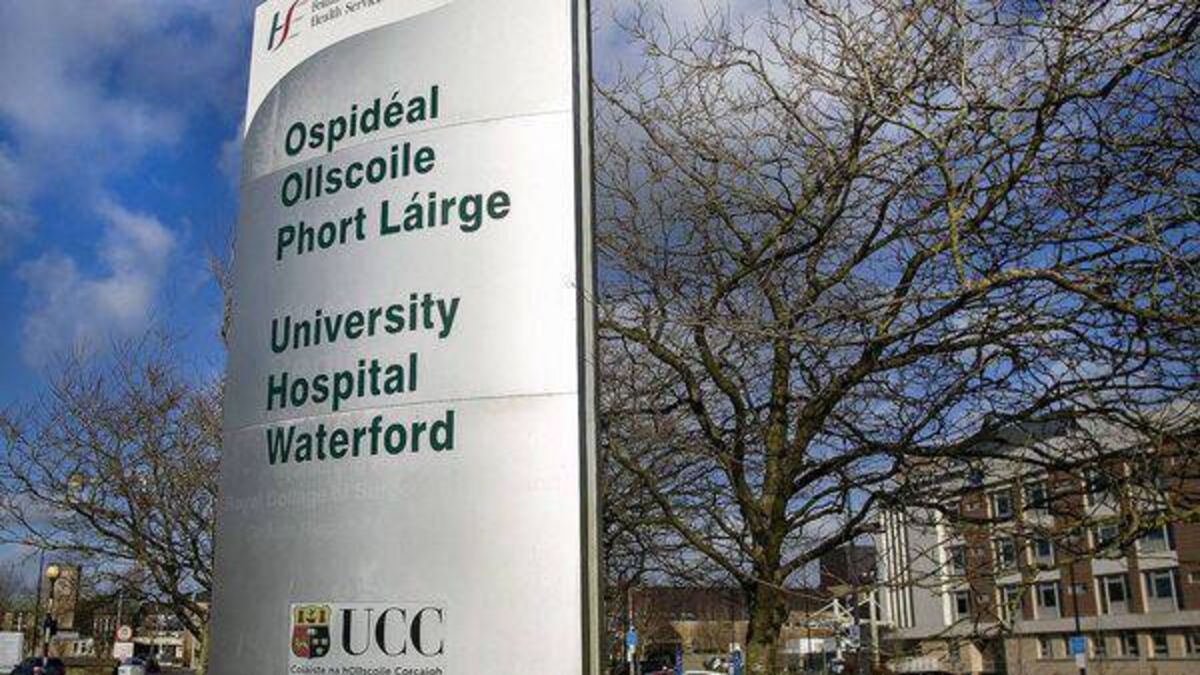
The barrister representing UHW extended his sincere apologies to Mr Kennedy's family on behalf of the hospital's management.
An inquest into the death of Mr Nicholas Kennedy has found that he died due to an allergic reaction to an antibiotic, his partner told medical staff that she suspected he was allergic to. The court found that by not connecting his symptoms to that of an allergic reaction, he was administered the same antibiotic again which led to severe brain damage.
Mr Kennedy, 41, of Grantstown in Ballygunner, was admitted to University Hospital Waterford on December 24, 2023. He died in the Intensive Care Unit on December 30, 2023.
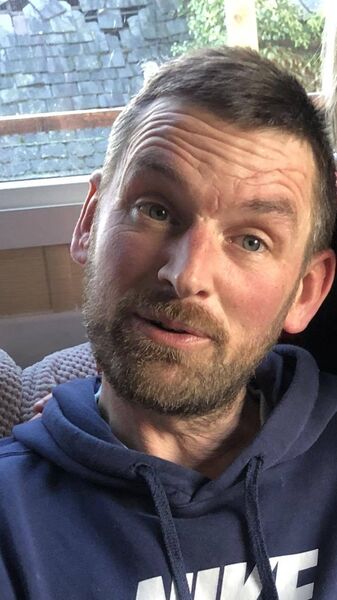
Nicholas Kennedy was described by his mother as “a tall, strong man in the prime of his life”. At six foot four, he worked full-time on his family’s farm. He was the father of three young children aged 13, 11 and nine. Mrs Kennedy continued that the family are “completely devastated” by Mr Kennedy’s sudden death. She explained that Christmas is especially hard as it was around that time that Mr Kennedy died.
Mr Paul McGuinn, the barrister representing the hospital, read out a letter sent by Ben O’Sullivan, CEO of UHW, on June 10, 2026. In it, Mr O’Sullivan said: “I would like to sincerely apologise,” to Mr Kennedy’s family, and that, “We should have administered a non-penicillin-based antibiotic.”
He continued: “A number of recommendations have been made.”
According to the autopsy report, which was read out in court, Mr Kennedy died at aged 41 due to “anaphylaxis”, meaning a severe allergic reaction.
On December 23, Mr Kennedy went to his own GP complaining of flu-like symptoms. He was prescribed steroids, a cough bottle and an antibiotic called Augmentin. That evening, about an hour after taking the Augmentin, Mr Kennedy had a seizure that lasted “about 15 seconds”, according to his partner, Bernadette Buckley.
Ms Buckley called the emergency services, and Mr Kennedy was taken to the hospital in an ambulance. According to Ms Buckley, she told the paramedics, the triage nurse who admitted Mr Kennedy and the doctor on call, Dr Mohammed Kadir, that she suspected Mr Kennedy was having an allergic reaction to Augmentin.
Ms Buckley said that whilst Mr Kennedy was sitting up in the bed, awake and alert, a nurse walked into his room.
“She didn’t say anything, she didn’t acknowledge us. She inserted a syringe into his cannula and when it was 90% empty, Nicky suddenly asked, 'What's in that?'"
Ms Buckley said that a few moments later, he said, “I have a horrible taste in my mouth” before having a seizure that was “much more violent” than the first one. Mr Kennedy never regained consciousness.
What the inquest showed was that a possible allergic reaction was mentioned on both the paramedics notes and the nurses’ notes.
When speaking on the stand, Mr Kadir admitted that he had not read either set of notes before seeing Mr Kennedy in the resuscitation room of the emergency department.
However, both he and his two superiors said that this was a “normal procedure”.
Dr Kadir also acknowledged that he knew that Mr Kennedy had suffered a seizure after taking the Augmentin but did not connect the two events at the time. After consulting with the senior doctor on duty, Dr Kadir suspected Mr Kennedy had a respiratory infection and possibly sepsis and prescribed him Augmentin, which was administered intravenously.
Acting on behalf of Mr Kennedy’s family, solicitor Mr Niall Tansey pointed out that it was “futile to check about drug allergies in the last number of years but to brush over drug allergies in the last number of hours.”
Doctor Desmond Fitzgerald, the consultant of emergency medicine at UHW since 2013, then took to the stand where he read out the results of an external investigation carried out by the HSE.
After some initial delays in the investigation, the review began in September 2025, which, Coroner John Goff noted, “was far too late.”
The review found that Mr Kennedy’s symptoms were “consistent with an allergic reaction” and the “attending doctor did not recognise this.”
It found that, “An alternative non-penicillin antibiotic should have been administered.”
While 10 recommendations were made in the report, one of the most significant was that upon any suspicion of an allergy, “whether from a nurse, paramedic or indeed the family,” it would be treated as an official allergy until otherwise disproven.
Mr Goff recommended that this becomes an HSE-wide policy to avoid this tragedy from happening again.
Dr Fitzgerald also pointed out that UHW is the only Model 4 hospital that has only one registrar (senior doctor) working on nightshifts. He explained that smaller Model 3 hospitals often have two registrars.
The registrar on duty on the night Mr Kennedy had the seizure told the court that if he had examined Mr Kennedy himself, he would not have prescribed Augmentin. However, Dr Fitzgerald pointed out that registrars face a large “cognitive burden” when operating as the sole senior doctor.
He told the court he has asked for additional registrars for the emergency department multiple times since this incident, “but I have been unable to secure funding as recently as six weeks ago.”
Mr Goff agreed with both lawyers' recommendations that this case be treated as an instance of medical misadventure. He said the main issue was that a “connection was not drawn between the seizure and Augmentin”.
He said it was a “tragic case” and that whilst he appreciated the frankness and honesty from the report and the doctors, the delay in publishing it meant “the good has gone out of it.”
He concluded by speaking directly to Mr Kennedy’s family, who were present, “You shouldn’t have lost your son.”