Waterford's museums: A treasure trove, a love letter and a celebration of life
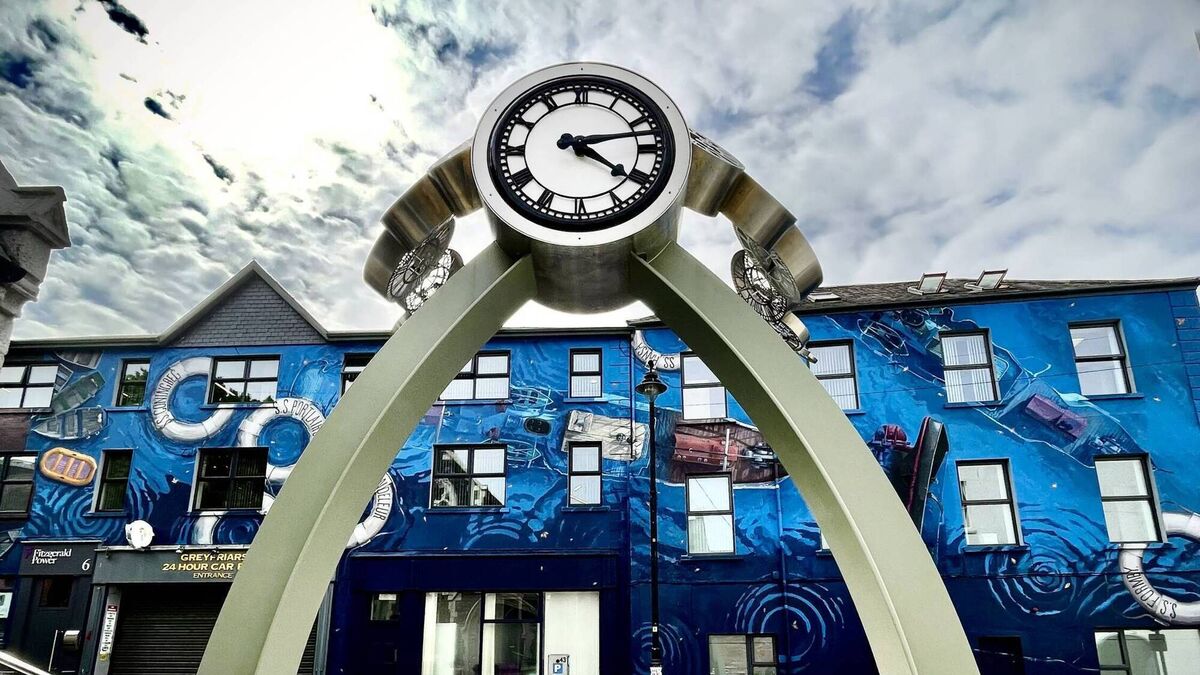
The Museum of Time. Picture by Joe Evans
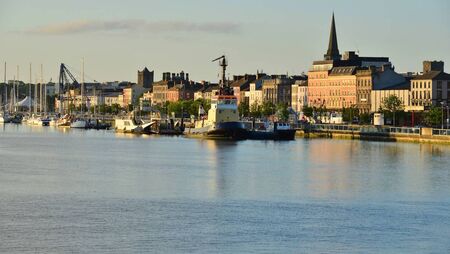
In the heart of Waterford City is the Viking Triangle. You know it, the long ship, the little models and the Viking picture stand with missing faces ready for visitors with camera’s and of course the museums. But what if I told you that Waterford Treasures was less about tourism and more about the people of Waterford.
Written in five very old buildings are the great epics, scandals, political spats and a celebration of the lives that built Ireland’s oldest city.
Under the expert guidance of Waterford Treasures Head Curator Cliona Purcell, The Waterford News and Star toured the five museums of the Viking Triangle to hear about the lives, loves and lawsuits of old Waterford.
Located next to Christ Church Cathedral, the Medieval Museum is the only purpose-built medieval museum in Ireland and also the only building in Ireland with two medieval chambers.
We visited the city gallery first, to learn about Waterford at its height of power and as the leading importer of wine in Northern Europe.
The building has three floors, two galleries plus the medieval chambers and more treasures than you could count.
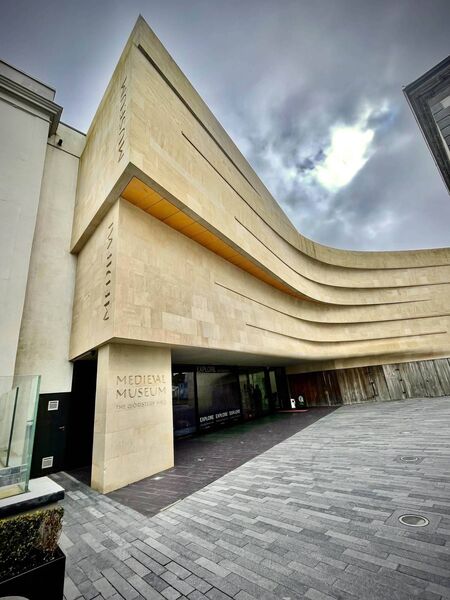
It is home to two of the 100 most important objects in the state.
One of those two objects is the Charter of Waterford. ⯠The charter is essentially a legal argument to King Edward II as to why Waterford should have a special status in the wine trade, rather than our close neighbours (and competitors), New Ross.
Water was unsafe to drink in the medieval period so most people, including children, drank some kind of alcohol, and the city became the wine capital of Europe.
“There is a special type of beer for children and workers called it small beer, which was only about 1% alcohol. So that 1% was not enough to get you tipsy, but it was enough to save your life potentially from bad bacteria,” said Cliona.
Waterford had a royal dispensation so merchants transporting wine only had to pay half the tax they normally would; that is the top of the charter.
The charter has an image of Waterford, which is the oldest depiction of an Irish city.
There are three images of King Edward III to catch his attention.
There are also pictures of King John with a falcon on his arm and Edward I, known as Edward Longshanks, standing on a dog as a symbol of loyalty.
On one side there is what looks like a tear, and I ask Cliona if it's damaged.
“No. That was put on as an addendum to this longer section again, all to do with New Ross. They had so many complaints about New Ross that they ran out of space for them, and they were just sewing on extra bits.
“What people don’t realise about history is that they think it’s a lot of sword fights. Actually, it’s a lot of lawsuits. Medieval people were just suing everybody for everything all the time,” said Cliona.
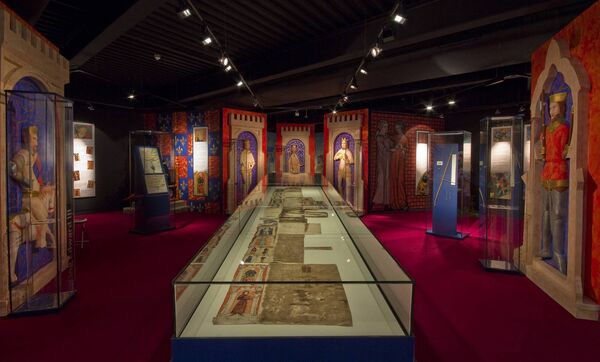
The second most important exhibit is a set of 15th-century high-mass vestments housed in the Art of Devotion gallery, which itself is dedicated to the religious and art history of Waterford.
They hang in glass cabinets in a dark room to protect them, which gives them an eerie appearance.
Each one has a section of the bible embroidered in silk and gold on it, and each piece of artwork gives hints about the time period.
The vestments tell their own stories, but their history is equally fascinating because they were lost in the 1600s. They were hidden under the church to protect them from Cromwellian forces during the siege of Waterford in 1650.
But when the former medieval church was demolished, the vestments were found.
They now belong to the Bishop of Waterford and Lismore, who has kindly loaned them to the Medieval Museum.
And this is what is so wonderful about history; it’s not Game of Thrones, but it is certainly petty and full of gossip and scandal.
But if its gossip you want, our next stop will be the one for you.
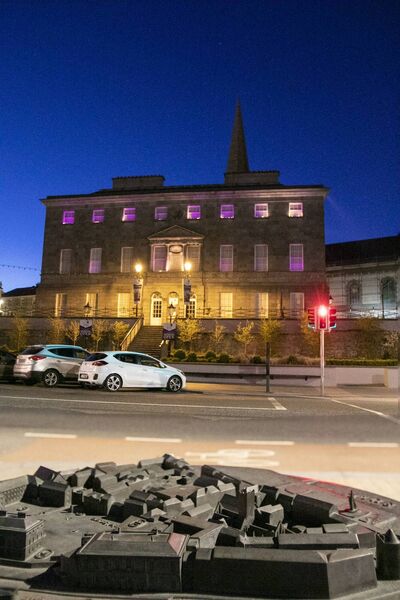
Located on the Mall, Bishops Palace starts in 1690 where the Medieval Museum leaves off. Bishop Palace is an 18th century dressed house and of course, such a historic home must have a housekeeper.
Tours at Bishops Palace are given to guests by Mrs Richards, the ‘1820s’ housekeeper who wears full period costume.
“She may tell you a story here or there about gossip and scandal. She wouldn’t be into that sort of thing herself, but you know she will divulge if you press her,” said Cliona.
Good to know because the former occupants of Bishops Palace have some stories to their names.
The Roberts’, of John Roberts Square, called Bishop’s Palace home and a branch of the still influential Wyse family pretty much did whatever they wanted with some hilarious results, One such member was Thomas ‘Bullocks’ Wyse.
His Bullocks Wyse name was down to penal law that said Catholics could not own any horse over the value of 5 pounds so Thomas said he could beat that.
“So, he doesn’t have horses, he has bulls. His cart is pulled by bulls etc and it is just because Bullocks Wyse woke up and decided to be annoying, so it’s a funny little thing from him.” Bullocks Wyse was not the only strange nickname in the family though.
John Wyse’s wife, Mary Anne (née: Blakeney) was called Murdering Moll.
It was said that she was so beautiful that just one look at a man could kill him.
Bullocks Wyse’s grandson Tom, eventually helps to bring those pesky penal laws to an end, but he too finds himself on the wrong end of a scandal.
Tom goes on a Grand Tour, which Cliona explains is like a big boy’s trip, and while in Naples he falls in love with Princess Letitia Bonaparte, Napolean’s niece and the pair marry.
It was not a happy marriage.
“She spends the first two years of their marriage in a convent. Nobody knows, or is entirely sure if he put her in there to try to calm her down or she fled there to get away from him. Both stories have been told,” said Cliona.
But Letitia did come back to Waterford eventually because she and Tom were ‘till death do us part’.
She had five children, but only two could have been Tom’s and Letitia didn’t hide that fact, giving them their fathers’ surnames.
Tom disowned all of the children, but when he died Laticia bought the family home and installed the Bonaparte crest above the door, thus the family became the Wyse-Bonaparte family.
Another feature of Bishops Palace is what Cliona calls “a love letter to 20th century Waterford”.
On the top floor, you will find toys, sports memorabilia, Poole’s photography, Royal Showband history as well as bits from the War of Independence, Civil War and WWI.
The exhibition is called ‘Other Voices: Ordinary People, Extraordinary Lives’, and opened in 2016.
“The top floor is a little bit of everything, but it’s a real trip down memory lane for locals. It’s a lovely section.
Many of the pieces on the top floor were donated by locals.
Cliona said one of her favourite pieces is a toy called Ms Busy Bee, which was a wind-up typist to inspire girls to get jobs when they grow up.
Another interesting section of the exhibit is Poole’s photography, which Cliona said is really important for local historians. Waterford is lucky enough to have a large collection.
“I love to highlight the top floor of Bishop’s Palace. It’s so incredible. It really is a love letter to Waterford and the people who made Waterford,” said Cliona.
The Silver Museum tells the history of Ireland through silver.
Its contents come from the time of the Vikings, the 18th century, when retail therapy was starting to become a thing, and from changes in class and status in Ireland.
“For many, many years, the largest collection of Irish silver was in San Antonio, Texas. But because of some very, very generous donors, it's actually here in Waterford,” said Cliona.
Exhibits like the Kufic coin, a tiny piece of silver from near Baghdad found in Woodstown, show just how connected Waterford was to the rest of the world.
It is a small triangle of silver cut from the coin, because that is what the Vikings did.
When they got hold of silver, they broke it up, hence the name, “hack silver,” which is what they used as currency.
“It has a small inscription in Arabic which essentially says there is no god but Allah, and it made its way through trade routes all the way to Woodstown, the Viking settlement just down the river and landed here.
“It’s amazing to think it made that journey in the 840s,” said Cliona.
The 18th century in Ireland saw the emergence of the middle class and shopping was as much a hobby as it was a show of status.
“There was a bit of a panic among the upper class because it was no longer enough just to be rich,” said Cliona, commenting that people then had to prove how rich they were.
Hence the fashion of engraving family arms onto silver, but the rich were now not the only ones who could do that.
But it wasn’t just class boundaries being pushed, but gender roles too.
One lovely story from the museum is about Ignatius and Anastasia Flemming.
Ignatius was a silversmith in Waterford, but he died and his wife Anastasia had watched him so long she ended up picking the craft and even passing it on to her son.
Anastasia even got a contract for retailing silver from the Corporation, despite being a woman and catholic. Girl power!
You can see some of her pieces, including a stunning terrapin shell box on display at the museum.
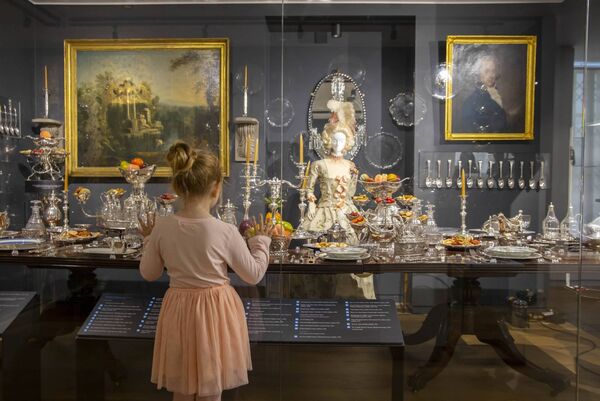
Another section of the museum is dedicated to dressed tables, the purpose of which was to show off. The rich converted their wealth into silver because banks were unreliable and put it on display.
But it was not the only status symbol on the dining room table.
You may be able to go down to Aldi and buy a pineapple, but in the 18th century a pineapple could cost you thousands in today’s money, so you might have been better off renting one!
But there is a rather sobering exhibit in the museum that is a stark reminder that Ireland has its own links to the slave trade.
“It’s important to acknowledge that there is a really strong correlation or relationship with the slave industry during this time period.
“Silver itself is a slave product,” said Cliona.
Silver came from South America and the average life expectancy for people working in those mines was less than a year.
The Silver Museum houses two candelabras (one of only three sets in the world) depicting an enslaved person chained from neck to ankle. These disturbing pieces were made for the Viscount of Galway who at the time, for about six months, owned a plantation.
“The fact that he had these made is really confusing for us, but as you can see, it’s quite a difficult object. It’s a really racist caricature of what an enslaved person would have looked like,” said Cliona.
It’s a really bizarre object and it points to the fact that Ireland does have a complicated relationship with the history of slavery,” she added.
So far, we have explored medieval Waterford, the shenanigans of the elite, and the politics of class struggles of the 18th century. But now comes science and folk craft.
For that, we visited The Museum of Time.
“Time is something we don’t think too much about; it just happens. But it really has ruled human development,” said Cliona.
The museum is partially housed in a Neo-Gothic 1884 Methodist church, and original details like a rose stained-glass window are still there.
The timepieces in the museum include the first timekeeping equipment, microscopes, a first edition of Ulysses, and possibly the first clock to go ticktock.
“It has been a mystery for hundreds of years as to who invented the anchor escapement [the thing that makes the clock go tick tock]. Was it William Clement, a London-based clockmaker, or was it Robert Hooke, the famous scientist,” said Cliona.
This clock is important because it may be the first to have an anchor escapement, which is what makes a clock accurate and gives them their tik tock sound.
“This clock is dated 1663 by William Clement of London. The earliest patent Robert Hooke filed for the anchor escapement is two years later. So, we think this could be the earliest clock to go tick tock,” said Cliona.
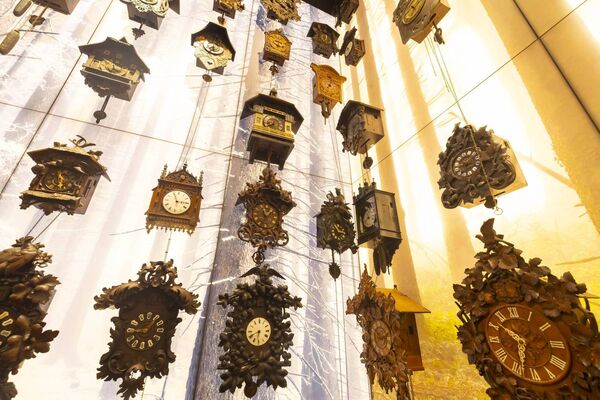
The newest exhibit for the museum is the Black Forest cuckoo clocks, which opened in March this year.
The exhibition consists of 349 Black Forest cuckoo clocks donated by benefactor David Bowls.
“It’s a wonderful example of a folk craft and it developed because, basically, during long winters in the Black Forest, people were looking for something to do and they started carving these clocks, and over time they just got astonishingly ornate,” said Cliona.
Each piece is adorned with animals, some with hunting rifles, flora and one with shifty eyes.
They all must be wound up by hand - and it takes a long time.
The Museum of Time is a lot of fun and you will find timepieces from all around the world as well as Ireland.
I’m not sure I can leave this one without mentioning the outside of the building, which features an ornate clock statue, making it one of the most iconic buildings in Waterford.
“I think it's one of those museums that people coming in don’t expect to like so much as they do and there is something about it that just kind of speaks to people,” said Cliona.
The Wake Museum is based in a 15th-century alms-house, which was the precursor to nursing homes.
The house was lived in until 2004, and now it's one of Waterford’s most curious museums.
“It’s an amazing house filled with all these mysteries,” said Cliona.
The house the Wake Museum is in is itself a most important artifact.
It's a
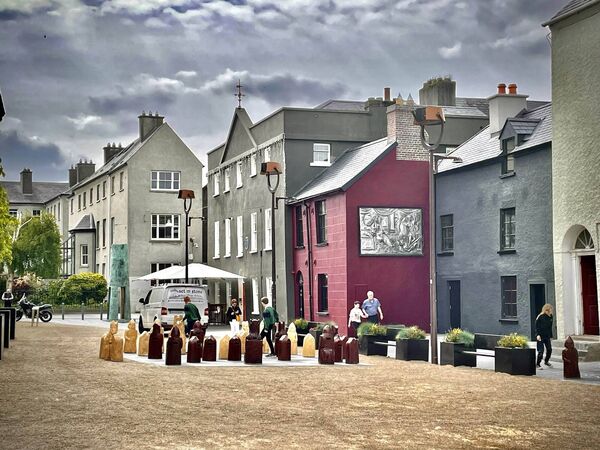
stark contrast to Bishop’s Palace, which was built by very wealthy people, but the house on Cathedral Square is no less important.
“This house has survived for one reason and one reason only: nobody who ever lived here lived a particularly wealthy life. If they did, they would have knocked it and built something else. Instead, they patched what they could and moved on.
“As a result, they have left us with this incredible patchwork quilt of Waterford history. This house has overlooked this square for over six centuries and has become an artefact itself,” said Cliona.
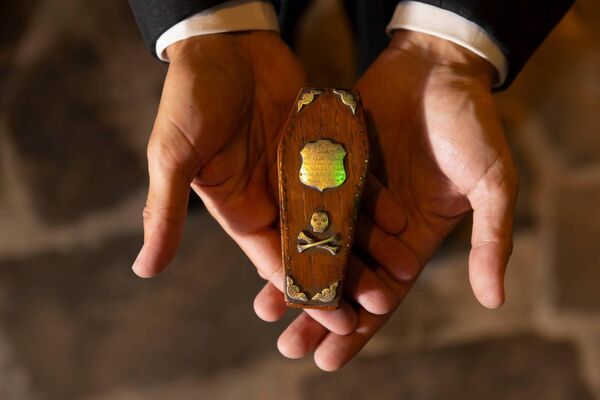
The Wake Museum is not a museum of death but of all the ways we celebrate the lives of those we love when it's time to say goodbye.
The museum has a section on medical history where you can learn what a smoke enema was and why one very well-known apothecary was called Billy the Bleeder.
You can learn about the plague and the surprising connection between it and Covid-19 in terms of traditional wakes.
The museum has a large collection of mourning jewellery, like lockets, and a cross containing hair from deceased loved ones and in particular, children.
“I think they are quite beautiful,” said Cliona.
“Some people think they are creepy, but I think there is something lovely in them. There is something so human in these permanent mementoes.” Many people, especially in cities, may never have attended a traditional wake. But at the museum, you will learn about how a person is celebrated when they pass and that weddings often followed funerals.
Guests are invited to leave a message for their loved ones on a special wall upstairs. Messages on the wall are for parents’ past, pets and in so many languages.
“Something we try to get across in this museum is that grief is something that unites us all. Every culture in the world.
“And even though Irish wakes are intensely Christian, they are very similar to other parts of the world and that's one of the lovely things about the tour here.
“Usually, the groups are a mix of people from all over, but by the end everyone is sharing different funeral traditions and a really lovely cultural exchange,” said Cliona.
The Viking Triangle is a triumph for Waterford.
We hope you will visit the five museums in this piece, but if that’s not enough (and I promise it’s not), visit Reginald’s Tower, take the Epic Walking Tour, and honestly, just walk around the city.
Waterford people are incredibly lucky to have access to so much of the past.
I always ask the people I talk to what they think is the most important point and Cliona said: “The Viking Triangle is an incredible achievement for all the people who made it and there really is something for everyone here.
“I think sometimes people have the idea that it is set up for foreign visitors, but really this is our story and our heritage.
“It's incredible to think about just how many people have lived in this city centre over the centuries and what they left behind.”