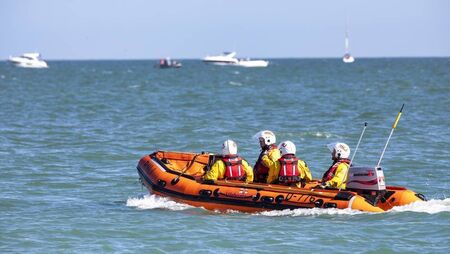
'Search and rescue crews need protecting' - Cullinane

Sinn Féin TD for Waterford, Deputy David Cullinane has called for an end to the under-recording of Coast Guard helicopter crews’ 24-hour shifts.
Sinn Féin TD for Waterford, Deputy David Cullinane has called for an end to the under-recording of Coast Guard helicopter crews’ 24-hour shifts.
Deputy Cullinane made his remarks ahead of moving a Dáil motion on Tuesday which will call for urgent action to end the under-recording of working hours for Ireland’s search-and-rescue helicopter crews, which he said poses a fatigue and safety risk to crews and communities.
Deputy Cullinane tabled the motion following engagement with search-and-rescue crew members in Waterford and across the State.
Under new rules, crews working full 24-hour shifts will have their working-time recorded on paper as just 16.5 hours under an Irish Aviation Authority, 'factoring', system normally applied to standby or reserve personnel.
The motion argues this is inappropriate, unsafe, and inconsistent with Irish and EU working-time law.
Speaking about the matter, Deputy Cullinane said: “The Minister for Transport must intervene to protect Search and Rescue crews from risky new rules that increase the number of allowable 24-hour shifts in a year by 25 per cent. These rules reduce the number of hours recorded on a 24-hour shift from 18 to 16.5 under new ‘factoring’ calculations."
“Search-and-rescue crewmembers based in Waterford and across the State brought this change to my attention," said Deputy Cullinane.
"I am very concerned that it is unsafe to increase the number of 24-hour shifts in this way, which will allow for 21 more 24-hour shifts a year per worker," he added.

Highlighting the importance of the work the search and rescue crews do, Deputy Cullinane said: "Coast Guard search-and-rescue helicopter crews work hard to protect us. It is wrong to record their 24-hour shifts as just 16.5 hours. These shifts are served on deployment or on base, where crews must always be ready to go at a moment’s notice."
“We know in Waterford that search-and-rescue crews do vital, life-saving work, and they must be fully deployable within minutes for life-saving missions," he said.
"None of this time can be treated as rest," he added.
He said his party was bringing the motion "to stand up for fair conditions and to protect those who protect us".
“The Minister and Irish Aviation Authority must make sure that this practice ends, that rostering does not break Irish and EU working-time rules, that work hours are recorded properly, and protect both the crews and the communities they serve," he said.
“This motion is about protecting crews, protecting the public, and ensuring that our search-and-rescue service remains safe, sustainable, and legally compliant," he added.
Deputy Cullinane's, Sinn Féin party colleague, Deputy Conor McGuinness had previously expressed criticism over the matter and said that Government negligence is putting Coast Guard air crew safety at risk.
Commenting on the matter he said the Government and the Irish Aviation Authority (IAA) have serious questions to answer following reports that Coast Guard helicopter crews are being subjected to unsafe working-hour arrangements.
The IAA responded to the criticism and said that the requirements for Flight Time Limitation schemes and rest requirements for crew members (helicopters) in Ireland is detailed in IAA Aeronautical Notice O.58.
"This direction sets out the Irish National Flight Time Limitation (FTL) requirements for Commercial Air Transport and declared operators of helicopters that have their principal place of business in Ireland," said a spokesperspon.
"Note that the main objective of these aviation safety rules is to minimise the safety risks arising from crew member fatigue," he added.