Rose Keating likes having a body...sometimes
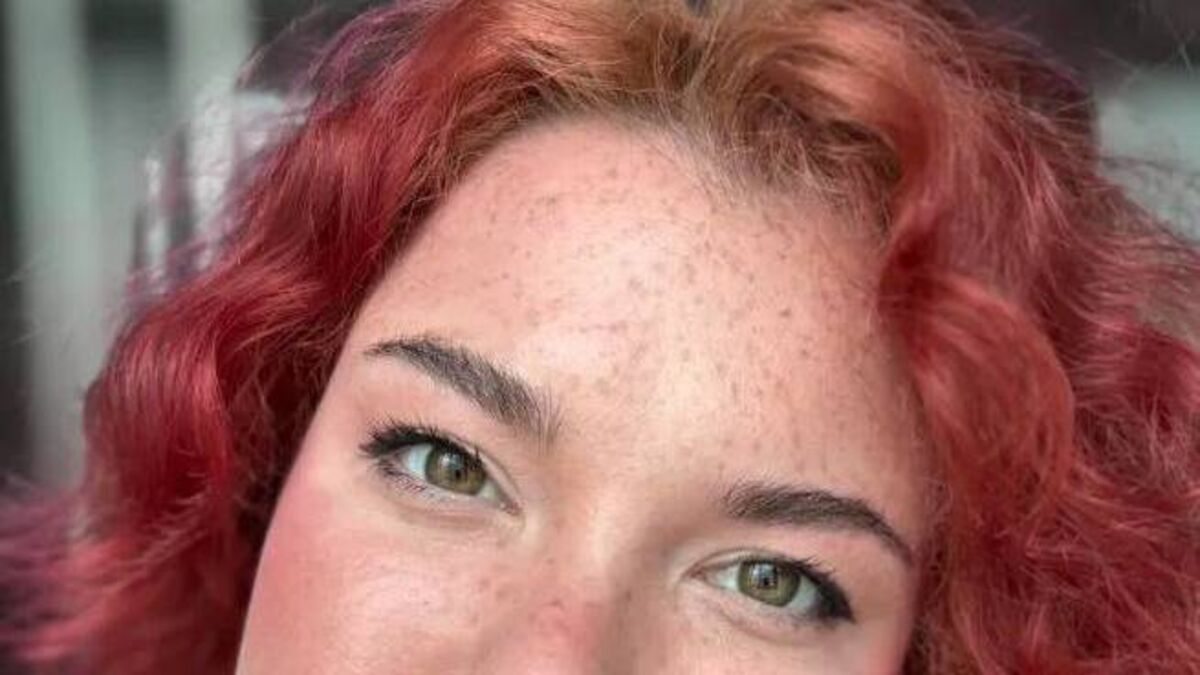
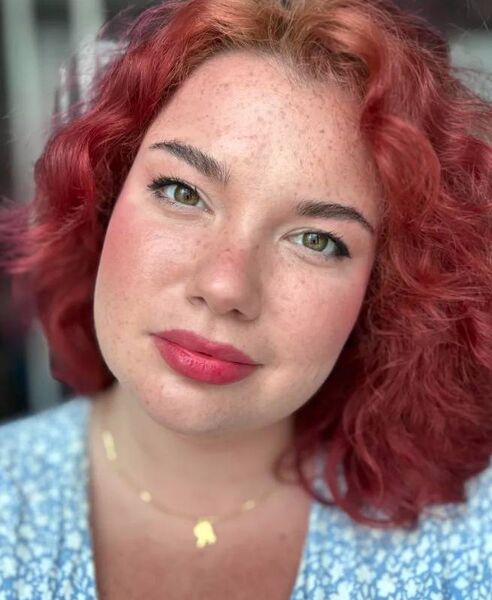
Author Rose Keating
Rose Keating is a writer from Waterford, Ireland. She received an MA in creative writing prose fiction from the University of East Anglia, where she was a recipient of the Malcolm Bradbury Scholarship and the Curtis Brown Prize. She is a winner of the Marian Keyes Young Writer Award, the Hot Press Write Here, Write Now Prize, and the Ted and Mary O’Regan Arts Bursary. She has been published in The Stinging Fly, Apex Magazine, Banshee, and Southword. In 2022, she received an Agility Award from the Irish Arts Council.
Her debut collection of short stories called 'Oddbody' came out in July 2025. It has been described as "weird-girl fiction at its finest" and "exquisitely grotesque".
Rose also cut her teeth as a columnist with while in university, and as a member of Waterford Youth Arts.
Rose sat down with us to tell us all about her short story collection and her life in Thailand.
I was really influenced by short stories. Especially people like Raymond Carver, Angela Carter. In terms of novels, I love Ottessa Moshfegh and Camilla Grudova. Sayaka Murata, and a lot of Asian literature in translation, has a specific surrealism that I just find so interesting and compelling. Lorrie Moore is absolutely hilarious. I didn’t realise how funny short stories could be until I read her.
Every two or three years, articles always come up saying, ‘The short story is having a come back.’ It’s not. It’s always been interesting and very frequently at the forefront of experimentation.
The short story form is so good at adaptation and fluidity. Because of the brevity of short stories you’re able to be a little bit more extreme and be a bit more creative, and it's just harder to do that in a novel. The short story is able to carry the weight of experimentation.
When I first was sending the collection out, I felt anxious about having to try and sell a short story collection. In the initial meeting with my publisher, I thought I should say that I’ll write a novel someday. That didn’t work because I’m not very good at lying.
I love writing short stories, but if one day I had an idea and it didn’t suit the short story form, then I ‘d come up with something else. Maybe it would be a poem, a song, a play, a novel.
I think the idea you have will just become the form they’re meant to be, regardless.
A lot of the time when I sit down to write, it sounds basic, but it's because I have a feeling. And that’s the problem, it sounds basic but actually our inner world, that creative, dark, emotional space is incredibly complex. But it is also a space without language, and therefore it makes it really hard to put into words. We could feel something so extreme and the only words we have are, ‘I’m sad’, and it's just not enough. Whereas I feel when you work in a mode of non-realism or surrealism, when you go beyond the natural and real, it kind of allows you to go into that space and to put words to the thing. Because that world inside you doesn’t work in a linear logical way, it goes beyond logic. And you end up having this internal emotional logic through stepping out of reality.
I remember a different interviewer noting that it was a ‘very wet collection’ and she wanted to know why there was so much viscosity to it. It was such an odd moment because it wasn’t something I was aware of when writing it.
Sometimes a writing style is intentional, but sometimes it's more of a thumbprint where things about yourself are revealed if you want them to be or not. When I make those descriptions, they are familiar, especially when it comes to being in a body. This isn’t autofiction, but the stories are still decorated by the way my brain works.
My experience of being in a body is that it's so joyful, but there’s also such horror and disgust. It’s a horrifying thing to have to be in a body, to bleed and sweat and just be a gross human. There is a feeling of being both within the body and also trapped.
It’s probably influenced everything in both good and bad ways. I don’t think Waterford, in itself as a location, was a unique influence. But I think anywhere you grow up is going to shape you. It shapes how you think about the world and how you think about home. It affects me as much as every single other person in the world.
I love Tramore. Even in winter. I love the beach.
I grew up in Ballybeg and I like it a lot. It’s familiar.
I’ve been living in Thailand for the past year teaching English. Initially I only really went over to fill the time until the book came out or until I started writing the next thing. I’ve never had a job that makes me happy before. Writing makes me happy but I struggle to think of that as a job job, a lot of the time. This is the first normal job that hasn’t made me sad. I just feel very grateful to be able to work with these tiny humans and be able to help them. It’s really corny and I didn’t think I’d be the type of person who’d feel like this, but it’s honestly been so beautiful.
I don’t know. It’s a big thing when you’re in the UK, the whole ‘Irish writer’ thing. It’s seen as such a phenomenon. A lot of it is down to the fact that we have great Arts Council funding. There’s a lot of support there. In one way, it’s one of the best countries to be an artistic person. I didn’t realise that until I left. But on the other hand, I did leave. I was unemployed in Waterford for at least a year. Frankly, there aren’t a lot of jobs. And rent is really high. It does make it hard to want to stay somewhere. I have two degrees, and I didn’t want to be a waitress anymore. It’s having the kind of life that isn’t miserable, I found hard to envision in Waterford. And it’s such a shame because Waterford is a good city and there are good people there.