‘Marion O’Mara was real. She leaves a great legacy in this city’
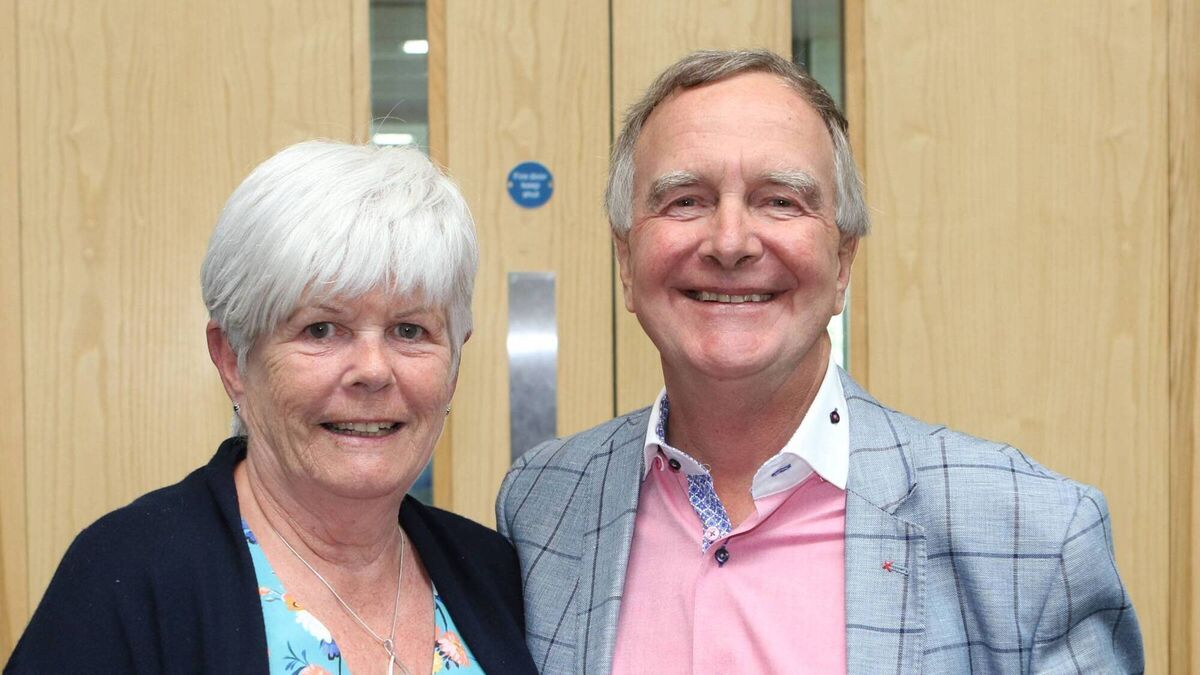
The late Marion O’Mara pictured with former Minister for Waterford Martin Cullen. Photo: Joe Evans
Former Minister and Waterford politician Martin Cullen paid a heartfelt tribute to veteran journalist Marian O'Mara, describing her death as "a really sad day for journalism" and hailing her as one of the finest journalists he had ever encountered.
Cullen said O'Mara's passing was a loss not only to Waterford but to journalism as a whole.
"I would consider Marian every bit as good as any national journalist that ever existed. It's really, really sad. I feel the loss personally, and my sympathies go to her husband, her children and all her family. She was a wonderful, wonderful woman."
The pair first met in 1983 when Cullen was beginning his political career and considering a run in the 1985 local elections. From that first meeting, he said, a strong relationship built on trust and mutual respect developed.
"There was a good trust between us from the beginning," he recalled. "Marian was somebody you knew you could talk to, and if something was confidential, it stayed confidential."
Cullen said O'Mara represented an increasingly rare style of journalism, describing her as "old school" in the best sense of the term.
"When Marian wrote a story, she didn't just take one source and write it. She checked her sources, she went to others, and she made sure she was writing an honest and fair story. That was a hallmark of her career."
Despite their close professional relationship, Cullen said O'Mara never shied away from asking difficult questions or holding politicians to account.
"Marian was a real journalist. She wasn't a sycophant to anybody. She could be critical of anyone, but her criticism was constructive rather than destructive. You might not always like what she wrote, but you could understand why she wrote it."
He said that honesty strengthened the relationship between them over four decades.
"Sometimes I disagreed with what she wrote, but I always knew it would be fair. We were never in each other's pocket, but there was enormous respect between us."
One of Cullen's strongest memories of O'Mara came during election campaigns and count centres, where he said her political instincts were second to none.
He recalled a general election campaign in which he targeted second-preference votes in areas where support for another candidate, Martin O'Regan, was particularly strong.
"Most people were looking for number ones. We went looking for number twos. In the end, Martin O'Regan's vote effectively elected me."
Cullen said O'Mara understood the strategy long before others realised what was happening.
"When the result started to emerge, she came towards me with the biggest smile on her face and said, 'You pulled some stroke there. What a strategy, what a result!' She had called it very early."
According to Cullen, O'Mara had an exceptional ability to read both elections and people.
"If Marian had worked for a political party, she would probably have been the best tallyer that ever existed. She could read votes, but more importantly she could read people. She knew when someone was telling her the truth and when they were simply trying to spin a story."
That trust sometimes meant she agreed to hold back on stories when major announcements affecting Waterford were imminent.
"It was difficult for any journalist to do that, but there was such trust and respect between us. She knew that if I asked her to wait, I wouldn't be giving the story to somebody else."
Cullen also reflected on O'Mara's role during his years in government, beginning with his appointment as Minister of State in 1997. He said she understood the significance of major developments for Waterford and took genuine satisfaction from seeing the city progress.
"She wanted things done for Waterford as much as I wanted them done. She could see the bigger picture, whether it was investment in education, infrastructure or flood defences. She enjoyed seeing Waterford move forward."
Asked to sum her up, Cullen described O'Mara as "a true journalist in the real historic sense of good journalism".
He also praised the way she broke barriers for women in the profession.
"The glass ceiling still existed, and to some degree still does. Marian broke that ceiling because she was such a good journalist."
Cullen believed O'Mara could easily have succeeded at national level had she chosen to pursue that path.
"If she had wanted to go to any of the big national newspapers, there's no doubt in my mind she would have been a great national journalist."
Reflecting on her legacy, he said her contribution extended beyond journalism.
"She was part of seeing Waterford rise. She leaves a great journalistic legacy in this city."
In closing, Cullen said he would miss O'Mara's warmth, positivity and presence.
"I'll miss her smile, her honesty, her humanity and her generosity. Even after we had both retired, you knew you would bump into her somewhere and sit down for a coffee and a chat.
"Marian O'Mara was real. She was a very rounded person, very honest and, as I said, a true journalist. That's the truth of Marian O'Mara."