Major League Baseball pitcher with strong Déise connections
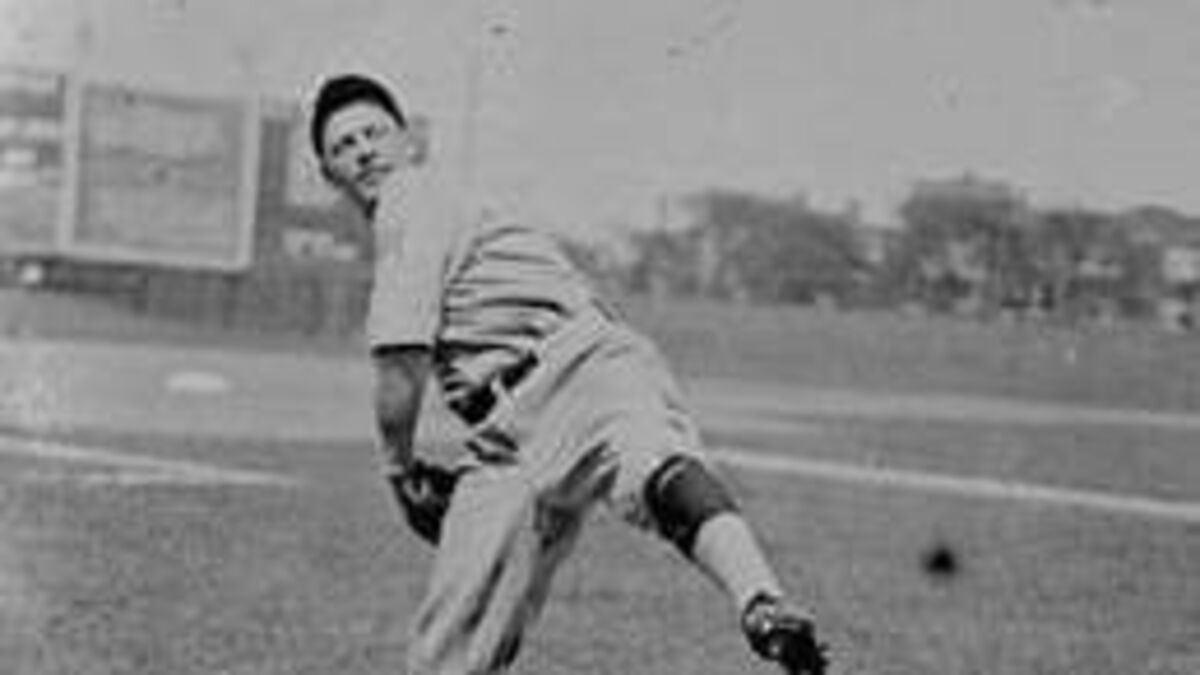
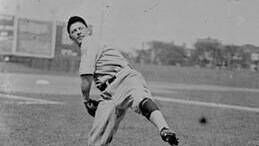
Iron Mike Prendergast pitching for the Chicago Cubs.
The Major League Baseball pitcher known as ‘Iron Mike’ Prendergast was the son of two natives from County Waterford. Mike was born on 15th December 1888 in Arlington, Illinois. He was the fifth child of eight born to Jeremiah and Catherine Louise Prendergast. Jeremiah ‘Jerry’ Prendergast hailed from Cappagh, Co. Waterford. In his late-20s, Jerry emigrated to the United States (in the 1860s), firstly staying in Brooklyn with his sister, before settling in Bureau County, Illinois. There, he took up farming and was later joined by his mother and brother, William. Jerry married fellow Waterfordian Catherine Louise Corcoran in 1879.
Young Mike grew-up in small-town Arlington (population then under 200 people) which was obsessed with baseball. The Prendergast boys were heavily involved with the local team, Mike performing as a pitcher while his older brother John played as a catcher. After his schooling, Mike Prendergast began his professional baseball career with the Galesburg Boosters in the Class-D Illinois-Missouri League in 1909. His all-round athletic ability didn’t prevent him from being released from his first professional team. A brief spell with the Pekin Celestials was followed by joining the Bloomington Bloomers of the Class-B Illinois-Iowa-Indiana League. The 1911 season saw the Bloomers and Prendergast relocate to Quincy. The Arlington-born pitcher was just one of three players retained by the franchise.
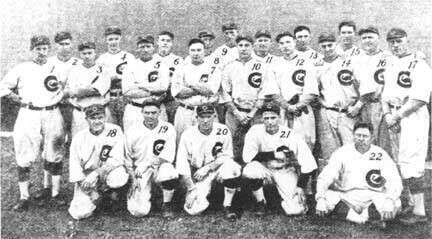
A loss of form with the Bloomers saw Prendergast released in July 1911. Fortunately, he was signed by title-chasing Peoria Distillers, who were battling it out for the championship crown with Decatur and Quincy. A rollercoaster season saw Peoria and Prendergast clinch the League pennant. Becoming a stalwart of the Distillers line-up for the next two seasons was attributed as much to Prendergast’s ingenuity as it was to his work ethic.
Baseball historian Chris Rainey highlights that ‘Standing 5-feet-9 and weighing 165 pounds, he [Mike Prendergast] was not an imposing figure on the mound.’ Continuing, ‘He made up for that by hiding his right hand from the batter, curling it behind his back during delivery.’ Rainey concludes Prendergast had ‘… good control but did not have the overpowering pitch that would have made him a strikeout pitcher.’
Subsequently, Mike was drafted by Milwaukee of the American League (AL) for the 1914 season.
However, Prendergast accepted an invitation from the Chicago Whales to play in the Federal League of Base Ball Clubs. His most notable performance in his maiden season for the Whales came on 25th July against the Brooklyn Tip-Tops, when he pitched a shut-out.
The star for the Chicago side was pitcher Claude Hendrix, who achieved a career-best season of 29 wins from 39 starts. The 1915 season saw Hendrix and Prendergast joined by Mordecai Brown and George McConnell. This pitching team led the Chicago Whales to the Federal pennant. Prendergast achieved a career-best 30 starts, winning 14 games. He credited his fine season to the teachings of Brown. A highlight for the Whales’ pitcher was closing out two shutouts against Baltimore and Kansas City in May. These results proved to be pivotal points gained from tight affairs in their championship quest.
The shuttering of the Federal League saw Prendergast return to his family farm in Arlington. The Whales were absorbed by the Chicago Cubs, with games being staged at the Whales’ ballpark, Weeghman Park. It would become more famous as Wrigley Field, and is often referred to as a monument of the failed efforts of the Federal League. Prendergast and his fellow Whales’ pitchers were retained by Cubs’ manager Joe Tinker. However, Mike’s starting opportunities were becoming increasingly limited. A personal highlight during a difficult season was his marriage to Grace Kerwin in November 1916.
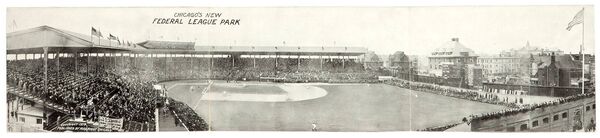
Another uncertain winter was dominated by a dispute between the Baseball Players’ Fraternity and team owners concerning players’ salaries. The respective franchise owners sought a decrease in their players’ wages, which they felt had been inflated by the competition between the American and National Leagues with the now-defunct Federal League. Having been an early signee with Chicago, Prendergast was expelled from the Baseball Players’ Fraternity.
Only 8 starts for the Cubs in the 1917 season inevitably saw Prendergast depart in the off-season, when he was part of a trade deal with Philadelphia. Phillies boss Pat Moran taught Mike how to throw a screwball, leading to him being selected regularly as a starter.
His phenomenal work rate led him to be nicknamed ‘Iron Mike,’ becoming a fan favourite across the Three-I League. The shortened 1918 season due to the First World War saw Prendergast make 30 starts, claiming 13 victories. But from hereafter, Prendergast had a largely nomadic career in the lower echelons of the game.
Released to Indianapolis in June 1919, ‘Iron Mike’ refused to report for his new team.
Instead, Prendergast opted to operate among the independent ranks, going on to pitch in the Industrial League for the Fairbanks-Morse Fairies. Remarkably, in 1921, Mike attempted to play for two teams, Beloit and the Joliet Standards. The intense schedule of pitching for both teams eventually saw his performances taper off, and was subsequently dropped by both franchises.
Finally, in 1923, Mike was reinstated to the Baseball Players’ Fraternity, leading him to join the Des Moines Boosters in the Class-A Western Association.
This was followed by a mid-season move to the Omaha Buffaloes, where Prendergast begins the transition from playing to coaching. He proves a pivotal locker-room influence as the Buffaloes claim the Western League pennant, winning 103 games.
After a spell with some semi-professional teams in Denver, Colorado and Texas, Prendergast became a truck driver for the Falstaff Brewing Company in Omaha. During the 1930s, Mike held baseball clinics for youths across the Big O. His philosophy appears to have been focusing on the individual becoming a good citizen with enjoyment for their work over a ‘win at all costs’ mentality.
Retiring from Falstaff in 1955, Mike planned to travel, make decoys for duck hunting and attend plenty of baseball games. On 18th November 1967, Mike Prendergast died as a result of pneumonia.