Locky Byrne: The story of the Border’s Hurler
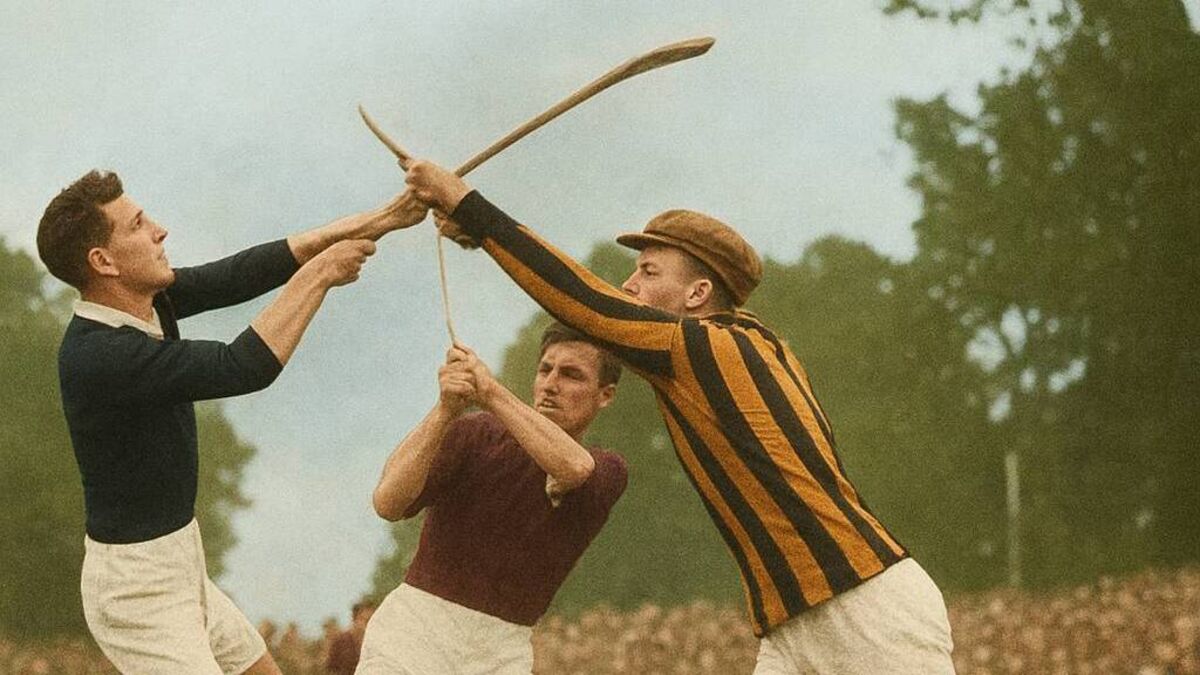
Locky Byrne in action for Kilkenny against Galway goalkeeper Tommy O'Meara in the 1935 All-Ireland Senior Hurling Championship Semi-Final.
In the early spring of 1913, amid the coal dust and clatter of Waterford’s railyards, a boy named Loughlin “Locky” Byrne was born in the Glen area of the city. His father, known locally as “Dashy” Byrne, worked on the railway, and the rhythm of industry — steam, steel, hammer and heat — was the backdrop to Locky’s childhood. From these streets and sidings would rise one of the most curious and gifted hurlers the game has ever known: a man who wore both the black and amber of Kilkenny and the blue and white of Waterford, and who never truly belonged to either.
The Byrnes later moved across the River Suir to Ferrybank, a parish perched precariously on the border between the two hurling heartlands. It was the sort of place that couldn’t quite make up its mind — the local pitch famously straddled the line between counties, with one goalpost in Waterford and the other in Kilkenny. For boys growing up there, identity was flexible. You might cheer for one side on Sunday and line out for the other on Monday. It was a borderland that shaped Locky Byrne’s life in ways few could have predicted.
By fifteen, Byrne was already making headlines. Small and wiry, quick off the mark and clever on the pull, he was selected for the Waterford minors and played a starring role in the county’s first-ever All-Ireland Minor Hurling Championship victory in 1929. A reporter at the time described him as “a spark in the attack… sure to trouble senior defences.” He did not have long to wait for that chance.
In 1931, aged seventeen, he was called into the Waterford senior team for the Munster Championship. In the final against the mighty Cork, Byrne rattled the net — a moment that might have been the stuff of legend had the referee not disallowed the goal. Waterford lost, but the boy from Ferrybank had arrived. The lesson was harsh but formative: brilliance would not always be enough.
The next few years were years of movement, both literal and political. In the mid-1930s, the GAA’s internal map-drawing caused one of those quiet revolutions that only hurling folk could truly understand. The association’s ruling meant that Ferrybank, for hurling purposes, was transferred from Waterford to Kilkenny. Overnight, Byrne found himself — without moving house — wearing different colours.
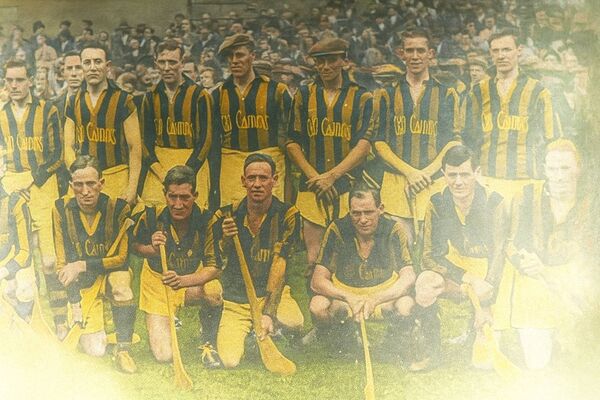
He joined the Kilkenny clubs Slieverue and Mooncoin, and in 1935 was called up to the county’s senior side. There, he lined out alongside the legendary Lory Meagher, helping Kilkenny to yet another All-Ireland title. He was, at only twenty-two, a champion of Ireland. Few men have managed to win their first All-Ireland medal while effectively playing for their neighbours.
And then, as quickly as it had come, the rule changed again. The GAA reversed its decision, restoring Ferrybank to Waterford’s jurisdiction. Byrne, ever pragmatic, simply crossed the bridge back home. The paperwork of allegiance changed, but the hurler did not. He played on — for the love of the game, not the boundaries that claimed to define it.
In 1938, everything came together. Waterford, long the nearly-men of Munster, had assembled a side of rare ability: John Keane, Willie Barron, Charlie Ware, and Locky Byrne among them. That summer, Waterford won their first ever Munster Senior Hurling Championship. The defining moment came late in the final against Clare when Byrne, ever alert, pounced on a loose ball and drove it into the net. It was the winning goal, and it sent Waterford into the All-Ireland final for the first time.
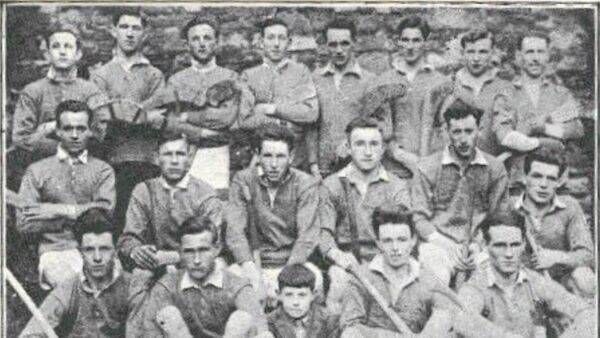
The irony was delicious. Earlier that same year, Byrne had faced Dublin — the same opponents — while wearing Kilkenny colours in a different competition. Now, in blue and white, he was to meet them again on the game’s grandest stage. One man, two counties, one summer.
Waterford’s dream ended in heartbreak. Dublin took the title, leaving Byrne and his teammates to wonder what might have been. Yet at club level, he was unstoppable. With Mount Sion — the Waterford city club that would later become synonymous with success — Byrne helped capture three consecutive county championships between 1938 and 1940. Those who played with him spoke of his calmness, his leadership, and his refusal to be drawn into rows. Even after taking the heaviest of hits, he would rise, dust himself down, and play on.
He was not only a fine hurler but also a craftsman, a carpenter by trade. There was a certain symmetry between his work with timber and his art with ash — each requiring touch, patience, and precision.
But the story of Locky Byrne, like so many of his generation, was to end too soon. In 1940, during a club game against Portlaw, he came off injured and sat on the wet grass, a coat around his shoulders. He caught a chill that developed into tuberculosis — the silent killer of the era. As the illness took hold, he lost weight rapidly but still insisted on lining out for Mount Sion in the county final that same year, playing centre-forward despite his weakening body.
In the months that followed, he faded. One day, walking along the quays in Waterford, a teammate asked him how he was keeping. “Ah, grand,” Byrne replied, with the understatement of a man who knew the truth but saw no need to share it. By January 1941, he was gone. He died in a Dublin hospital, aged just twenty-seven.
He never lived to see Waterford’s eventual breakthrough in 1948, when the county at last lifted the Liam MacCarthy Cup. But in a way, his spirit was there — in the blue and white banners, in the pride of a county that had waited so long, and in the memory of the border boy who had carried their hopes a decade earlier.
For years after his death, Mount Sion players would walk from the city to his grave in Ferrybank, not in solemn procession but in the quiet camaraderie of old teammates. The shuffle of boots on tarmac, the nods between men who had shared glory and grief — that was their tribute.
Locky Byrne’s life remains one of hurling’s most remarkable intersections of geography and talent. Born in Waterford, crowned in Kilkenny, and mourned on both sides, he was the embodiment of how sport can transcend the lines on a map. In an era when parish, county, and creed often divided, Byrne united — not through politics or words, but through play.
Ask in Ferrybank today and you’ll hear both versions. To some, he was a Kilkenny man who came home. To others, he was always Waterford’s own. The truth is more elusive — and perhaps more beautiful. He belonged to neither, and to both.
In the end, that’s what makes him unforgettable.