Inquest opens into death of young Waterford footballer who died days after getting Covid vaccine
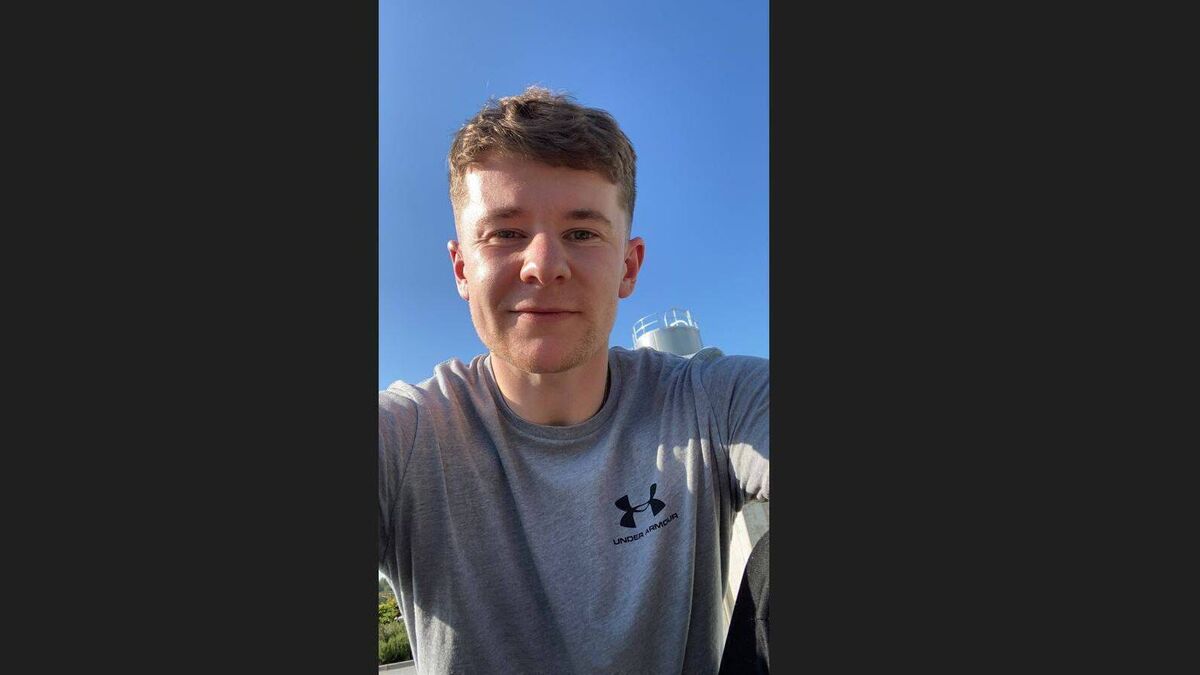
The late Roy Butler, who died aged 23, on August 17, 2021, days after getting the Covid-19 vaccine.
The family of a young Waterford soccer star who died days after getting the Covid-19 vaccine said they “just want the truth” about his death.
Roy Butler, 23, was described as being very fit and healthy up to the day he had one dose of the Janssen – Johnson & Johnson - Covid vaccine on August 12, 2021, in a local pharmacy in Waterford.
Roy repeatedly said that he felt “shook” and unwell after the vaccine but he did not seek medical attention.
He texted friends and family over the following days, saying he felt “fucked” after it, reporting headaches, grogginess, sweating, a sore jaw and sore neck.
“I’m not dying, I’m just not well,” he texted on August 14, 2021.
But he tragically suffered a catastrophic brain haemorrhage days later on August 16, Cork Coroner’s Court heard.
His family sat with him, watching his face and lips grow pale when his life support machine was turned off on August 17, 2021.

“Roy was a perfectly healthy young boy before the vaccine,” his mother Angela Butler told the court.
“He was perfect, he got this injection, then he wasn’t perfect.”
“He did not want to get it,” she said. But he wanted to go to Dubai with friends and needed to prove that he had been vaccinated to travel there at that time.
On the morning of August 16, 2021, after he finished his night shift in Bausch and Lomb, he returned to his parents’ house on O’Reilly Road, Cork Road in Waterford city.
He left to go to the gym but came back a short time later feeling unwell.
His “heart was banging out of his chest” and his face was unusually pale, his mother said.
She told him to lie down and put a towel over his forehead before bringing him up to bed and trying to make him comfortable.
He texted her to come up and she found he had vomited and was very unwell.
His father, Martin Butler, who was keeping an eye on him as he was worried, also came to his room and found him vomiting and convulsing in his bed.
He called an ambulance.
“Roy was trying to vomit in his basket. Roy’s eyes were closed even though he was getting sick,” his father said.
“I kept talking to him to get a response. He was laying on the bed in convulsions.
“Roy did not improve, he was just jerking, in convulsions from side to side,” his father said through tears.
When paramedics arrived, they told him to keep talking to his son.
“I held his hand,” his father said.
Paramedics worked on his son, who was unresponsive. He was transferred to University Hospital Waterford before being transferred to Cork University Hospital.
A “liaison person”, who was updating the family on Roy’s state in hospital, said that they “had not seen anything like this before”, for someone of Roy’s age, fitness, and previous good health. He was transferred to Cork University Hospital by ambulance.
His family followed in an ambulance with a garda escort.
A neurosurgeon called them on route and said Roy only had a 2% chance of survival.
“I asked him to do his best,” his father said.
“20 minutes later, I got a call from the surgeon again. He said things had gotten worse. He said he only had a 1% [survival] chance.”
Roy had suffered a catastrophic brain bleed.
Roy’s father and brother made the decision to switch off Roy’s life support machine.
“We went down and said goodbye. Five minutes later Roy had passed.”

Martin Butler said that Roy was “very apprehensive” about getting the vaccine but “felt pressurized” to get it because he wanted to go to Dubai with friends.
A medical report from Roy’s GP read out by Coroner Philip Comyn in court described “a healthy, sporty young man” who had suffered some asthma in his youth, which was controlled with some inhaler use.
Dr Wail Mohammad, consultant neurosurgeon at CUH, agreed under questioning by Ciara Davin, BL, barrister for the family, that getting the vaccine could not be ruled out completely as a cause.
He said that an intercranial haemorrhage was “a rare enough event".
No anatomical reason could be found for Roy’s brain bleed.
But Dr Mohammad said that there were “a handful” of cases of these types of catastrophic brain bleeds for which no known cause is found, even after studies, including when postmortem are conducted.
Ms Davin said that Jansson data showed that 59 other people who received the vaccine had also suffered intercranial bleeds within days of Roy’s death.
But barrister for Jansson, John Lucey, SC, said that these 59 cases of brain bleeds happened internationally amongst more than 600 million doses of the vaccine given. And most of these cases had no underlying information provided with them.
Roy’s death had been catastrophic, instantaneous and spontaneous, he said.
Ann Tobin, pharmaceutical vigilance monitor with the Health Products Regulatory Authority (HPRA), said in a letter from May 2022, that the HPRA had undertaken searches of adverse reactions to the vaccine in their databases, and to that date found no similar cases to the brain bleed Roy suffered attached to that Johnson and Johnson Covid vaccine.
Individual reports of symptoms post-vaccine were “rarely enough to establish causation”, she said.
Epidemiological studies, clinical trials and other measures would normally be needed to establish a causal relationship, she said.
But she said that Roy’s symptoms and death were recorded on databases in Ireland and Europe recording potential adverse reactions.
Remembering their “beloved” Roy, his mother Angela said that he was “sensitive and honest”.
“He was always happy and positive. He loved to laugh, he was passionate about football and keeping healthy.
“He was always ready to lend a helping hand to anyone who needed it.”
Angela also said that her son was religious, keeping rosary beads in his bedroom.
“He left all who knew and loved him with precious memories.
“He is always in our minds,” she said.
His father Martin said that Roy had wanted to line out for Waterford FC since he was a child. He had grown up opposite the club and dreamed of “walking out there to play for the Blues”.
He achieved that goal, being appointed captain and chosen as ‘player of the year’.
“He walked out as captain for Waterford under the tunnel as he had always wanted to.
“He was funny, he had a sense of humour, he was lovely to be around, a lovely kid.”
Roy’s brother, Aaron Butler, remembered his only sibling as “someone who gave back”, sharing his time and skill as a soccer player coaching others.
“He had it all – he was the total package - looks, funny and was healthy.
“He was very clean-cut.
“I still believe Roy went downhill after the vaccine.
“I just want (the) truth of what happened.”
The inquest in front of Coroner Philip Comyn in Cork Coroner’s Court continues tomorrow, Tuesday, September 25.