Hurricane Debbie (1961) and Storm Ophelia (2017): Reflecting on Waterford's strongest ever storms
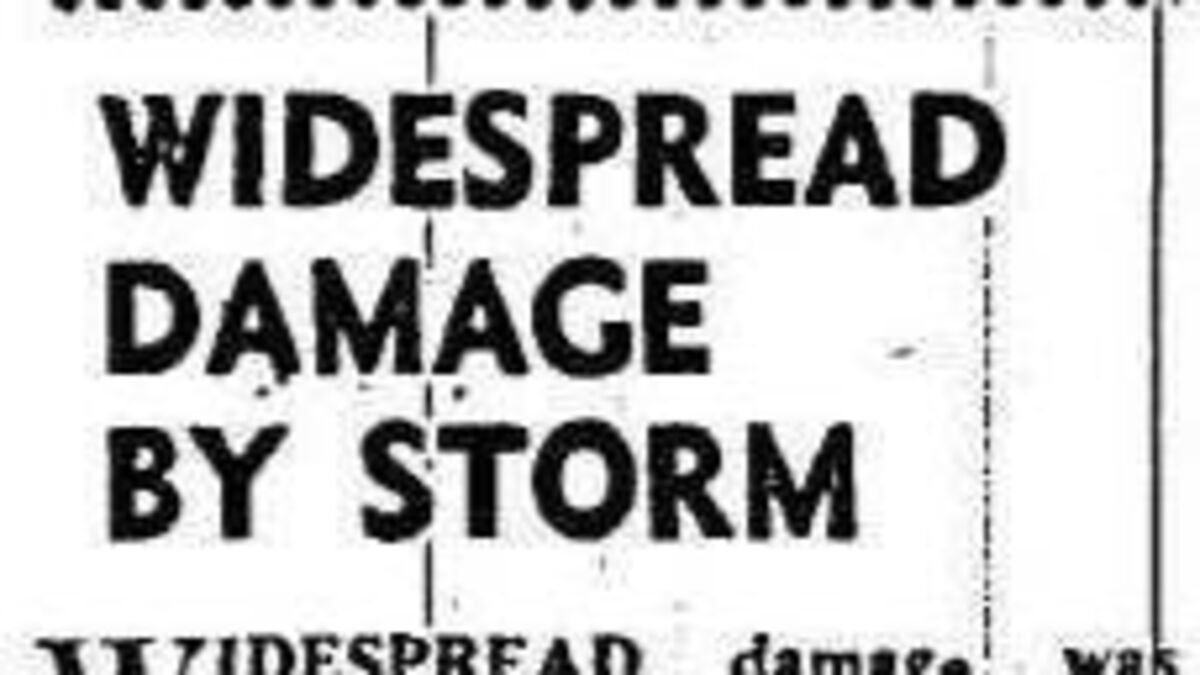
Waterford News and Star reports on Hurricane Debbie on September 19, 1961
One of the most severe storms to ever hit Ireland , Storm Éowyn, battered its way across the country last night.
While the red weather warning has ended, Waterford remains under an orange warning until 12pm and a yellow warning from midday to 4pm. Locals are advised to remain vigilant.
The extent of the damage caused by the storm is being assessed, with emergency crews tending to roads, electricity lines and damage to infrastructure.
With guests as high as 183km/h recorded, Storm Éowyn may solidify itself as one of the most extreme storms to hit the country in modern times, holding company alongside 1961’s Hurricane Debbie and 2017’s Storm Ophelia.
One of the most intense storms on record, Ireland was hit by winds gusting over 177 km/h as the centre of the former hurricane Debbie passed close to the west coast during the morning of Saturday, September 16, 1961.
At a number of stations across the country the winds recorded that day were the highest ever measured before.
While true hurricanes are technically not found at latitudes as high as Ireland, Debbie retained many hurricane characteristics when it arrived off the southwest coast.
Damage to property was extensive over the western half of the country and 11 deaths were attributed to the storm.
In the September 19, 1961 edition of the Waterford News & Star, the front page contained the headline ‘Widespread damage by storm’. The report said: “A big milk supplying firm was cut off from the city and lorries had to make a six mile detour by Ballygunner to get to the depot.
“A large number of small craft at Dunmore East dragged their anchors and got tangle up in each other. About six punts were sunk when they filled up with water.
“The local motor launch, St. Jude, seemed to get the worst hammering in Dunmore East when she filled up and was partly submerged. Damage was also caused to pleasure craft in Tramore, Dungarvan and Helvick pier."
In Dungarvan there was minor damage overall. In Lismore however, heavy rain and gale force winds caused ‘havoc’.
The News & Star report added: “The winds, which started late on Friday night uprooted trees in many places. Electricity supplies were cut off from early morning, causing a great deal of worry to housewives and shopkeepers.
“Harvesting operations were brought to a standstill and all cereal crops still standing were quickly flattened to the ground.”
Ophelia was a rare hurricane which made landfall over Ireland on Monday October 16, 2017, and is regarded as the worst storm to affect the country in 50 years.
While the southwest, south and southeast were worst impacted, trees were knocked or damaged in most areas, making road conditions extremely hazardous.
Warnings about the arrival of Storm Ophelia and advice on self-protection was disseminated to the public by the national and local response services, and the country was shut down almost completely on October 16.
The day dawned with fine and unusually warm conditions for most areas. However by 6am, Storm Ophelia began to affect the southeast with violent storm force winds.
Fallen electricity poles and electric cables left 300,000 households across the country without power.
Schools remained closed for a further day on the Tuesday October 17 as a precaution and the storm caused huge disruption to electricity supply services, with a ‘domino’ effect on other infrastructure and services.
The Waterford News & Star reported: “Storm Ophelia caused extreme destruction across the city and county yesterday, with Waterford on the receiving end of some of the former hurricanes most forceful winds.
“The roof of Fraher Field in Dungarvan suffered considerable damage, and right across the county roads were blocked by fallen trees and power lines. Gusts at Waterford airport reached 137 km/h."
Tragically, a woman in her 50s was killed when a tree fell on her car in the west of the county.
Ophelia was a significant weather event that led to widespread disruption, however no wind or wave records were broken.
Extraordinary events such as the “Night of the big wind” in 1839, with Hurricane strength winds, and Ex Hurricane Debbie in 1961 remain two of Ireland's most significant storm events in recorded history.
A wind speed of 183km/h brought by Storm Éowyn was recorded at 5am this morning in Co. Galway, the fastest since records began, Met Eireann have said.
The News & Star’s latest report on Storm Éowyn is available HERE
Our LIVE BLOG will keep you up to date as disruptions continue across the city and county.