Harnessing the Déise: Offshore wind - Ireland’s passport to energy security
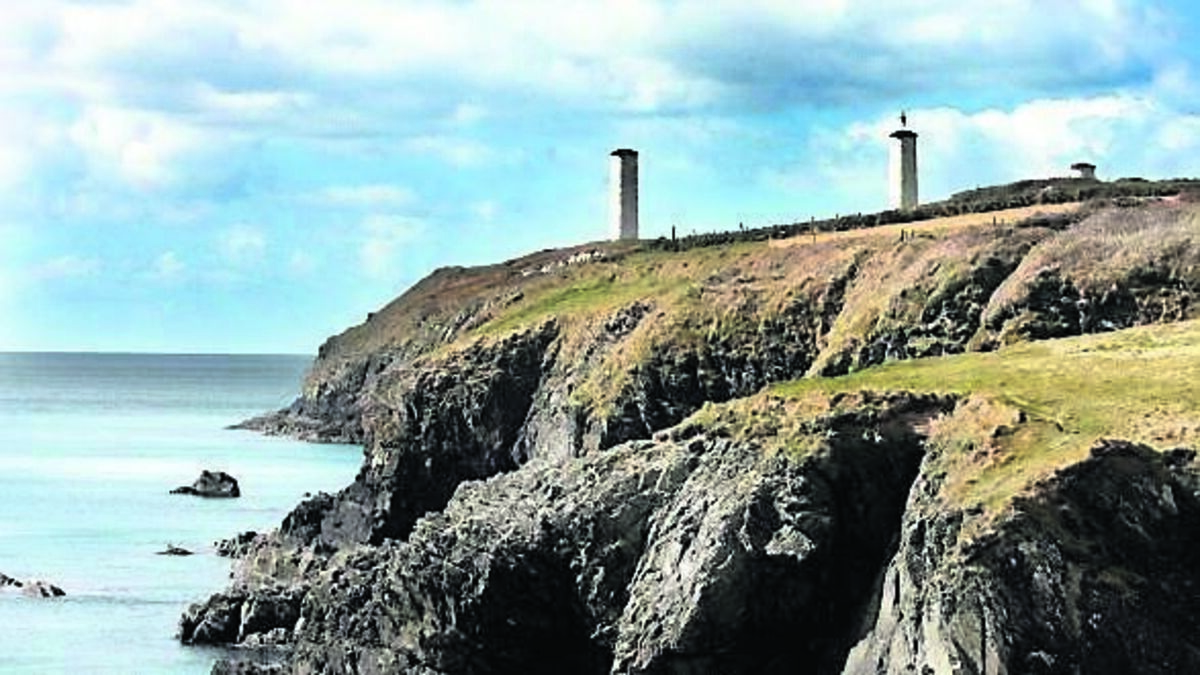
‘When I think about these offshore projects and when I think of solar, and I think of onshore wind, I just think of us taking a little bit more control over our energy responsibilities’ - Paul Deane, senior lecturer in Clean Energy Futures at UCC.
“Bill shock” is a known phenomenon that occurs when a customer receives a bill that is much higher than expected. But now the shock has worn off as high household energy bills become the unfortunate norm.
Data from the Central Statistics Office confirmed that wholesale electricity costs had jumped by 77 percent from August 2025 to August 2026. While this is down from the high of 2022, it does mean that as temperatures begin to fall, Irish households are still grappling with additional price hikes from electricity providers as well as soaring gas and oil bills. It also comes as the Government confirmed in the recent Budget that the welcome energy credits of recent winters will not be repeated.
Ireland’s vulnerability when it comes to our energy supplies cannot be understated – as one of the most energy dependent countries in Europe, we fare far worse than other countries when faced with global energy shocks.
According to data from the Sustainable Energy Authority of Ireland (SEAI), Ireland’s reliance on imported energy is one of the highest in Europe; we imported 78.2 percent of our energy requirements in 2025, compared with an EU average of 57.3 percent. Most of our electricity is generated from imported natural gas – a major problem as we move to electrify our transport and heating sectors.
“Where we are is not a good place,” warns Paul Deane, a senior lecturer in Clean Energy Futures at UCC. Deane works within the MaREI Centre (the Research Ireland Centre for Energy, Climate and Marine) and the Environmental Research Institute (ERI).
“Ireland is a country that uses huge amounts of energy but produces very little amounts of energy ourselves.” Deane says the majority of our energy comes from places like the UK, Norway, the US, and West Africa. “And that means we have very little control over the price.” According to Wind Energy Ireland, on days when wind generation was at its highest, the average price of electricity fell to €142.78 per megawatt hour.
On days when Ireland was forced to rely on imported gas, however, it reached €226.51 per megawatt hour.
“Wholesale electricity prices were almost €84 lower on the days with the most wind energy compared with prices on the days when we had to rely on imported gas. This demonstrates the value of wind energy in reducing our exposure to imported fossil fuels and volatile international energy prices,” commented Noel Cunniffe, CEO of Wind Energy Ireland.
Climate Minister Darragh O’Brien has said that energy affordability is a “priority” for the Government, but Deane says energy prices have soared in recent years due to geopolitical turmoil – something Ireland has no control over.
“The two big drivers of the cost of energy in Ireland have been Vladimir Putin's invasion of Ukraine, which drove gas prices through the roof, and that came out of our pocket, then of course more recently we are seeing President Trump's war in Iran impact the price at petrol pumps and we're seeing it in home heating as well.” This has galvanised the renewable energy debate – already a cornerstone of Irish climate policy, it now has added significance as Ireland remains hostage to global oil and gas markets. Deane says the clear answer is to focus on our abundant natural energy resources.
“We can ask, why don't we produce more energy in Ireland? Well, we don't really have oil and gas in Ireland,” he explains. “We’ve looked for lots of oil and gas over the last 40 years and we've been incredibly unsuccessful.
“We don't have stuff under the ground but what we do have in abundance above the ground is things like wind and sunlight and waves in our oceans and what these allow us to do then is make more electricity. This would be good for our pockets and good for the planet.” The 20-year contract won by ESB-Ørsted for Tonn Nua fixes the price at €98.7 per megawatt-hour (MWh) – around half the current wholesale electricity price. Yet Deane emphasises that renewables aren't necessarily cheaper overall. Huge amounts of steel used in the construction of the turbines and significant amounts of expensive copper used in the cables, generators and transformers mean they are ultimately cost competitive with fossil fuels.
“But what they do give us is price predictability and price stability and that's a good thing because it means that if you're a family or have a business, the price of electricity is pretty much fixed and you know what it's going to be across the lifetime of the project, unlike when the price of natural gas soars and so too does our electricity bills.” Ireland currently spends roughly one million euro an hour on importing fossil fuels, he adds.
“I would love to see that million euro having been spent in Ireland rather than leaving Ireland.” The reality, however, is that most people don’t even think about where our energy comes from – we simply flick a switch and a light comes on. Recent energy shocks may have helped people appreciate our seemingly infinite energy supply.
“We all have busy complex lives, we don't all have time to sit back and reflect about where our energy comes from – we only realise what we have when it isn't there,” Deane says.
This was exemplified by the long queues at garage forecourts during the fuel protests earlier this year.
“Certainly in the last year or two, with the two consecutive wars in Russia and Iran, it's something that Ireland has become very obviously exposed to.” Wind energy is Ireland’s largest and cheapest renewable energy resource. Deane believes that offshore represents our best chance of taking back control of our energy.
“When I think about these offshore projects and when I think of solar, and I think of onshore wind, I just think of us taking a little bit more control over our energy responsibilities, which today we outsource to the UK, the US and all these other countries and that's just not working out for us.
“The good news is that we have what we need, we have the know-how, we have the expertise, we have the technologies, we have the blueprints, and we have the finances – so it's really just about getting it done.”