Harnessing the Déise: Community Profile - Damian Nicholls, Tramore Eco Group
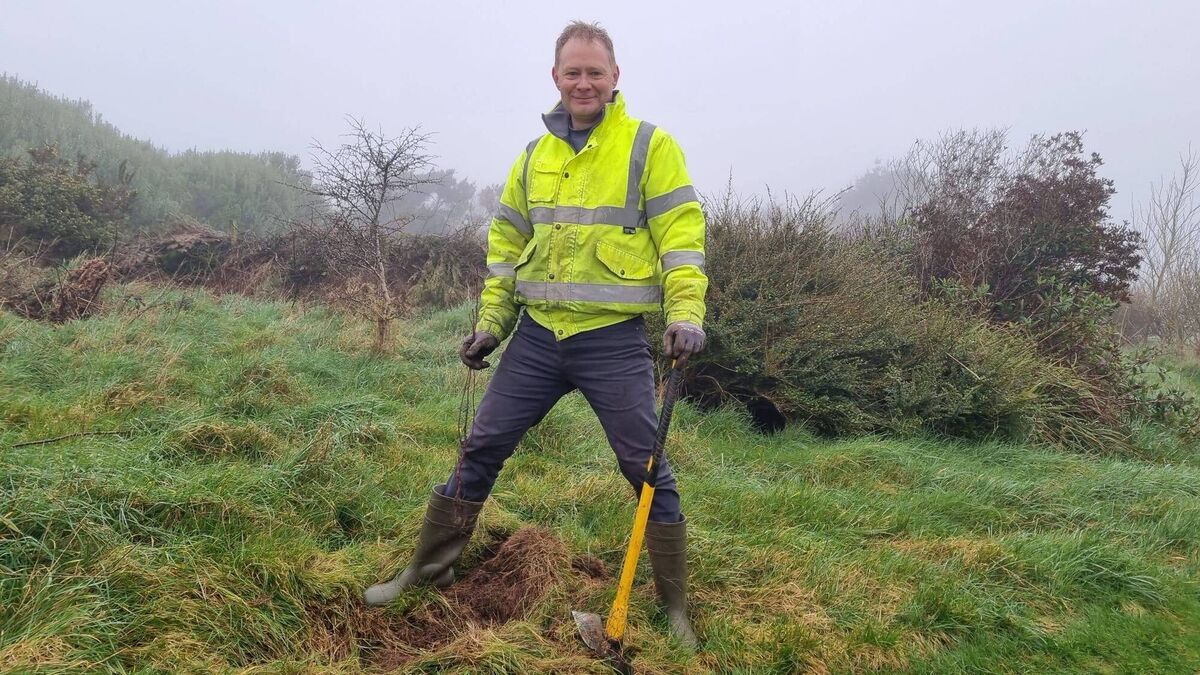
Damian Nicholls, Tramore Eco Group
Danielle Barron From weekly beach cleans to sand dune conservation, members of the Tramore Eco Group are doing more than their bit to protect the environmental integrity and biodiversity of one of Ireland’s most famous seaside towns.
Gardener and environmental advocate Damian Nicholls is the group’s secretary. A self-confessed “blow-in” originally from England, he says membership of the group is growing steadily year on year – right now, there's about 35 members.
“There's a real mix of different people, some who are just interested in looking after the place a little better, some who've got particular skills,” he says, noting that there are four ecologists in the group.
“We're just interested in and focused on anything that will promote, preserve, protect, enhance the natural environment in and around Tramore. And so it's whatever form that might take.” This includes a free tree giveaway, given that Tramore is one of the most tree-depleted areas in the county. Through its conservation work, the group has also helped boost the population of a large bumble bee, the carder bee, that lives in the dunes.
“We know if that particular bee is doing well, then loads and loads of other insects and animals are doing well as well. So at a time where it feels like everything is being chipped away, and you're seeing reductions in numbers of insects, birds, all kinds of animals, then anything that we can do to make people aware of that, and then also feel like everyone can play a part in reversing that, then that's got to be a good thing to do.” Nicholls is a “permaculturist” with a passion for sustainability. He describes the three core ethics of permaculture as “earth care, people care and fair share”.
“It’s a way of thinking about your life and how you live your life with a bit more structure,” he explains. “It’s looking after the earth, looking after the people, and that includes self-care as well. And then only taking your fair share, which is a particularly big thing for us in Western Europe. We take more than our fair share of things.” He works with Ard Scoil na Mara about one day a week on nature education, in addition to his garden design work.
Nicholls says the evidence is clear that changing weather patterns are having a direct impact on the coastal landscape where he lives.
“We seem to be in a pattern now, where we've got very dry springs and summers, and then very wet winters. So you're seeing brown lawns, brown fields, trees shedding their leaves early to try and protect themselves from death, essentially, just to try and preserve what's going on.” This was the first summer, he says, where he didn’t see any swifts in Tramore.
Tramore was packed with people this summer, its five kilometre stretch of sand a mecca for sun worshippers from Waterford and beyond.
“But while it was great for going down to the beach and having a swim, if you're trying to grow food, it was a nightmare, especially when the hosepipe bans came in.” Climate change is making his job “a lot harder”, he admits. “You’ve got to have plants that can survive the droughts in the summer. So you think, oh, maybe we'll plant some Mediterranean type of plants. But then those plants, they don't really like having their roots in the cold and wet.” Winter storms are also more intense and more frequent. Nicholls can see the impact of this with his own eyes.
“A few of us are doing a bit of citizen science for monitoring coastal erosion as well. So Kilfarrasy is my local beach and if I go down there, for instance, I see there's a bit of erosion after either some heavy rain or storm. And certainly, over the last couple of winters, we've seen a lot more erosion on the cliffs. And I'd say that's more from the rain than from the sea and the waves.” The prospect of offshore wind is one that brings up mixed feelings for Nicholls and his fellow members of the Tramore Eco Group. While they are in favour of renewable energy, he says, they would prefer the turbines of Tonn Nua to be “a little bit further away”.
“But I think they're coming, come what may. One of the group, a man in his 80s, said, ‘well, we might be moaning a little bit about things being on the horizon, but for generations to come, they'll have known nothing else’.” Tramore’s soaring population has put pressure on the town in terms of its amenities; Nicholls believes that the Tonn Nua Community Benefit Fund as promised by the developers will help “sweeten the pill”.
“It’s about accepting that these are necessary, especially as more and more things will be moved to be powered by electricity. We have just got to ensure that whatever is put in place, it's done in the best way possible. I think that we certainly couldn't stand here and say, no, we don't want them. Because then what are we going to do for electricity? And where's it going to go? It has to go somewhere.”