Ageing IT systems, staffing issues and knowledge deficits within Waterford Council

Existing Council IT systems are ‘ageing and require upgrading', according to the Waterford Council Risk Register. Image: City Hall
Staff shortages, deficits of knowledge and IT systems in need of modernisation; these are some of the areas which carry very high ‘risk ratings’ within Waterford City and County Council.
This is according to a Risk Register, a document which routinely identifies risks associated with the Council's work in housing, roads, planning, finance and environment.
The Risk Register, which commenced at the beginning of 2026, identifies key risks associated with Council activity, and then grades them according to their potential impacts and likelihood to occur. The Register also outlines the controls and actions needed to mitigate or prevent these risks.
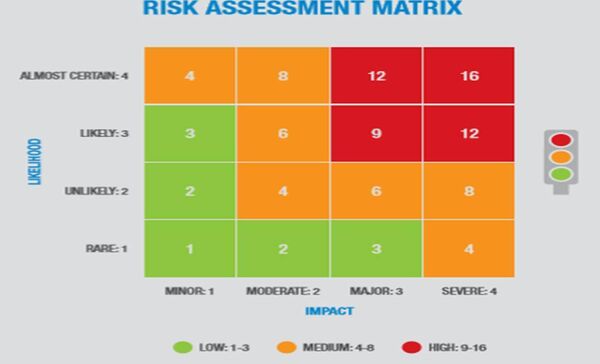
At the time the Council’s 2026 Register was authored, there were many areas and actions within the local authority that carried very limited risk.
There were, however, a number of areas which were allocated very high risk ratings.
In quarter one of 2026, resourcing in the Council’s planning department was measured at the highest possible risk level (16).
The Council identified the high turnover of staff in this Department as a potential problem. This has led to a "knowledge deficit which has impacted on the quality and efficiency of services".
The Register warns that due to limited staff capacity and statutory requirements, there is a potential risk that mandatory planning deadlines will be missed, resulting in "significant financial penalties, reputational damage and operational disruption to the planning services".
Senior staff have identified plans of action to mitigate the problem. This includes resourcing, forward planning with planners, knowledge transfer sessions and engaging with HR for targeted training.
Failure to ensure the proper enforcement of planning in Waterford also has a high-risk rating (9).
Recruitment to fill vacancies is identified as the plan of action to reduce further risk in this field.
The potential failure to ensure safety standards in Council-owned dwellings carries significant risk (12).
The Council currently manages and maintains approximately 6,800 properties, and a failure to maintain these dwellings may lead to health and safety concerns.
The Register states that the overall condition and quality of individual properties in Waterford is not fully known.
To address this, the Council is undertaking a "comprehensive stock condition survey programme across its housing portfolio over the next four years".
This work is "on track", according to the Register.
Additionally, the Register states that rent collection is an area that needs improvement.
“Housing Department are working on new policies to address this,” the document reads.
The Register further warns that failure to achieve housing delivery targets may result in reputational damage to the Council at both local and national level, which could lead to increased scrutiny from the Department, elected members, the media, and the public.
Progress in this area is "on track", and Waterford Council is on target to achieve its overall Housing for All delivery targets.
However, it is anticipated that new-build social housing delivery will fall short of specific targets.
Insufficient staffing resources, vacancies, staff turnover, or absence may also impact the Council's Housing department's ability to meet statutory obligations and achieve goals.
Use of temporary resources and engagement with external consultants are plans in place to deal with this.
Work is also being undertaken to increase staffing levels within the housing department.
All documents relating to housing are stored and managed through the Council’s IT systems.
The Register warns that "any significant issue affecting these systems would have a direct impact on housing operations and its ability to function effectively".
This carries a considerable risk rating (8), due to existing Council IT systems which are "ageing and require upgrading".
A programme of system upgrades is currently underway to improve reliability, performance and resilience.
However, progress in this area is labelled as "overdue" within the Register.
There are many subsections within the Register, which carry an inherently high risk rating despite the Council’s best efforts.
For example, under the ‘tax compliance’ section, the Register states that the local authority has a very good track record as a tax withholding and remitting body.
Despite this, risks within the area of tax compliance are unlikely to ever be eliminated.
Similarly, health and safety is an area with a guaranteed level of risk.
The Council outlines that given the nature, scale and complexity of the authority’s use of fleet vehicles and plant machinery, there is an inherently high risk of accidents despite all preventative measures that are in place.
Such an event would likely lead to investigation from the HSA and gardaí, significant operational and financial consequences, reputational damage and profound human impact, the Register outlines.
The Council identifies a lengthy list of preventative measures, including competent staff, incident reporting and training, and the procurement of a health and safety coordinator.
Despite the Council’s best efforts, there is also an inherent risk that an employee may be aggressively verbally abused, threatened, or physically assaulted.
Resultingly, the Library subsection within the Register states that staff are trained and that a fob alarm system is in place at local libraries. The register also outlines that procedures are in place for dealing with potential library protests.
The Council must adhere to public procurement policies; however, this is an area within the local authority which "needs to be addressed to ensure there is sufficient expertise and capacity, and that succession planning is considered".
The Register states: "Because the purchase procurement and purchase order processing systems are devolved, staff may not have the expertise, experience and support to ensure that the correct procurement method is carried out in a compliant manner. In addition, staff tasked with managing contracts may not have the knowledge and expertise to address performance, cost control and performance management."
Progress to improve this area is labelled as "overdue".
There is a need for a "significant review" of all high-class assets managed by the Council, including land, buildings, machinery and fleet.
"This is a significant exercise that involves multiple inputs across multiple sections," the Register states.