A Waterford success story - from reluctant goalkeeper to a glittering career
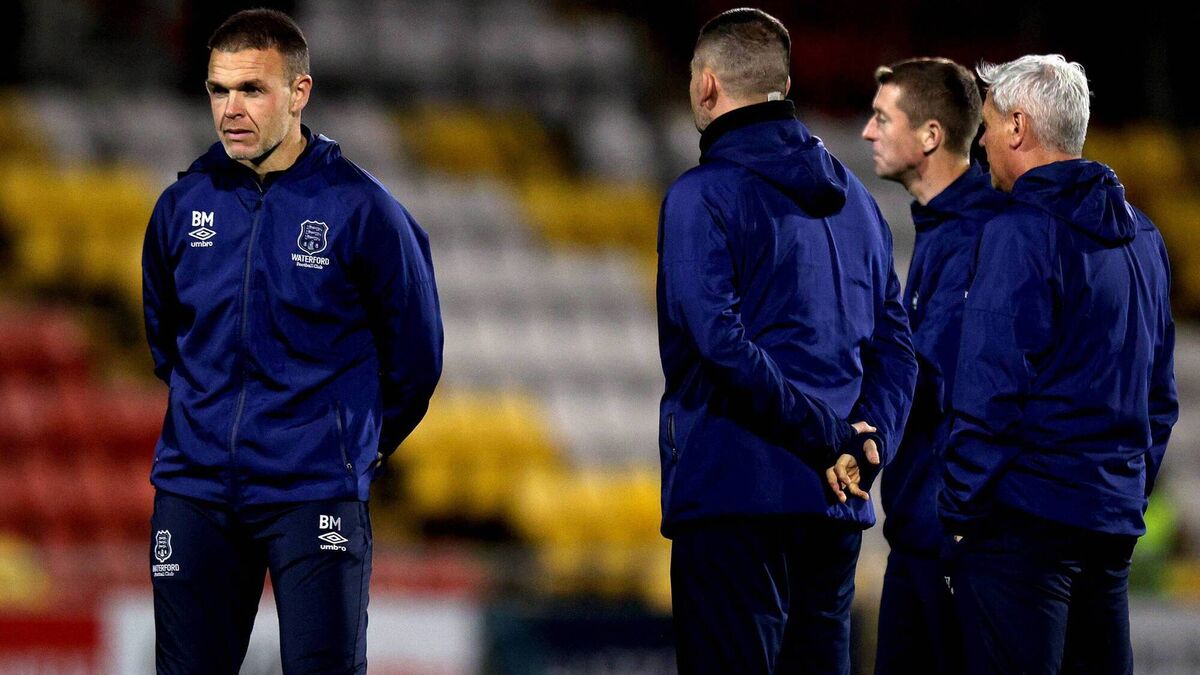
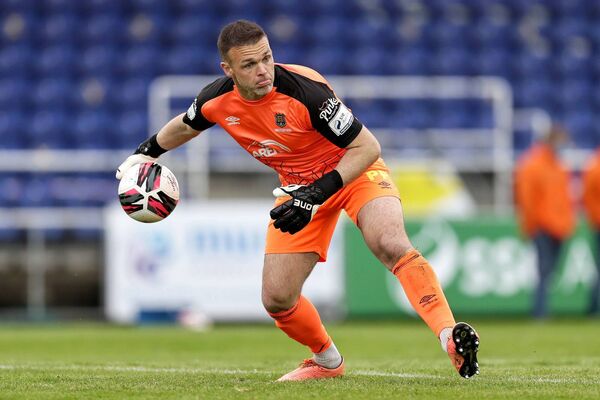
A return to Waterford now sees Brian Murphy as the goalkeeping coach to the Blues first-team.
Often, there are choices to be made, decisions that will ultimately change the course of your life, and crossroads that promise much, no matter which direction you choose. And when all is said and done, one is left to contemplate whether those decisions were right or wrong.
In many cases, those forks in the road provided paths that were ultimately proven to be correct. For Brian Murphy, such decisions led to a professional football career that spanned over 300 games for club and country across two countries, leaving a wealth of memories.
But the young lad from near Dunmore East was equally happy with a hurley in his hand, racing around a Ballygunner pitch or perhaps with another round ball as he kicked football with his pals at Gaultier GAA Club. And in those carefree days, the thoughts of professional football were furthest from his mind.
Growing up in County Waterford in the late eighties and early nineties, soccer was down the list for many, with hurling dominating the sporting landscape – the joy of an All-Ireland Under 20 crown in 1992 fresh in every child’s memory, and the thoughts of such a victory translating into Senior glory inspired many.
For Murphy, this was a time of hanging out with mates, drawn by the camaraderie that sport brings, and GAA dominated his landscape.
“I nearly always had a hurley in my hand,” he mused as he reflected on his childhood. “If it wasn’t a hurley at Ballygunner, it was football at Gaultier. Soccer was a distant third.” And if soccer was down the list, goalkeeping was even further away.
“I remember getting curious about it, maybe nine or ten, and going down to Dunmore for a game or two. But then there was so much hurling and football. So you were obsessed with that. I enjoyed that.
“It seemed to take up all of my time. Soccer would never have been that big for me, even if it had been just as good, if I had nothing else on. If there were no hurling or football match, then I would go to it.” And goalkeeping, as is the case with many, came by accident.
“Back then, you had to get changed in the back of a car, and I think the regular goalkeeper didn’t turn up, and it was like – “Who’s the tallest?” I really didn’t want to go in goal, but I was very upset about it, and I went in anyway.
“I don’t really remember the game, but a few games later, I was asked to go in again, and that was it. I had a knack for it, to some extent.
“Someone from Waterford Bohemians had seen me play and came to the house to ask me to join them. I went in there, played a few games, but then I thought, 'I don’t want to go in there.' It was a city club, and I was a bit daunted at the time and thought, This isn’t for me!”
There was also a brief dalliance with rugby, to which he was introduced in Waterpark College, where he went to secondary school. His physique made him an ideal out-half, and his ability to kick a ball long distances saw him drive his team to some success and also brought him some Irish trials.
However, the draw of hurling in particular was still pulling him back to the GAA.
“I just loved playing the game. I never looked too far ahead. As a kid, I just loved playing. It was all about living in the moment. Yeah, I just felt I was engrossed in it and probably playing too much of it at times.
“I wasn't bad at the hurling and football, to be fair. And I think I was involved with like Tony Forristal teams and Waterford setups and stuff.”
But some of the Bohs stalwarts weren’t giving up that easily, and a delegation consisting of Davy Mulcahy, Noel Lavery, Bobby Sinnott and Richie Elliott arrived back at the house to try to convince him to give the club another chance.
And so began the journey that would eventually lead to a professional career.
“Going in there, I played a couple of games and did well, and then I ended up playing up a few age groups. I played with John O Shea and Shane Robinson, and that group, who were two years older. I recall being on the bench for a few games, and then there was a youth cup and similar events.
“I never really had any coaching; I just seemed to have the knack for it. We won the Kennedy Cup, going through the whole competition without conceding a goal, and that was the start of it.” The Kennedy Cup is a competition that draws considerable attention from cross-channel scouts, and that victory put many of the players in the spotlight.
“The scouts just started turning up,” Murphy remembers. I started receiving numerous trial offers. Middlesbrough was the first one. I was fourteen years old and went over on my own. There were also a few visits to Manchester United, as well as a few others, but the offer eventually came from the blue side of Manchester.” “The first few weeks there were daunting,” he recalled.
“I was supposed to be rooming with a few of the Irish lads there - Paddy McCarthy and Glenn Whelan, but I ended up in digs on my own. I was on the phone with my parents the first night, saying this was not what was agreed upon, but my parents said they would ring the club and sort it out. But it was left to be seen, so leave it a week and see. And the week became two and so on.”
Murphy would go on to spend over four years at City before heading to Wales to join Swansea City. After three seasons at Swansea and despite an offer of a new contract there or a move to Bristol City, Murphy decided that it was time to come home.
“The homesickness never really left me all through my career,” he remembers. “There were tough moments over there. It's tough for any kid. Leave your family. Your mother's cooking, cleaning, and other household tasks. I think it was just leaving home, leaving your environment, leaving hurling and football, as well as everything else. They were big decisions.”
With the difference in seasons, the decision to come home meant he had to wait four months before he could sign for an Irish club, and with numerous offers on the table, he elected to head to Dalymount Park.
His time at Bohemians saw him win two leagues, an FAI Cup medal, a League Cup medal as well as three Goalkeeper of the Year awards from Soccer Writers Ireland. He also landed a Player of the Month award in November 2008, the only goalkeeper to have lifted the monthly accolade.
A FAI Player of the Season award that year was also the icing on the cake – again, the first goalkeeper to win that award. During his time at Bohemians, he played 97 games, 63 of which ended in clean sheets.
Such performances brought attention once again from the cross-channel and he headed back across the water to join Ipswich Town in 2009, where Roy Keane was the manager.
A broken ankle put paid to his progress there, and following Keane’s sacking, Paul Jewell came in as he returned to full fitness, but once again, despite an offer of a new contract, he opted to leave the club, and his next stop would take him to Queen’s Park Rangers.
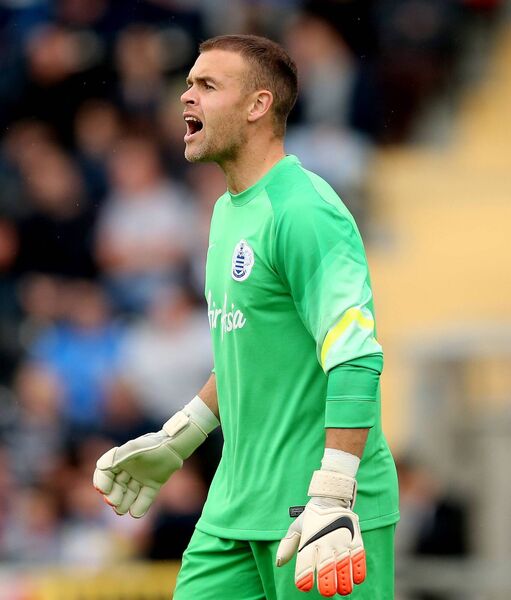
This was a move to the Premier League, and manager Neil Warnock made it clear to Murphy that he was not going to be number one.
“You're coming in here as number two,” he told me.
“I don't want you complaining that you're not playing. You're coming into the Premier League. Paddy Kenny is my number one. I don't care how you do. You will play the cup games.
“It was a turbulent five years at Loftus Road, marked by relegation followed by an immediate bounce-back promotion and then relegation again.
The club were making a big change with players. There was no contract offer there for me. They had one or two younger goalkeepers coming through. And then that's the way it went.” A season at Portsmouth followed more as a favour to then-manager Paul Cook, but it wasn’t really a move that inspired him, and he decided to reject the offer of a new contract.
With home now looming large again, he had discussions with Dundalk, who were dominating football in the League of Ireland. Still, at the last moment, an offer from Cardiff City provided yet another fork in the road.
“I went into Cardiff as a number 3 and to provide experienced cover. I had a few opportunities in the first couple of months and did well, so I stayed there over four years. In that time, we had a promotion and relegation, but it was the best of times. I really enjoyed my time there. Everyone seemed to get along well, the players being the best group I've been involved with. In terms of togetherness. All the partners, girlfriends, wives and all that. Very close.”
Neil Harris, the Cardiff manager at the time, was very accommodating, and when an opportunity came to return to Waterford ahead of the 2020 season, he didn’t stand in his way.
“I spoke to the manager and told him there's a chance for me to go back home. I'm at an age now where I probably won't get another contract here. I'm 37 in that summer. I said it's best to go. And then he said, 'Yeah, look, if we can get a replacement for you, we can work something out.' And he did!” Waterford fans warmly greeted the return, but turbulence persisted within and around the club, and the COVID-19 pandemic loomed large. Football was halted for months, and in the shortened season, Waterford found themselves midtable and safe.
However, that uncertainty continued off the field, but Murphy was happy to end his playing career at the Blues.
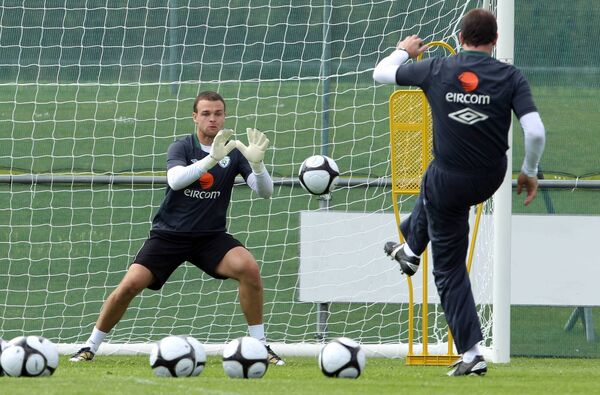
“I'd done more than I ever thought in my career. I was in the Ireland squads, training with the likes of my hero, Shay Given. I was in the World Cup qualifiers. The first-ever one was Ireland-France in the two-legged playoff, known as the Henry Handball.
“I was in that squad, so I was there. I'd achieved more than I ever did. I felt obliged to come back, maybe and play. And I always wanted to. Perhaps I should have gone to Dublin first, for the first year or two, and then returned because of the way the club was.
“Still, I think it was probably in one of my best forms at Cardiff before I left. I felt really good. Probably COVID set me back a little bit because you didn't do anything for four or five months.
“But do I have regrets? Certain things, but I think a lot of it's more that I’ve been in the right place, right time, a little bit of luck and plenty of hard work. And that was me.”
As a reflection on what stood out over a career that had it all – promotions, relegations, European Championships, medals, longevity - Murphy has a special word for one man.
He credits Kevin Keegan with providing a significant amount of the help and advice he received during his time at Manchester City.
“Probably working with Kevin Keegan and what he said to me,” he says without thinking, “I think that stuck in my brain from day one. I was, what, 18, maybe at the time when he told me. And I think that's stuck in me, and no matter where I was or how bad I thought I was, I always felt that if I worked hard enough, something good would happen or something positive would happen in my career.
“And luckily for me, it did.”